Instant
01 · Ask
Block, tarmac, gravel or resin?
Different surfaces, different lifespans, different maintenance. Describe the driveway and the AI tells you what fits your house and budget.

Block paving, tarmac, resin-bound or gravel — costed per m², kerbed and edge-restrained.
Read the brief on drainage rules, sub-base depths and edge restraint — then let Three local specialists quote.
Different surfaces, different lifespans, different maintenance. Describe the driveway and the AI tells you what fits your house and budget.
SuDS regulations, dropped-kerb consent, sub-base depths, edge restraint, drainage falls. Know the lingo before the quote.
Three local specialists quote on the same spec — base depth, edge restraint, drainage solution — so corners aren't cut underground.
Ready when you are
Enter your postcode and get free quotes from local pros.
Four moves that separate a smooth job from a nightmare.
Since 2008, paved-over front gardens above 5m² must be permeable, drain to a soakaway, or have planning permission. A driveway that ignores SuDS is illegally laid.
Type 1 MOT, compacted in 75mm layers. Block paving over 75mm sub-base fails inside a winter. Quote should specify depth.
If your driveway crosses a public footpath, you need a dropped kerb from the council. A driveway with no dropped kerb is an enforcement notice waiting to happen.
Without proper edging (kerb stones, haunching), the whole driveway spreads sideways. Every block-paving quote must include edge restraint.
Indicative UK ranges and what affects price.
By job type
Quote spread is typically ± 18% — always get 3 quotes.
Visual breakdown of costs, timelines and the questions you should be asking.
Driveways quick-view
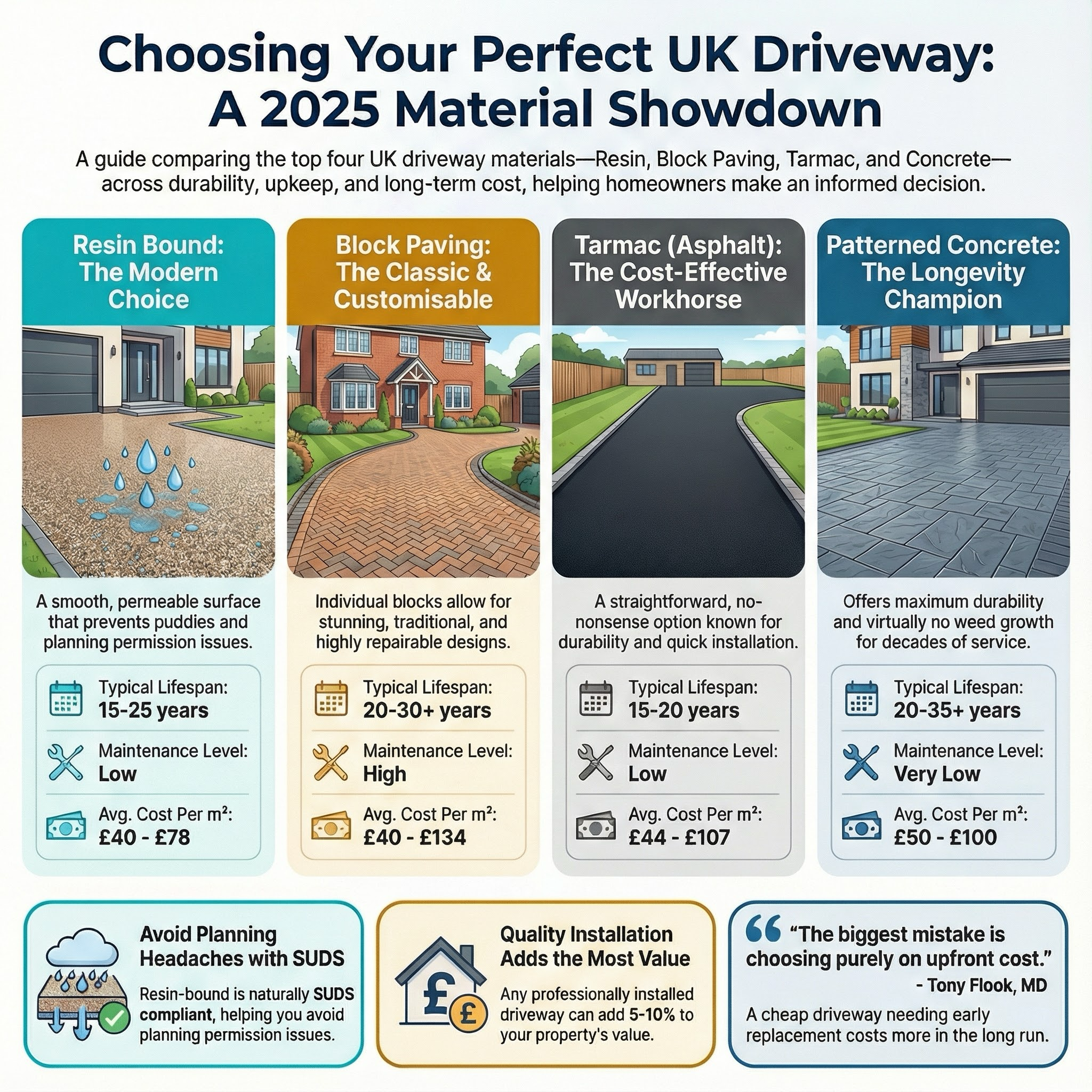
Driveways explained
Everything you need to know before hiring a driveways.
A professional driveway specialist transforms the entrance to your home, combining aesthetic appeal with essential structural durability. Whether you are looking for the classic look of block paving, the sleek finish of resin, or the cost-effective reliability of tarmac, these experts ensure your frontage can withstand the weight of modern vehicles while managing surface water effectively.
Beyond simple aesthetics, a high-quality driveway significantly boosts your property's kerb appeal and market value. UK homeowners typically hire these specialists to replace crumbling concrete, extend parking spaces for multi-car households, or install sustainable drainage systems that comply with local environmental regulations.
Hiring a driveway professional involves a structured process to ensure the ground is correctly prepared and the finish is level. Most specialists offer a comprehensive service from design to completion.
While laying gravel might seem like a simple DIY task, professional installation is critical for long-term durability. Driveways must support several tonnes of moving weight; without a professionally compacted sub-base and correct "fall" for water runoff, the surface will quickly succumb to potholes, sagging, and flooding.
In the UK, strict legislation regarding "Sustainable Urban Drainage Systems" (SuDS) applies to front gardens. If your driveway is over 5 square metres and uses non-porous materials without a soakaway, you may legally require planning permission. A professional specialist understands these regulations and will design a system that naturally drains water, saving you from potential fines or issues when selling your home.
Driveway pricing in the UK varies based on the material chosen, the condition of the existing ground, and the total area. The following table provides realistic 2025/26 estimates including VAT and labour.
| Service (per m²) | Low £ | High £ | Notes |
|---|---|---|---|
| Gravel (on grid system) | £45 | £80 | Most affordable; requires regular raking. |
| Tarmac (Asphalt) | £65 | £110 | Durable and quick to install. |
| Block Paving | £90 | £150 | Highly customisable; easy to repair. |
| Resin Bound | £80 | £160 | Permeable, modern, and weed-resistant. |
| Pattern Imprinted Concrete | £95 | £140 | Low maintenance but prone to cracking. |
Costs are heavily influenced by the amount of "muck away" (waste removal) required and whether a new sub-base is needed. Large-scale excavations or the addition of complex drainage channels will push prices toward the higher end of the scale.
Choosing a reputable contractor is essential to avoid the "cowboy" traders often associated with driveway scams. Look for established businesses with a local physical address and a portfolio of past work you can visit.
Questions to ask before hiring:
In the UK, you generally do not need planning permission if you use a permeable (porous) surface like gravel, resin-bound, or permeable block paving. If you use non-permeable materials like tarmac or standard concrete for an area larger than 5 square metres, you must install a drainage system that directs water to a lawn or border. If water drains onto the public highway, planning permission is mandatory.
A standard two-car driveway typically takes between 5 and 10 working days to complete. This includes 2-3 days for excavation and sub-base preparation, followed by several days for laying the chosen surface and finishing the edges. Weather conditions, particularly heavy rain, can delay tarmac and resin installations.
Resin-bound systems involve mixing the aggregate and resin together before laying, creating a smooth, porous surface that allows water to drain through. Resin-bonded systems involve scattering stones over a layer of resin; this is non-porous, has a rougher texture, and the stones can become loose over time. Resin-bound is generally considered the superior, SuDS-compliant option.
This depends on the material. Gravel can be used immediately. Tarmac usually requires 48 to 72 hours to harden sufficiently, though it can take longer in very hot weather. Block paving can be used as soon as the kiln-dried sand has been vibrated into the joints. Resin-bound driveways typically require 24 to 48 hours before they can handle vehicle weight.
Describe the job in plain English. The AI asks a few smart questions, then tells you whether a driveways is the right call, what it should cost, and what to ask before they start.
Refurbishing a garden path is one of the most effective ways to instantly boost your home’s kerb appeal and improve safety. In the UK’s damp climate, older path...
READ GUIDE →GuideA professionally laid patio is more than just a space for summer hosting; it is a structural addition that can significantly increase your property's value. In ...
READ GUIDE →GuideInstalling garden slabs is one of the most effective ways to transform an underutilised outdoor space into a functional, all-weather seating area. Whether you a...
READ GUIDE →GuideLaying garden slabs is one of the most effective ways to transform a tired outdoor space into a functional, multi-purpose area. Whether you are looking for a sl...
READ GUIDE →GuideMaintaining the relationship between your patio and surrounding trees is essential for both the aesthetics and structural integrity of your garden. Overhanging ...
READ GUIDE →GuideA brick-paved patio is a timeless addition to any British garden, offering a durable and aesthetically pleasing space for outdoor entertaining. Unlike large pav...
READ GUIDE →GuideRefreshing your garden with new patio slabs and professional fencing is one of the most effective ways to add value and functionality to your UK home. Whether y...
READ GUIDE →GuideA perfectly level patio is the foundation of a functional outdoor living space. In the UK, professional tiling and levelling are essential not just for aestheti...
READ GUIDE →GuideCombining paving slabs with artificial grass is one of the most popular garden transformations for UK homeowners. This pairing offers a "best of both worlds" so...
READ GUIDE →Replacing a cracked, dated concrete driveway or patio with fresh gravel is one of the most effective ways to instantly boost your home's kerb appeal. Beyond the...
READ GUIDE →GuideGravel is one of the most versatile and cost-effective landscaping solutions for UK homeowners. Whether you are looking to create a low-maintenance border, a tr...
READ GUIDE →GuideGravel driveways remain one of the most popular choices for UK homeowners, offering a blend of traditional aesthetics, excellent drainage, and cost-effectivenes...
READ GUIDE →In the UK, driveways endure a relentless cycle of heavy rain, frost, and UV exposure. Over time, this leads to the growth of moss, algae, and lichens, alongside...
READ GUIDE →GuideNeglected pathways and parking spaces are more than just an eyesore; they represent a significant slip hazard and can lead to expensive structural damage. Over ...
READ GUIDE →