Instant
01 · Ask
Ask the AI a follow-up
Got more questions about tarmac Driveway Installation? Describe the bit you're unsure about — the AI explains options, sequencing and what to ask the driveways.

Hot-rolled tarmac — sub-base, primer, base course and surface course, edged and rolled.
You've read the brief on tarmac Driveway Installation. Now lean on us to find the right driveways — and stay in control of the job.
Got more questions about tarmac Driveway Installation? Describe the bit you're unsure about — the AI explains options, sequencing and what to ask the driveways.
Costs, timelines, pitfalls and the right questions to ask before any driveways starts on tarmac Driveway Installation.
Itemised quotes from up to 3 local drivewayss on tarmac Driveway Installation — so you can compare like-for-like, not lump sums.
Ready when you are
Enter your postcode and get free quotes from local pros.
Four moves that separate a smooth job from a nightmare.
Turning car wheels while stationary on fresh tarmac can cause "power steering scuffs." Avoid full-lock turns for the first few months.
Caused by poor levelling during the laying process. This indicates a failure in the base or wearing course.
Usually happens from the edges or through cracks if the sub-base wasn't treated with weedkiller or a geotextile membrane.
Often the result of an insufficient sub-base or heavy vehicles (like delivery lorries) using a driveway designed only for cars.
Indicative UK ranges and what affects price.
By job type
Quote spread is typically ± 18% — always get 3 quotes.
Driveways quick-view
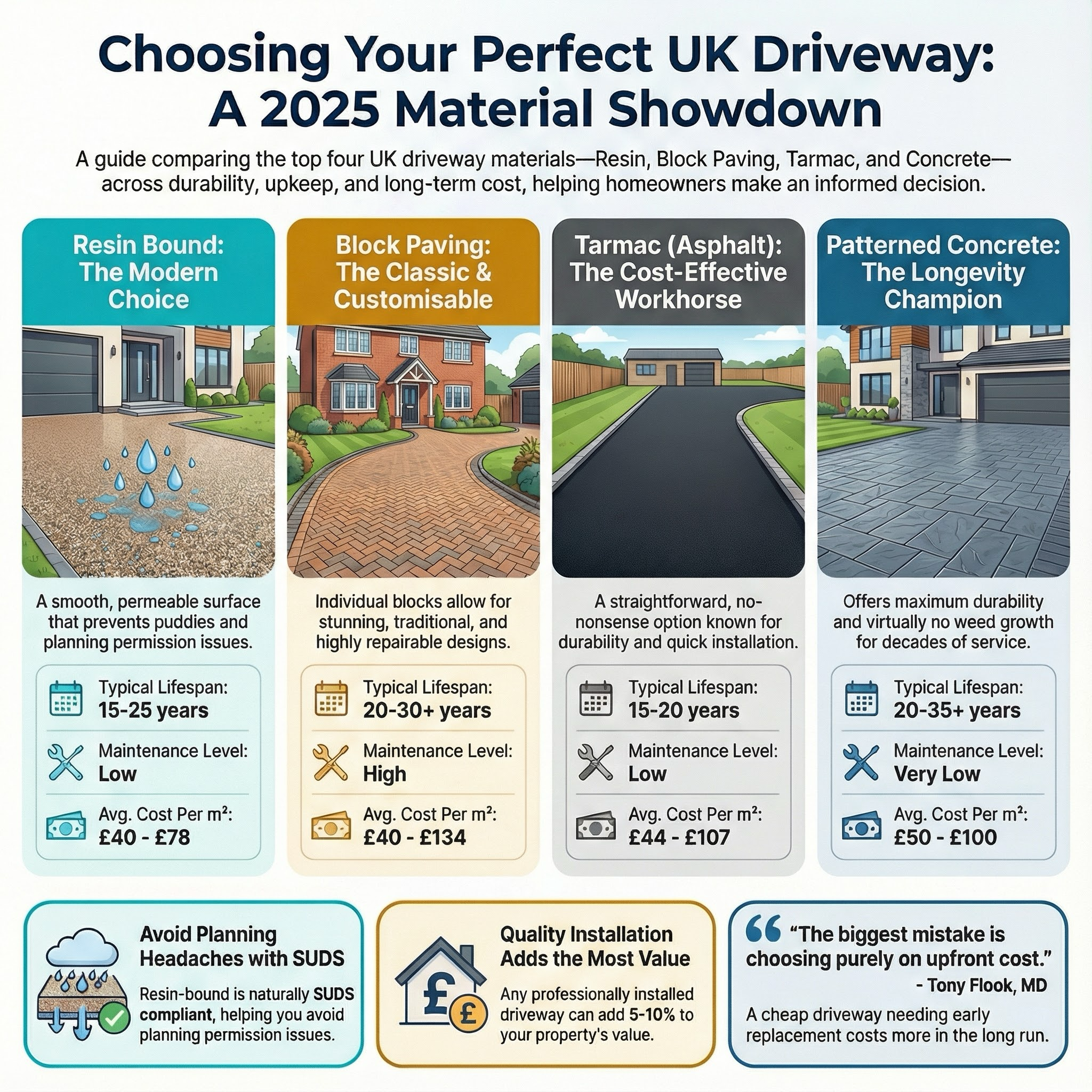
Driveways explained
A professionally installed tarmac driveway can last upwards of 20 years. Modern "SMA" (Stone Mastic Asphalt) mixes now offer even greater resistance to scuffing and stone loss, providing a sleek, jet-black finish that significantly boosts kerb appeal.
Prices for tarmac driveways are generally calculated per square metre. Total costs will vary based on whether you are "overlaying" an existing surface or requiring a full "dig-out" and new sub-base.
| Item | Low £ | High £ | Notes |
|---|---|---|---|
| Full Installation (per m²) | £80 | £120 | Includes excavation, sub-base, and two layers of tarmac. |
| Resurfacing / Overlay (per m²) | £50 | £70 | Laying over existing solid tarmac or concrete. |
| Small Driveway (approx. 30m²) | £2,400 | £3,600 | Standard single-car space with minimal prep. |
| Large Driveway (approx. 80m²) | £6,400 | £9,600 | Multiple cars, includes drainage and edgings. |
| Dropped Kerb Application | £1,000 | £1,800 | Required for new vehicle access (Council fees apply). |
Factors affecting the price include the distance from the asphalt plant, the complexity of the driveway shape, and the necessity for significant groundworks or tree root removal.
Tarmac installation is not a DIY project. It requires heavy machinery, including excavators and vibrating rollers, and the material must be laid while hot (around 140°C) to bond correctly.
Professional installers have the "hot-lay" accounts at local plants; DIYers are usually restricted to "cold-lay" bags, which are only suitable for temporary pothole repairs and will not last as a full driveway surface.
Yes, provided the concrete is stable and not badly cracked. An "overlay" involves cleaning the concrete, applying a tack coat (glue), and laying a new tarmac skin, though this will raise the height of your driveway.
Yes, red tarmac is significantly more expensive. The pigment and clear binder required can increase material costs by 20% to 50% compared to standard black bitumen.
With a proper sub-base and professional installation, you can expect a lifespan of 15 to 20 years. Regular sealing every few years can extend this further.
Only if the surface is non-permeable and the water drains onto a public highway. If you install a soakaway or drain the water into your own land, you generally do not need permission.
Tarmac stays flexible for several months, especially in summer. It takes time for the oils to evaporate and the binder to fully harden. Avoid using ladders or high-heels on it during very hot days.
This guide was written with AI assistance and is intended for general information only. Prices are estimates based on UK averages and may vary by region. Always get at least three quotes and consult a qualified professional before starting any work.
Ask follow-ups in plain English. The AI explains options, sequencing and what to ask the driveways — so you walk in informed.
Combining paving slabs with artificial grass is one of the most popular garden transformations for UK homeowners. This pairing offers a "best of both worlds" so...
READ GUIDE →GuideGravel is one of the most versatile and cost-effective landscaping solutions for UK homeowners. Whether you are looking to create a low-maintenance border, a tr...
READ GUIDE →GuideInstalling garden slabs is one of the most effective ways to transform an underutilised outdoor space into a functional, all-weather seating area. Whether you a...
READ GUIDE →GuideA driveway is more than just a place to park; it is the first impression your home makes and a significant factor in its market value. In the UK, our fluctuatin...
READ GUIDE →GuideNeglected pathways and parking spaces are more than just an eyesore; they represent a significant slip hazard and can lead to expensive structural damage. Over ...
READ GUIDE →GuideA brick-paved patio is a timeless addition to any British garden, offering a durable and aesthetically pleasing space for outdoor entertaining. Unlike large pav...
READ GUIDE →