Instant
01 · Ask
Ask the AI a follow-up
Got more questions about fireplace Repair Cost & Work? Describe the bit you're unsure about — the AI explains options, sequencing and what to ask the fireplaces & stoves.

What repairs cost on gas, electric and solid-fuel fireplaces — parts, labour and re-commissioning.
You've read the brief on fireplace Repair Cost & Work. Now lean on us to find the right fireplaces & stoves — and stay in control of the job.
Got more questions about fireplace Repair Cost & Work? Describe the bit you're unsure about — the AI explains options, sequencing and what to ask the fireplaces & stoves.
Costs, timelines, pitfalls and the right questions to ask before any fireplaces & stoves starts on fireplace Repair Cost & Work.
Itemised quotes from up to 3 local fireplaces & stovess on fireplace Repair Cost & Work — so you can compare like-for-like, not lump sums.
Ready when you are
Enter your postcode and get free quotes from local pros.
Four moves that separate a smooth job from a nightmare.
These protect the metal casing of a stove; if they fail, the stove body can warp or crack.
This is the most common reason for a gas fire pilot light failing to stay lit.
Smoke entering the room often indicates a blocked flue or an incorrectly fitted chimney cowl.
Often caused by burning unseasoned wood, which can lead to corrosive damage to the glass and flue.
Indicative UK ranges and what affects price.
By job type
Quote spread is typically ± 18% — always get 3 quotes.
Fireplaces & Stoves quick-view
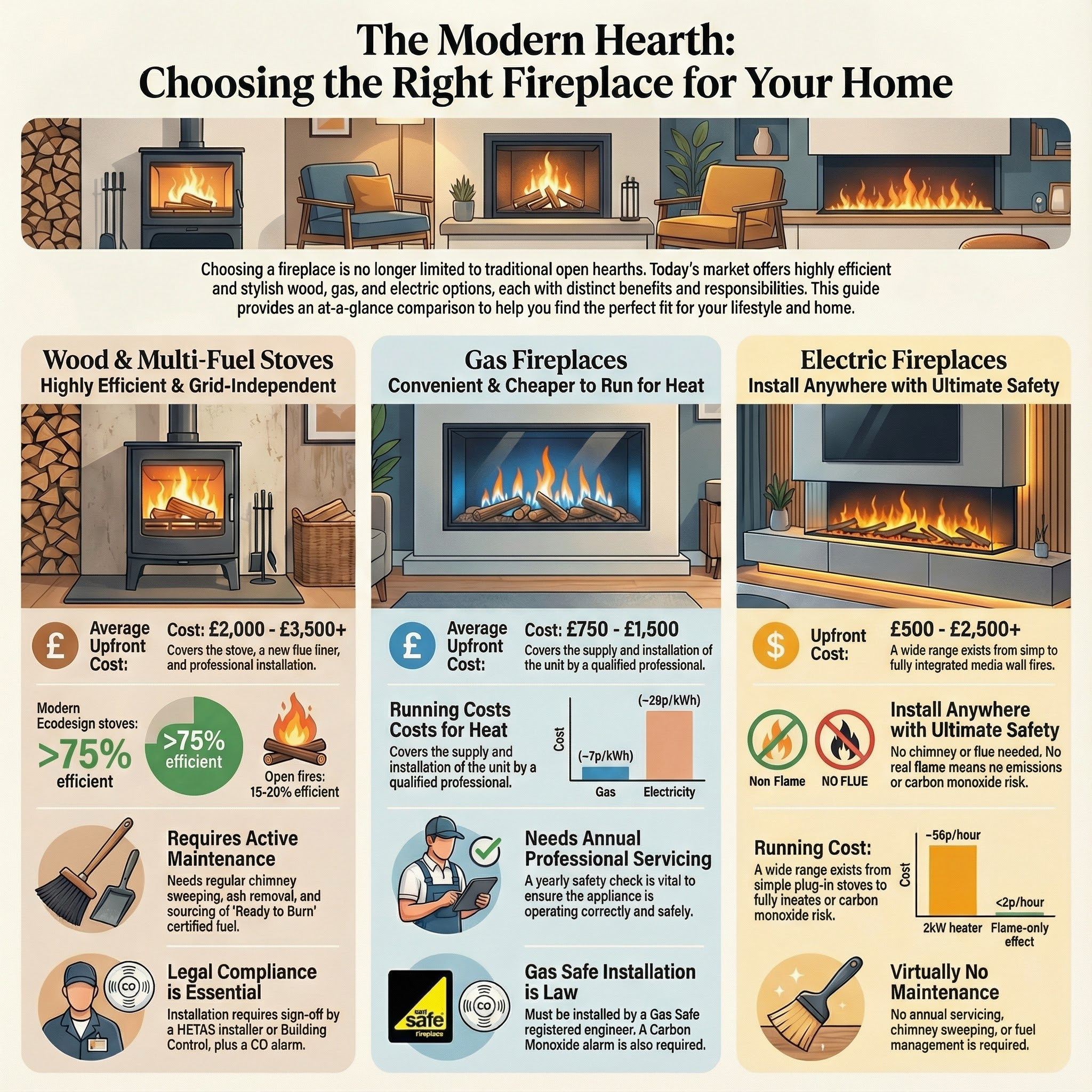
Fireplaces & Stoves explained
Professional repairs ensure your appliance operates efficiently and safely. Whether you have a traditional open hearth, a wood-burning stove, or a modern gas fire, addressing small issues early prevents costly structural damage and ensures compliance with UK safety standards.
The scope of fireplace repair varies depending on the fuel type and the nature of the fault. A typical repair visit generally follows these steps:
The cost of fireplace repairs depends heavily on the type of appliance and the cost of specialist parts. Prices below include VAT and reflect 2025/26 UK averages.
| Item | Low £ | High £ | Notes |
|---|---|---|---|
| Basic Call-out / Diagnostic | £80 | £150 | Usually covers the first hour of labour. |
| Gas Fire Thermocouple Replacement | £120 | £250 | Includes part and Gas Safe labour. |
| Wood Burner Glass Replacement | £100 | £220 | Varies by glass size and stove model. |
| Firebrick Replacement (Set) | £90 | £180 | Labour and materials for 2-4 bricks. |
| Chimney Cowl Installation | £150 | £350 | Includes ladder/roof access and the cowl. |
| Electric Fire PCB/Element Repair | £130 | £300 | Includes specialist electrical components. |
Labour rates are generally higher in London and the South East, typically adding 20-30% to the total. If your chimney requires scaffolding for access, expect to add at least £500 to the repair bill.
Most fireplace repairs are completed within a single day, provided the tradesperson has the necessary parts in stock.
While cleaning a hearth or replacing a decorative surround can be a DIY task, internal repairs must be handled by professionals. It is a legal requirement in the UK that all gas fireplace repairs are performed by a Gas Safe registered engineer.
Similarly, repairs to wood-burning stoves and flues should be carried out by HETAS-certified installers. Attempting to repair a flue or combustion chamber yourself can invalidate your home insurance and lead to dangerous leaks of carbon monoxide.
Finding a qualified specialist is crucial for both safety and the longevity of the repair. Look for the following when hiring:
Red Flag: Avoid any "specialist" who is willing to work on a gas appliance without showing you their Gas Safe ID card. No ID, no job.
Questions to ask:
Fireplace installations and repairs are governed by several key standards to ensure domestic safety.
If you notice these issues, it is time to call in a professional before the damage worsens:
This is usually caused by a blocked pilot injector or a faulty igniter. It may also be a failing thermocouple, which is a safety device that shuts off gas if it doesn't detect heat.
If the crack is hairline, it is usually okay for short-term use, but if the metal of the stove is exposed, you must stop using it. The bricks protect the outer shell from melting or cracking under extreme heat.
The NHS and Fire Service recommend an annual service. For wood burners, the chimney should also be swept at least once a year (twice if burning wood) to prevent chimney fires.
This is usually "sooting" caused by incomplete combustion. It often happens if you are burning wet wood (moisture content over 20%) or if the "air wash" system on your stove is blocked.
A Gas Safe engineer should provide a gas safety record or a job sheet confirming the appliance is safe to use. For solid fuel, a HETAS engineer will provide a certificate of compliance for significant repairs.
This guide was written with AI assistance and is intended for general information only. Prices are estimates based on UK averages and may vary by region. Always get at least three quotes and consult a qualified professional before starting any work.
Ask follow-ups in plain English. The AI explains options, sequencing and what to ask the fireplaces & stoves — so you walk in informed.
A fireplace surround is the visual centrepiece of a British living room, but its role goes beyond aesthetics. A correctly installed surround ensures heat is saf...
READ GUIDE →GuideA Rayburn range cooker is often the heart of a British home, providing warmth, hot water, and a reliable cooking platform. Because these appliances often run 24...
READ GUIDE →GuideA fireplace is often the focal point of a British home, providing essential warmth and a sense of comfort during the colder months. Whether you are looking to r...
READ GUIDE →GuideInstalling a gas fire is one of the most effective ways to add both warmth and a striking focal point to your UK home. Beyond the aesthetic appeal, modern gas f...
READ GUIDE →GuideRegular maintenance of a gas fire is more than just a cleaning exercise; it is a critical safety requirement for UK homeowners. Annual servicing ensures your ap...
READ GUIDE →GuideA fireplace is more than just a heating source; it is the architectural heart of a British home. Whether you are restoring a Victorian original, installing a mo...
READ GUIDE →