Instant
01 · Ask
Ask the AI a follow-up
Got more questions about gas Fire Installation? Describe the bit you're unsure about — the AI explains options, sequencing and what to ask the fireplaces & stoves.

Inset, hole-in-the-wall or freestanding gas fire — Gas-Safe install with full commissioning.
You've read the brief on gas Fire Installation. Now lean on us to find the right fireplaces & stoves — and stay in control of the job.
Got more questions about gas Fire Installation? Describe the bit you're unsure about — the AI explains options, sequencing and what to ask the fireplaces & stoves.
Costs, timelines, pitfalls and the right questions to ask before any fireplaces & stoves starts on gas Fire Installation.
Itemised quotes from up to 3 local fireplaces & stovess on gas Fire Installation — so you can compare like-for-like, not lump sums.
Ready when you are
Enter your postcode and get free quotes from local pros.
Four moves that separate a smooth job from a nightmare.
If the room is too airtight, the fire may "spill" fumes back into the room; a dedicated air vent may be needed.
Old chimneys can drop soot or mortar, blocking the fire. A chimney liner is the most common solution.
If the pipe from the meter is too thin (15mm vs 22mm), the fire may not reach its maximum heat output or could fail safely.
Using a decorative hearth that isn't deep enough to meet safety regulations.
Indicative UK ranges and what affects price.
By job type
Quote spread is typically ± 18% — always get 3 quotes.
Fireplaces & Stoves quick-view
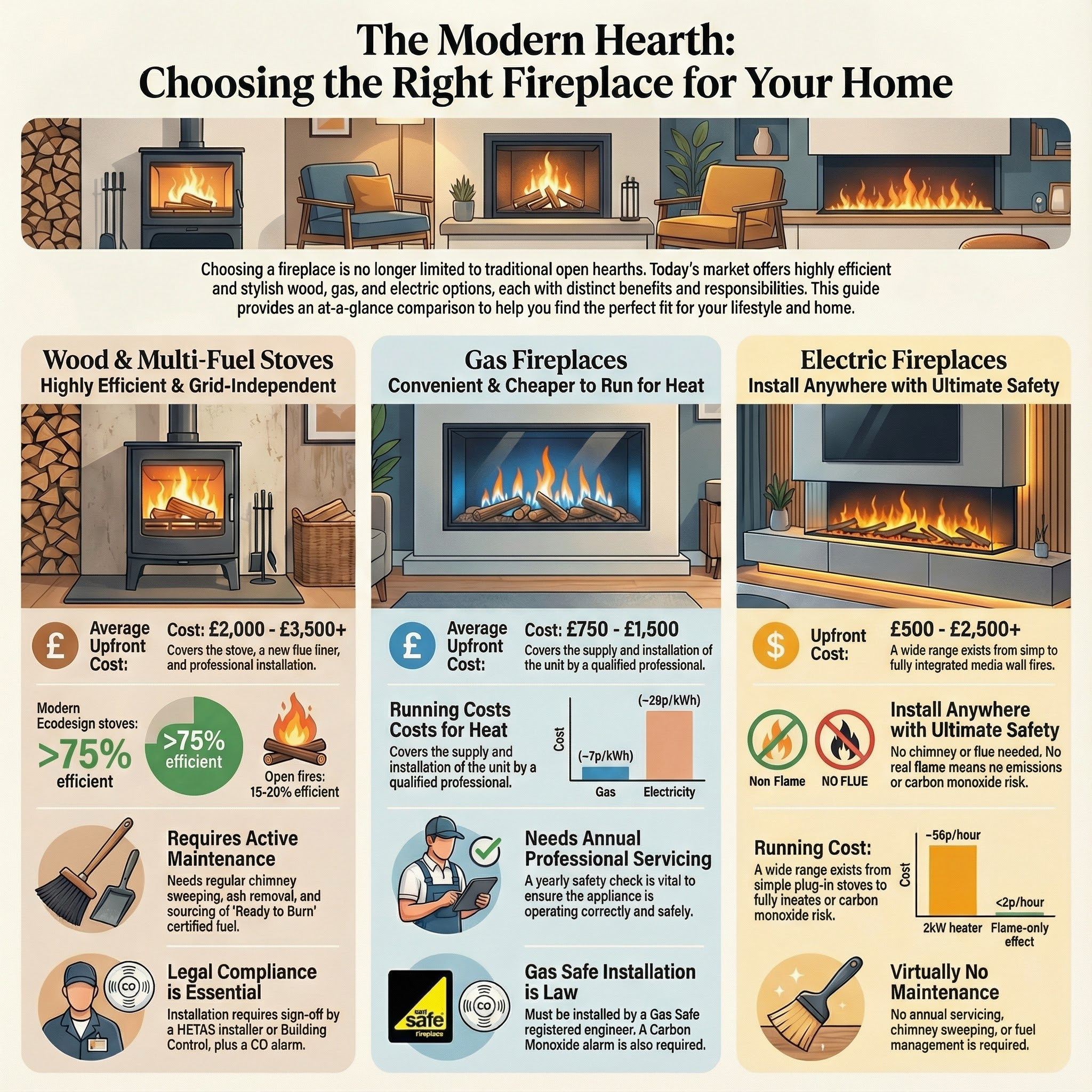
Fireplaces & Stoves explained
Because gas work carries significant safety implications, understanding the installation process is vital. This guide outlines the costs, regulations, and technical requirements involved in getting your new fire up and running safely.
| Item | Low £ | High £ | Notes |
|---|---|---|---|
| Labour (Standard Install) | £250 | £450 | Basic swap into an existing opening. |
| Flexible Flue Liner | £300 | £600 | Required if the chimney is leaking or old. |
| Gas Fire Unit | £400 | £2,500 | Varies by brand, efficiency, and style. |
| New Gas Run | £150 | £400 | If a new pipe is needed from the meter. |
| Hearth & Surround | £350 | £1,200 | Materials and fitting for the fireplace. |
Prices are influenced primarily by the type of flue you have. A "Balanced Flue" fire (for homes without a chimney) requires an external wall vent, which increases labour costs compared to a standard chimney fit. Always ensure your quote includes VAT and the final Gas Safe notification fee.
Warning: In the UK, it is a legal requirement under the Gas Safety (Installation and Use) Regulations 1998 that any gas work must be carried out by a Gas Safe registered engineer.
DIY installation of a gas fire is illegal and incredibly dangerous. Incorrectly fitted fires can lead to gas leaks, fires, or fatal carbon monoxide poisoning. Furthermore, without a Building Regulations compliance certificate from a professional, your home insurance will likely be void.
Questions to ask:
Yes. You can install a "Balanced Flue" gas fire, which vents directly through an outside wall via a twin-wall pipe, or a "Powerflue" which uses an electric fan to expel fumes.
Yes. It is essential to have the chimney swept to remove soot and bird nests. Your installer will also perform a smoke test to ensure the chimney draws correctly.
You should have your gas fire serviced annually by a Gas Safe registered engineer to check for carbon monoxide leaks and ensure the burner is clean.
Class 1 is a traditional brick chimney (7 inches or more). Class 2 is either a pre-fabricated metal pipe or a shallower pre-cast concrete flue found in modern homes. You must buy a fire compatible with your specific class.
Most standard manual or battery-ignition gas fires will work without mains electricity. However, some high-end "remote control" models or Powerflue models require a mains connection and will not function during a blackout.
This guide was written with AI assistance and is intended for general information only. Prices are estimates based on UK averages and may vary by region. Always get at least three quotes and consult a qualified professional before starting any work.
Ask follow-ups in plain English. The AI explains options, sequencing and what to ask the fireplaces & stoves — so you walk in informed.
A fireplace surround is the visual centrepiece of a British living room, but its role goes beyond aesthetics. A correctly installed surround ensures heat is saf...
READ GUIDE →GuideA Rayburn range cooker is often the heart of a British home, providing warmth, hot water, and a reliable cooking platform. Because these appliances often run 24...
READ GUIDE →GuideA fireplace is often the focal point of a British home, providing essential warmth and a sense of comfort during the colder months. Whether you are looking to r...
READ GUIDE →GuideA fireplace is often the focal point of a British home, providing essential warmth and character. However, a malfunctioning fireplace is more than just an incon...
READ GUIDE →GuideRegular maintenance of a gas fire is more than just a cleaning exercise; it is a critical safety requirement for UK homeowners. Annual servicing ensures your ap...
READ GUIDE →GuideA fireplace is more than just a heating source; it is the architectural heart of a British home. Whether you are restoring a Victorian original, installing a mo...
READ GUIDE →