Instant
01 · Ask
Ask the AI a follow-up
Got more questions about fireplace Surround Installation? Describe the bit you're unsure about — the AI explains options, sequencing and what to ask the fireplaces & stoves.

Marble, stone, oak or painted MDF surround — supplied, fitted and finished cleanly to the wall.
You've read the brief on fireplace Surround Installation. Now lean on us to find the right fireplaces & stoves — and stay in control of the job.
Got more questions about fireplace Surround Installation? Describe the bit you're unsure about — the AI explains options, sequencing and what to ask the fireplaces & stoves.
Costs, timelines, pitfalls and the right questions to ask before any fireplaces & stoves starts on fireplace Surround Installation.
Itemised quotes from up to 3 local fireplaces & stovess on fireplace Surround Installation — so you can compare like-for-like, not lump sums.
Ready when you are
Enter your postcode and get free quotes from local pros.
Four moves that separate a smooth job from a nightmare.
Occurs when the wrong adhesive is used or if stone is not "slabbed" (cut into sections) to allow for thermal expansion.
A major safety hazard, often caused by relying on "no-more-nails" style adhesives instead of proper wall anchors.
If a new surround changes the size of the fireplace opening, it can ruin the "draw" of the chimney, causing smoke to enter the room.
Can lead to the surround leaning or cracking over time as the house settles.
Indicative UK ranges and what affects price.
By job type
Quote spread is typically ± 18% — always get 3 quotes.
Fireplaces & Stoves quick-view
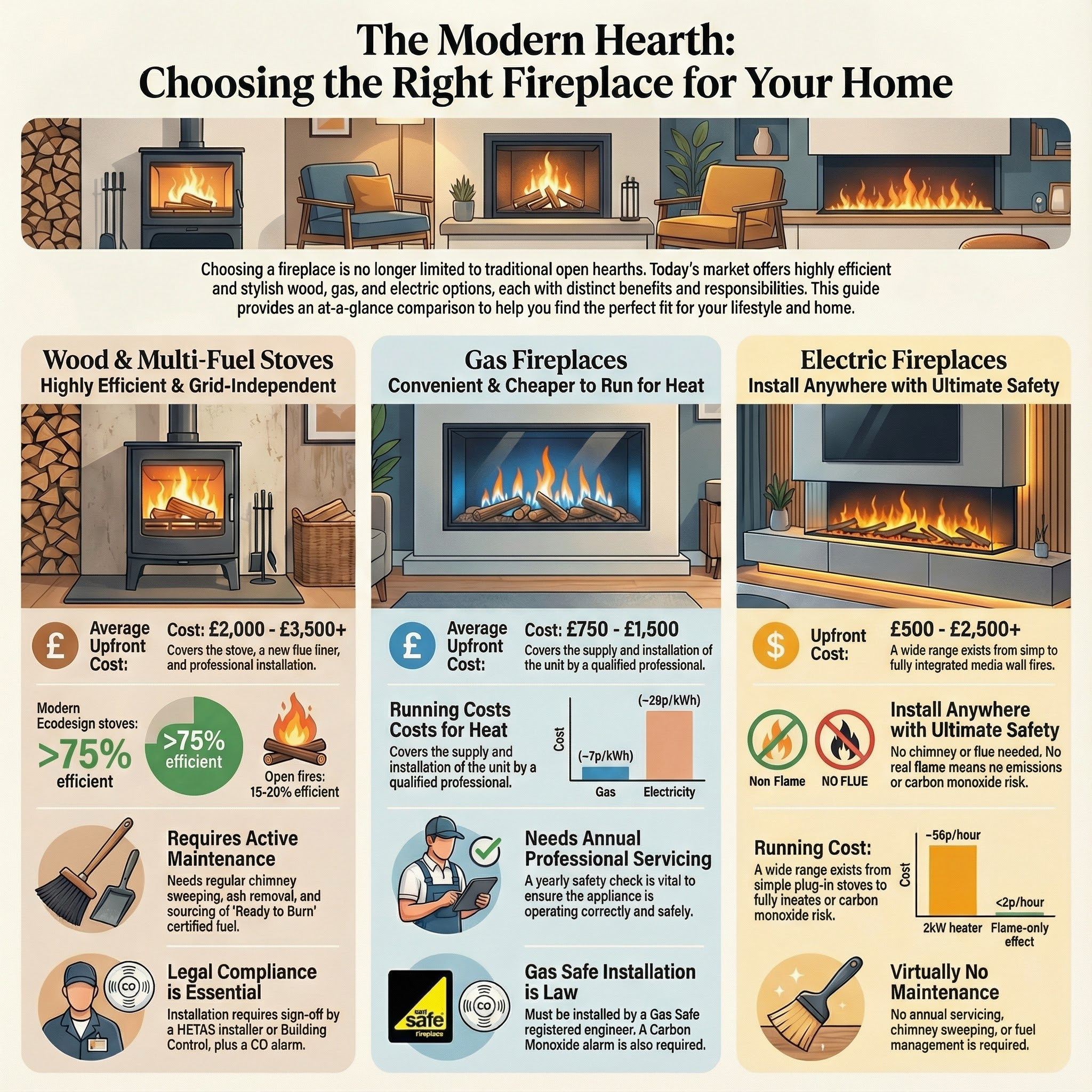
Fireplaces & Stoves explained
Whether you are upgrading an old timber mantle or installing a heavy bespoke stone feature, the installation requires precision. Professional fitting prevents common issues like heat cracking, loose fixtures, and non-compliance with home insurance requirements.
Prices vary significantly based on the weight of the material and whether the existing wall requires remedial plastering. All prices below include VAT at 20%.
| Item | Low £ | High £ | Notes |
|---|---|---|---|
| Labour (Standard Timber/MDF) | £250 | £450 | Typically a half-day job for one person. |
| Labour (Stone, Marble, or Cast Iron) | £450 | £900 | Requires two people due to weight and specialist fixings. |
| Materials (Adhesives, Plaster, Fixings) | £60 | £150 | Includes heat-resistant sealants and mortar. |
| Waste Disposal | £50 | £120 | Removal of old hearth and surround materials. |
| Total Project Cost | £360 | £1,170 | Excludes the cost of the surround itself. |
The primary cost drivers are the material weight and the condition of the chimney breast. Heavy stone surrounds require mechanical fixings to the masonry, which increases labour time compared to a lightweight timber frame.
While a lightweight MDF surround can be a DIY project for a confident hobbyist, stone, marble, or cast iron installations should be left to professionals. These materials are incredibly heavy and pose a significant safety risk if they are not mechanically fixed to the wall.
Important: If your fireplace installation involves moving gas pipes or affects a solid fuel appliance, the installer must be Gas Safe or HETAS registered by law.
If you are only replacing the decorative surround and not touching the stove or flue, you don't strictly need a HETAS engineer. However, they are the best choice to ensure the surround meets Part J heat-distance regulations.
Yes, but it must adhere to the "distance to combustibles" rule specified by the stove manufacturer and Building Regulations. This is often 300mm–600mm above the stove, depending on the heat output.
Slabbing involves cutting a stone hearth into pieces and rejoining them with a heat-resistant grout. This allows the stone to expand and contract with the heat of a real fire without cracking.
Yes, but you must use specialist heat-resistant paint. Standard emulsion or gloss will peel, discolour, or even emit toxic fumes when the fire is lit.
You should typically wait at least 24 to 48 hours to allow adhesives, mortar, and sealants to cure fully. Lighting a fire too early can cause the adhesive to fail or the stone to crack.
This guide was written with AI assistance and is intended for general information only. Prices are estimates based on UK averages and may vary by region. Always get at least three quotes and consult a qualified professional before starting any work.
Ask follow-ups in plain English. The AI explains options, sequencing and what to ask the fireplaces & stoves — so you walk in informed.
A Rayburn range cooker is often the heart of a British home, providing warmth, hot water, and a reliable cooking platform. Because these appliances often run 24...
READ GUIDE →GuideA fireplace is often the focal point of a British home, providing essential warmth and a sense of comfort during the colder months. Whether you are looking to r...
READ GUIDE →GuideInstalling a gas fire is one of the most effective ways to add both warmth and a striking focal point to your UK home. Beyond the aesthetic appeal, modern gas f...
READ GUIDE →GuideA fireplace is often the focal point of a British home, providing essential warmth and character. However, a malfunctioning fireplace is more than just an incon...
READ GUIDE →GuideRegular maintenance of a gas fire is more than just a cleaning exercise; it is a critical safety requirement for UK homeowners. Annual servicing ensures your ap...
READ GUIDE →GuideA fireplace is more than just a heating source; it is the architectural heart of a British home. Whether you are restoring a Victorian original, installing a mo...
READ GUIDE →