Instant
01 · Ask
Ask the AI a follow-up
Got more questions about garage Door Repairs Overview? Describe the bit you're unsure about — the AI explains options, sequencing and what to ask the garage doors.

What goes wrong, what it costs and when a new door makes more sense.
You've read the brief on garage Door Repairs Overview. Now lean on us to find the right garage doors — and stay in control of the job.
Got more questions about garage Door Repairs Overview? Describe the bit you're unsure about — the AI explains options, sequencing and what to ask the garage doors.
Costs, timelines, pitfalls and the right questions to ask before any garage doors starts on garage Door Repairs Overview.
Itemised quotes from up to 3 local garage doorss on garage Door Repairs Overview — so you can compare like-for-like, not lump sums.
Ready when you are
Enter your postcode and get free quotes from local pros.
Four moves that separate a smooth job from a nightmare.
Often caused by rust or the door being operated while obstructed. Always replace cables in pairs to ensure even tension.
Usually a sign that the springs have lost their tension or "fatigued." Continuing to use the door in this state will burn out your motor.
Often caused by LED light bulb interference in the garage or low battery. Check these before calling a pro.
This is typically a safety sensor misalignment or the "close limit" being set too tight, triggering the obstruction sensor.
Indicative UK ranges and what affects price.
By job type
Quote spread is typically ± 18% — always get 3 quotes.
Garage Doors quick-view
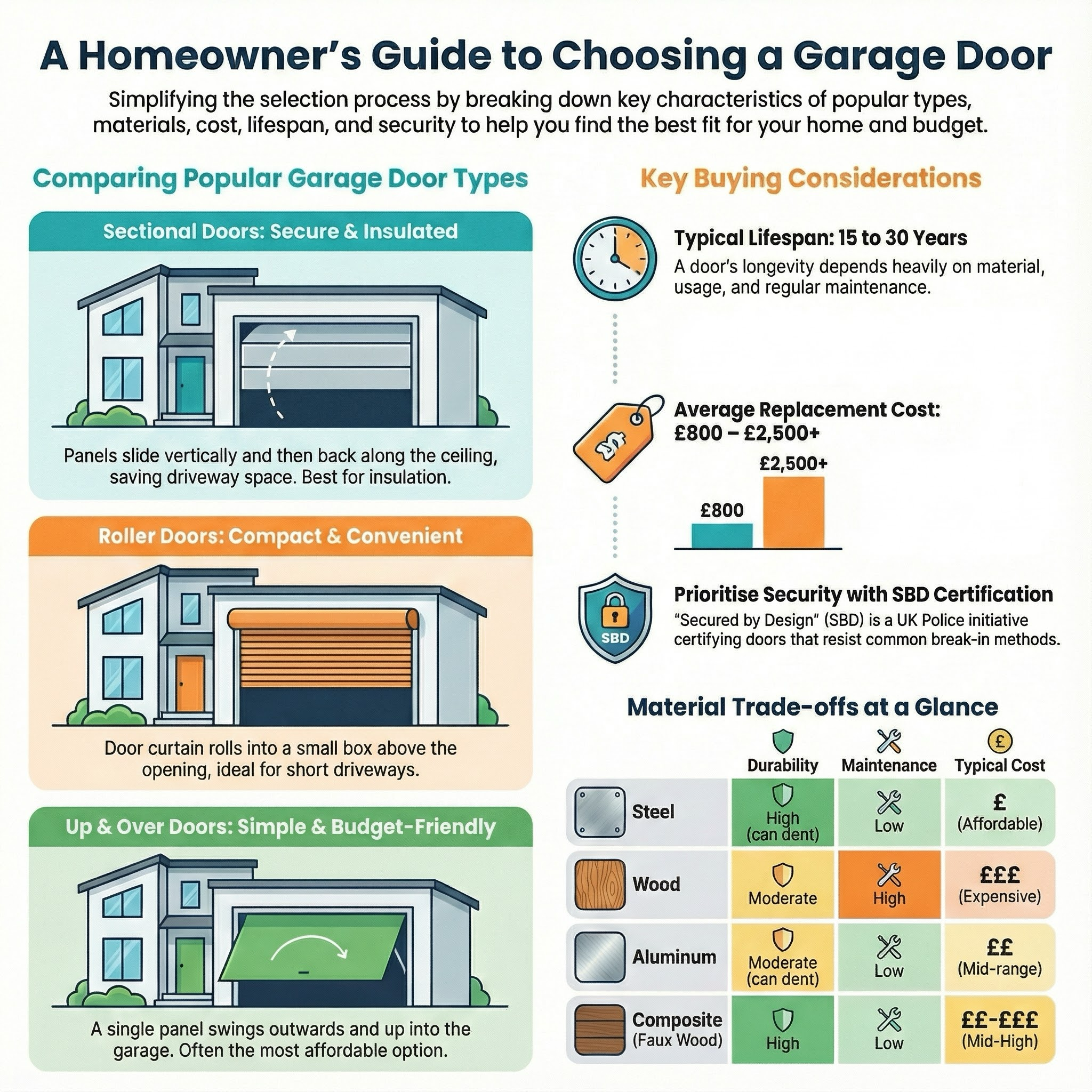
Garage Doors explained
In the UK, garage doors are subject to heavy use and the unpredictable British weather, which can lead to rusted components and mechanical fatigue. This guide outlines what to expect when hiring a professional, the costs involved for 2025/26, and how to ensure your door remains safe and compliant with UK standards.
| Item | Low £ | High £ | Notes |
|---|---|---|---|
| Call-out Charge / Diagnostic | £80 | £130 | Often includes the first 30-60 mins of labour. |
| Cable Replacement (Pair) | £110 | £190 | Includes parts and labour for both sides. |
| Spring Replacement (Pair) | £160 | £380 | Torsion springs are more expensive than extension springs. |
| Replacement Roller/Section | £90 | £250 | Depends on door material (Steel vs Timber). |
| New Electric Motor/Opener | £350 | £700 | Includes unit and installation of a belt/chain drive. |
| Handset/Remote Replacement | £45 | £95 | Includes programming to the existing motor. |
Prices vary based on your location in the UK and the brand of the door (e.g., Hörmann and Garador parts often carry a premium). Total costs generally include VAT, but always confirm this with your tradesperson before work begins.
While basic lubrication and tightening of visible bolts are suitable for DIY, major garage door repairs should always be handled by a professional. The springs on a garage door are under immense tension; if they snap or are released incorrectly during a DIY attempt, they can cause life-changing injuries or significant property damage.
Furthermore, if your door is electric, any wiring work should ideally be checked by a Part P competent person. Professional installers also ensure the door is "force tested" to meet UK CA/CE marking requirements, protecting you from liability if the door were to injure a third party.
Yes, all automated doors must have a manual release mechanism. This is usually a red pull-cord attached to the motor carriage. Ensure you know how to operate this before an emergency occurs.
For most UK households, an annual service is recommended. This involves checking the balance, lubricating moving parts, and ensuring safety sensors are clean and aligned.
This is usually due to dry rollers or unlubricated tracks. However, it can also signal that the door is out of alignment and rubbing against the frame. Stop using the door if the noise is metallic or grinding.
If the repair costs exceed 50% of the price of a new door, or if the door is more than 15 years old, replacement is often better value. Modern doors offer significantly better insulation and security features.
Small dents in steel doors can sometimes be "massaged" out, but deep creases usually require a panel replacement. If it’s a sectional door, you can often replace just the damaged section rather than the whole door.
This guide was written with AI assistance and is intended for general information only. Prices are estimates based on UK averages and may vary by region. Always get at least three quotes and consult a qualified professional before starting any work.
Ask follow-ups in plain English. The AI explains options, sequencing and what to ask the garage doors — so you walk in informed.
A misaligned garage door is more than just a noisy nuisance; it is a significant security risk and a potential safety hazard. When a door is out of plumb, it pl...
READ GUIDE →GuideGarage door springs are the unsung heroes of your home’s exterior, doing the heavy lifting every time you leave for work or return home. Because these springs o...
READ GUIDE →GuideIndustrial garage doors, including roller shutters and sectional overhead doors, are heavy-duty systems designed for security and frequent use. For UK homeowner...
READ GUIDE →GuideScope of Works • Inspect garage opening and measure dimensions • Remove existing door (if applicable) and prepare the opening • Assemble and install the new gar...
READ GUIDE →GuideUpgrading to an electric garage door is one of the most practical home improvements for UK homeowners. Beyond the obvious convenience of opening your door at th...
READ GUIDE →GuideA garage door is often the largest moving component in a UK home, yet it is frequently the most neglected until it fails. Beyond providing security for your veh...
READ GUIDE →