Instant
01 · Ask
Ask the AI a follow-up
Got more questions about glass Polishing? Describe the bit you're unsure about — the AI explains options, sequencing and what to ask the glazier.

Light scratches on windows, splashbacks or mirrors polished out — without ripping out the glass.
You've read the brief on glass Polishing. Now lean on us to find the right glazier — and stay in control of the job.
Got more questions about glass Polishing? Describe the bit you're unsure about — the AI explains options, sequencing and what to ask the glazier.
Costs, timelines, pitfalls and the right questions to ask before any glazier starts on glass Polishing.
Itemised quotes from up to 3 local glaziers on glass Polishing — so you can compare like-for-like, not lump sums.
Ready when you are
Enter your postcode and get free quotes from local pros.
Four moves that separate a smooth job from a nightmare.
Caused by over-polishing one spot, creating a "dip" that bends light and makes views look wavy.
If the glass gets too hot during polishing, it can undergo thermal shock and crack instantly.
Polishing compounds are very fine and can stain brickwork or carpets if the area isn't properly masked.
Very deep gouges or chips near the edge of a pane may be impossible to polish out without risking a breakage.
Indicative UK ranges and what affects price.
By job type
Quote spread is typically ± 18% — always get 3 quotes.
Glazier quick-view
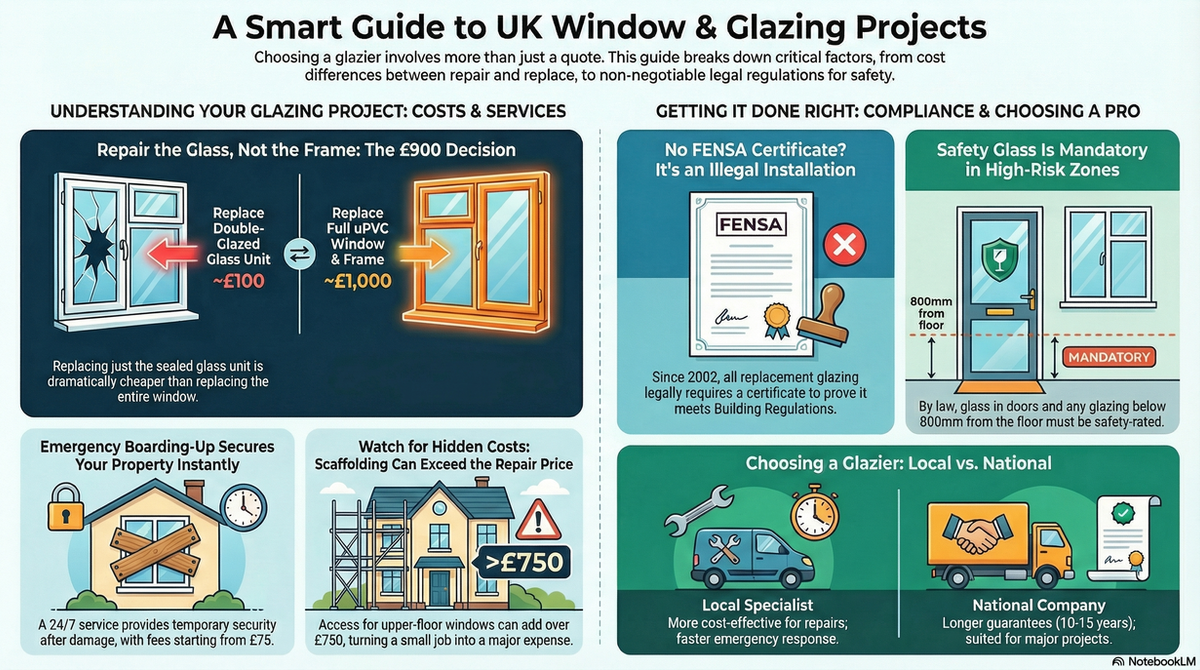
For UK homeowners, this process is particularly valuable for large double-glazed units or toughened glass doors where replacement costs can run into thousands of pounds. By opting for restoration, you save on material costs and avoid the disruption of removing entire frames.
| Item / Service | Low £ | High £ | Notes |
|---|---|---|---|
| Call-out / Minimum Charge | £120 | £180 | Covers travel and first hour of work. |
| Small Window (Light Scratches) | £80 | £150 | Per pane, excluding call-out fee. |
| Large Patio Door / Shopfront | £250 | £450 | Depends on scratch depth and height. |
| Full Day Rate | £450 | £650 | Best value for multiple windows or sites. |
Several factors influence the final quote, including the depth of the damage, the type of glass (toughened vs. laminated), and accessibility. Scratches near the edges of a frame are harder to reach and may require more time and precision.
While DIY glass polishing kits are available for very light "hairline" scratches, they carry a high risk of causing optical distortion or "lens effect." Professional technicians use specialized equipment that maintains a flat surface across the glass, preventing the wavy appearance common with amateur attempts.
If a scratch is deep enough to catch your fingernail, it almost certainly requires professional-grade abrasives and high-speed machinery to remove safely.
Most scratches can be removed, but if the scratch is so deep that you can't see the bottom of it or it has caused a visible "V" in the glass, it may be too deep to polish without causing significant distortion.
Professional polishing only removes a few microns of the surface. While it technically makes the glass thinner, it is such a negligible amount that it does not impact the structural safety or thermal properties of the pane.
Polishing is typically 50-80% cheaper than replacement, especially for bespoke glass, large units, or high-end frames where the labour to replace the unit is intensive.
If the tint is "body-tinted" (all the way through), it can be polished. However, if the glass has a surface coating (like Low-E or reflective film) on the side being polished, the coating will be removed, leaving a visible patch.
Most professionals use a "wet" system which creates a milky slurry rather than dry dust. This is contained by masking, but a reputable tradesperson will always clean the surrounding area thoroughly before leaving.
This guide was written with AI assistance and is intended for general information only. Prices are estimates based on UK averages and may vary by region. Always get at least three quotes and consult a qualified professional before starting any work.
Ask follow-ups in plain English. The AI explains options, sequencing and what to ask the glazier — so you walk in informed.
Specialist leadwork is a hallmark of British architectural heritage, providing both decorative charm and essential weatherproofing for UK homes. Whether you are...
READ GUIDE →GuideGlass restoration is a highly specialised service designed to return damaged, scratched, or weathered glass to its original clarity. For UK homeowners, this is ...
READ GUIDE →GuideUpgrading or repairing residential glazing is one of the most effective ways to improve a UK home’s energy efficiency, security, and noise insulation. Whether y...
READ GUIDE →GuideMirror Mounting Guide Scope of Works Survey & mark‑up wall, locate studs/pipes and confirm mirror weight. Supply heavy‑duty fixings matched to plasterboard,...
READ GUIDE →GuideInstalling a glass shower screen is a sophisticated upgrade that transforms the look and feel of a UK bathroom. Beyond the aesthetic appeal, a professionally fi...
READ GUIDE →GuideGlass splashbacks have become a staple in modern UK kitchen design, offering a sleek, hygienic alternative to traditional tiling. Beyond their aesthetic appeal,...
READ GUIDE →