Instant
01 · Ask
Ask the AI a follow-up
Got more questions about e-Design Consultation? Describe the bit you're unsure about — the AI explains options, sequencing and what to ask the interior designer.

Remote interior design — questionnaire, photos, then a detailed digital design package with mood board and shopping list.
You've read the brief on e-Design Consultation. Now lean on us to find the right interior designer — and stay in control of the job.
Got more questions about e-Design Consultation? Describe the bit you're unsure about — the AI explains options, sequencing and what to ask the interior designer.
Costs, timelines, pitfalls and the right questions to ask before any interior designer starts on e-Design Consultation.
Itemised quotes from up to 3 local interior designers on e-Design Consultation — so you can compare like-for-like, not lump sums.
Ready when you are
Enter your postcode and get free quotes from local pros.
Four moves that separate a smooth job from a nightmare.
The biggest risk in e-design is the homeowner providing wrong dimensions; always use a laser measurer and provide a "check-measure" for critical fitments.
Paint colours and fabric textures look different on every monitor; always order physical samples before committing to a full room of paint.
The UK retail market moves fast; items on a shopping list may sell out within weeks, requiring the designer to suggest alternatives.
Without a professional on-site, it is easy to underestimate the "heaviness" of a piece of furniture in a small UK room.
Indicative UK ranges and what affects price.
By job type
Quote spread is typically ± 18% — always get 3 quotes.
Interior Designer quick-view
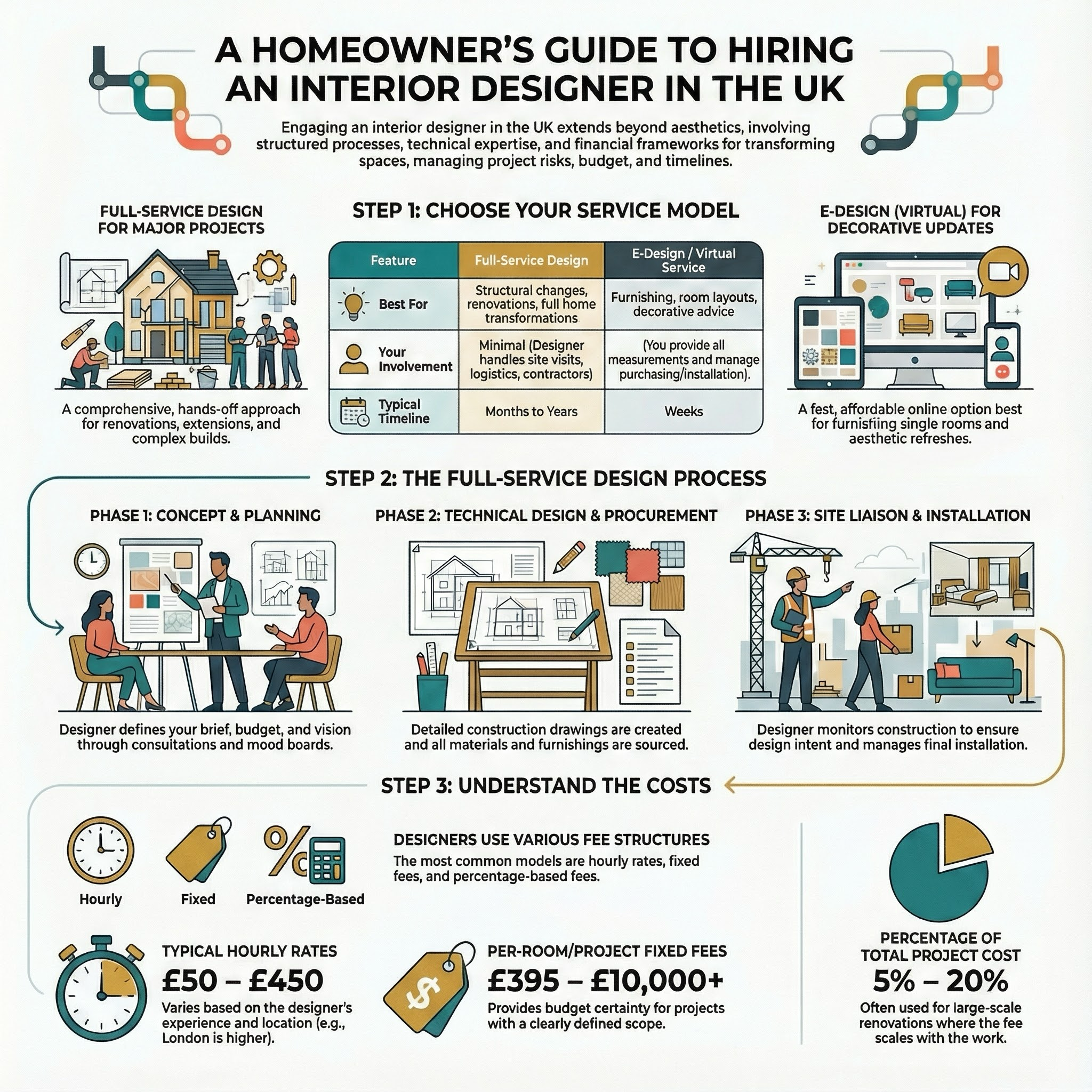
Interior Designer explained
Whether you are looking to refresh a single bedroom or plan a complete open-plan living extension, an e-design consultation offers a structured roadmap. It bridges the gap between a DIY Pinterest board and a high-end bespoke renovation, ensuring your space is both functional and aesthetically cohesive.
E-design is typically charged as a fixed-fee package per room, which helps homeowners maintain strict control over their renovation budget. Prices vary based on the designer's experience and whether you require basic 2D layouts or photorealistic 3D visualisations.
| Service | Low £ | High £ | Notes |
|---|---|---|---|
| Initial Video Consultation | £75 | £150 | A 60-minute deep dive into your style and layout issues. |
| Single Room Concept Board | £150 | £350 | Mood board and colour palette only; no floor plans. |
| Full E-Design Room Package | £350 | £950 | Includes floor plans, 3D renders, and a full shopping list. |
| Open-Plan Living/Kitchen | £600 | £1,500 | Higher cost due to the complexity of zones and lighting. |
| Whole House (3-Bed) | £2,000 | £5,000 | Comprehensive digital design for all primary living spaces. |
Prices generally include VAT but exclude the cost of the actual furniture and materials. Most designers offer a "trade discount" pass-through, which can often save you enough money on furniture to cover the design fee itself.
While many homeowners enjoy choosing their own cushions, a professional e-designer understands spatial ergonomics and lighting layers that DIYers often overlook. They prevent "expensive mistakes," such as buying a sofa that is too large for the room or a rug that is too small for the seating area.
Professional designers have access to trade-only suppliers and software that can accurately simulate how natural light will affect your chosen paint colours at different times of day.
If your project involves moving walls or significant electrical changes, an e-designer provides the vision, but you will still need to consult a local contractor to ensure structural integrity and compliance with UK Building Regulations.
No, the shopping list is a recommendation. You are in full control of your spending and can purchase items at your own pace or swap them for cheaper alternatives if you find them.
Yes, but with caveats. They can provide the aesthetic design and layout, but you will still need a specialist installer to verify plumbing points and technical specifications on-site.
Most professional e-design packages include at least one round of revisions. It is vital to be honest during the feedback stage so the designer can pivot the style to your liking.
E-design is primarily for "cosmetic" and layout planning. If you are removing load-bearing walls, you need a structural engineer and an architect alongside your designer.
Stand in each corner of the room and take wide-angle shots in natural daylight. Also, take "elevations" (straight-on shots) of each wall, including windows, radiators, and sockets.
Not always. Some designers charge a lower fee and keep the commission, while others charge a higher fee and pass 100% of the discount to you. Always clarify this upfront.
This guide was written with AI assistance and is intended for general information only. Prices are estimates based on UK averages and may vary by region. Always get at least three quotes and consult a qualified professional before starting any work.
Ask follow-ups in plain English. The AI explains options, sequencing and what to ask the interior designer — so you walk in informed.
Space planning is the architectural foundation of any successful interior design project. In the UK, where homes range from compact Victorian terraces to sprawl...
READ GUIDE →GuideInterior design services. UK costs and process.
READ GUIDE →GuideSpecialist kitchen design service. UK costs.
READ GUIDE →GuideBathroom design and planning service. UK costs.
READ GUIDE →GuideColour scheming and soft furnishing. UK costs.
READ GUIDE →GuideLounge interior design. UK costs.
READ GUIDE →