Instant
01 · Ask
Ask the AI a follow-up
Got more questions about interior Space Planning? Describe the bit you're unsure about — the AI explains options, sequencing and what to ask the interior designer.

Furniture layout, room flow and storage planning — before you buy or rearrange. Saves expensive mistakes.
You've read the brief on interior Space Planning. Now lean on us to find the right interior designer — and stay in control of the job.
Got more questions about interior Space Planning? Describe the bit you're unsure about — the AI explains options, sequencing and what to ask the interior designer.
Costs, timelines, pitfalls and the right questions to ask before any interior designer starts on interior Space Planning.
Itemised quotes from up to 3 local interior designers on interior Space Planning — so you can compare like-for-like, not lump sums.
Ready when you are
Enter your postcode and get free quotes from local pros.
Four moves that separate a smooth job from a nightmare.
Creating layouts that look good on paper but leave unusable corners or awkward gaps in reality.
Choosing pieces that are too large for the room, making a space feel cramped and difficult to navigate.
Designing a layout without considering where the light switches and sockets are currently located (leading to expensive rewiring).
Focusing on the "look" of a room while failing to incorporate enough practical storage for everyday life.
Indicative UK ranges and what affects price.
By job type
Quote spread is typically ± 18% — always get 3 quotes.
Interior Designer quick-view
Interior Designer explained
Professional space planning ensures your home flows logically, feels spacious, and functions perfectly for your specific lifestyle. It moves beyond choosing colours and fabrics, focusing instead on the structural layout, furniture placement, and ergonomic efficiency of a room.
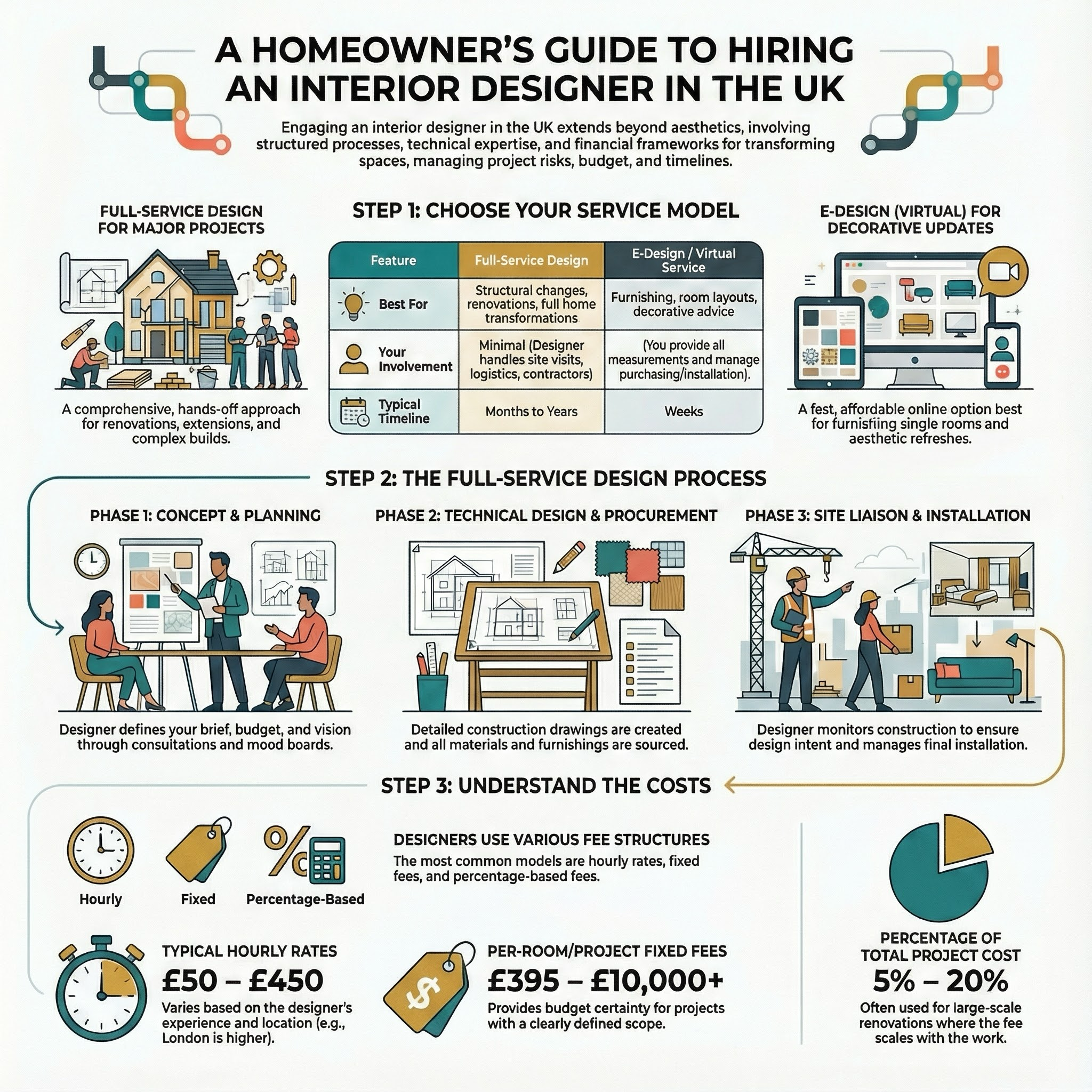
Interior design fees vary significantly based on your location (with London and the South East commanding a premium) and the complexity of the project. Most designers offer either a fixed fee per room or an hourly rate for consultancy.
| Item | Low £ | High £ | Notes |
|---|---|---|---|
| Initial Consultation | £150 | £500 | Often 1-2 hours; some designers deduct this from the final fee. |
| Single Room Layout (2D) | £350 | £850 | Includes floor plans and furniture suggestions. |
| Full House Space Planning | £2,500 | £7,500+ | Scaling with the number of rooms and complexity. |
| Hourly Rate | £60 | £180 | Standard for ad-hoc advice or revisions. |
| 3D Rendering (per room) | £250 | £600 | High-quality digital visualisations. |
Costs are influenced by the level of detail required. A basic 2D sketch is significantly cheaper than a photorealistic 3D render that includes bespoke cabinetry designs and specific lighting schemes.
While DIY apps allow homeowners to "drag and drop" furniture, they often lack the technical precision required for structural changes. A professional interior designer understands ergonomics—the science of how humans interact with their environment—ensuring you don't end up with a sofa that blocks a radiator or a kitchen island that prevents the dishwasher from opening.
If your space planning involves moving walls, plumbing, or electrical mains, you must consult a professional to ensure compliance with UK Building Regulations.
An interior designer focuses on the structure, layout, and functionality of a space (including space planning). A decorator primarily focuses on the aesthetic "surface" elements like wallpaper, paint, and soft furnishings.
If your space planning involves removing or moving any internal walls, you must consult a structural engineer to determine if the wall is load-bearing and if a RSJ (steel beam) is required.
Yes. A professional designer will take measurements of your current pieces and incorporate them into the new floor plan to ensure they fit the scale and flow of the redesigned room.
It is a technical drawing where every centimetre on the paper represents a specific distance in the real room (e.g., a 1:50 scale). This is vital for ensuring furniture actually fits before you buy it.
Absolutely. Well-planned homes feel larger and more logical to prospective buyers. Open-plan layouts and clever storage solutions are high-value features in the UK property market.
This guide was written with AI assistance and is intended for general information only. Prices are estimates based on UK averages and may vary by region. Always get at least three quotes and consult a qualified professional before starting any work.
Ask follow-ups in plain English. The AI explains options, sequencing and what to ask the interior designer — so you walk in informed.
E-design (electronic design) has revolutionised how UK homeowners approach interior renovations. By delivering professional expertise through digital platforms,...
READ GUIDE →GuideInterior design services. UK costs and process.
READ GUIDE →GuideSpecialist kitchen design service. UK costs.
READ GUIDE →GuideBathroom design and planning service. UK costs.
READ GUIDE →GuideColour scheming and soft furnishing. UK costs.
READ GUIDE →GuideLounge interior design. UK costs.
READ GUIDE →