Instant
01 · Ask
Concept, fit-out or both?
Some designers do paper only; others run the whole job. Describe what you need and the AI tells you which kind of designer to look for.

Room layouts, colour, lighting and styling — costed by room, hour or full project.
Read the brief on fee models, trade discounts and visualisations — then let Three local designers quote.
Some designers do paper only; others run the whole job. Describe what you need and the AI tells you which kind of designer to look for.
Fee models, RIBA work stages 0–7, trade discount disclosure, sample boards vs CGI. Know the language before the first meeting.
Three local designers quote on the same brief — concept, deliverables, project management, supplier discount terms. Compare like-for-like.
Ready when you are
Enter your postcode and get free quotes from local pros.
Four moves that separate a smooth job from a nightmare.
Hourly, fixed fee, percentage of project, or product mark-up — interior designers charge any of four ways. Pin down which before any work starts.
'I want something modern' is not a brief. Insist on a written, signed brief covering scope, style, budget and timeline — change it later costs extra.
Designers often buy at trade prices and pass on (or keep) the discount. Get clarity on whether you pay trade or retail through them.
Mood boards are vague; CGI or 3D visualisations let you see the actual room. Worth £400 to avoid a £4k mistake.
Indicative UK ranges and what affects price.
By job type
Quote spread is typically ± 18% — always get 3 quotes.
Visual breakdown of costs, timelines and the questions you should be asking.
Interior Designer quick-view
Interior Designer explained
Everything you need to know before hiring a interior designer.
An interior designer does far more than choose paint colours and cushions. They are spatial experts who transform the functionality and aesthetic of your home through clever layouts, bespoke lighting schemes, and curated material palettes.
From reimagining a cramped kitchen-diner to overseeing a full-scale home renovation, these professionals bridge the gap between an architect and a decorator. They ensure every square inch of your property is utilised efficiently while reflecting your personal style and lifestyle needs.
Hiring a designer is an investment in your property’s value and your daily wellbeing. They handle the technical details—such as electrical plans and plumbing locations—long before the first piece of furniture arrives, preventing costly mistakes during the build phase.
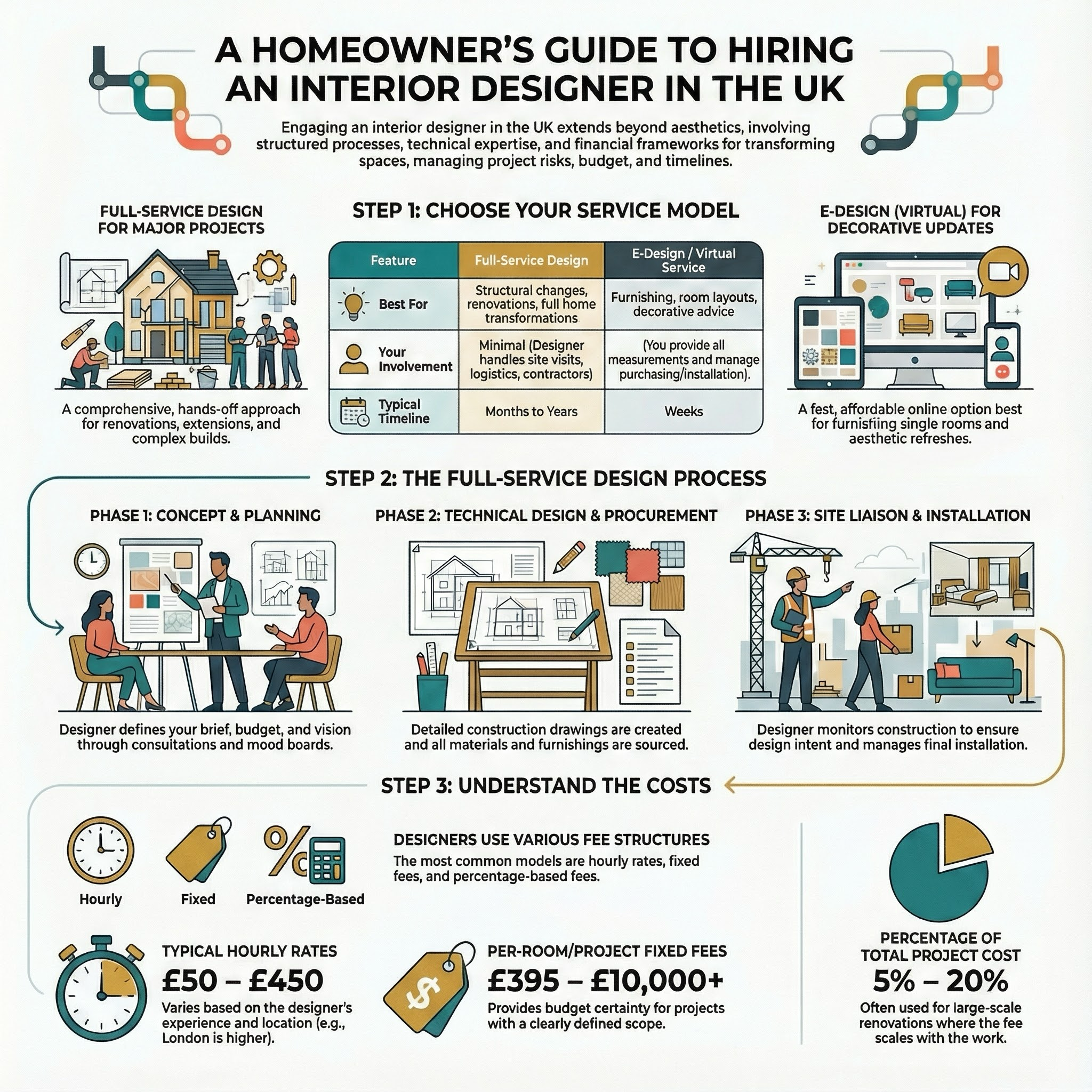
The process of working with an interior designer is collaborative and structured. While every studio has its own flair, most projects follow a clear path from concept to completion:
While many homeowners enjoy DIY decorating, a professional interior designer brings technical expertise that goes beyond aesthetics. They understand Building Regulations, particularly regarding fire safety, accessibility, and structural changes that might require a structural engineer's input.
Designers are skilled in "spatial awareness," spotting opportunities to move walls or doorways that a layman might miss. They also provide access to a trusted network of reliable tradespeople and high-quality wholesalers, often passing on trade discounts that can offset a portion of their design fee.
Perhaps most importantly, they act as a buffer between you and the stress of a renovation. They manage the timeline, handle delivery issues, and ensure that the "honey-oak" floor you saw online doesn't arrive looking bright orange in your specific North-facing light.
Interior design fees vary significantly based on the designer's experience, your location, and the complexity of the project. Some charge a flat fee per room, while others work on a percentage of the total project spend.
| Service | Low £ | High £ | Notes |
|---|---|---|---|
| Initial Consultation | £150 | £500 | Usually 1-2 hours; may be credited back if hired. |
| Single Room Design | £400 | £1,500 | Includes mood boards, floor plans, and shopping lists. |
| Full House Concept | £3,000 | £12,000+ | Comprehensive design for a 3-4 bedroom home. |
| Project Management | 10% | 20% | Percentage of the total contractor/materials spend. |
| Bespoke Joinery Design | £300 | £800 | Technical drawings for wardrobes or media units. |
Costs are influenced by the level of detail required. A "remote" or "e-design" service is the most affordable option, providing you with a digital shopping list, whereas a full "turnkey" service handles everything from construction to hanging the curtains.
Finding a designer who shares your vision and respects your budget is crucial for a successful project. Follow these steps to find the right match:
Questions to ask before hiring:
An interior designer focuses on the structure, function, and spatial flow of a room, often involving technical drawings and project management. An interior decorator focuses primarily on the surface aesthetics—paint, wallpaper, furniture, and fabrics—without altering the room's layout or structural elements.
No. Many designers offer "consultation only" packages for a few hundred pounds, providing you with a professional roadmap you can execute yourself over time. However, for full-service design and procurement, most professionals suggest a minimum project spend to make the fees cost-effective.
Ideally, you should hire a designer at the same time as your architect or before you hire a builder. This allows them to influence the position of walls, windows, and sockets before construction begins, saving you from expensive "change orders" later in the build.
Absolutely. Most designers are happy to incorporate sentimental or high-quality existing pieces into a new scheme. Be sure to mention these items during the initial consultation so they can be measured and factored into the new floor plans.
Describe the job in plain English. The AI asks a few smart questions, then tells you whether a interior designer is the right call, what it should cost, and what to ask before they start.
Bathroom design and planning service. UK costs.
READ GUIDE →GuideBedroom interior design. UK costs.
READ GUIDE →GuideColour scheming and soft furnishing. UK costs.
READ GUIDE →GuideE-design (electronic design) has revolutionised how UK homeowners approach interior renovations. By delivering professional expertise through digital platforms,...
READ GUIDE →GuideHome office design. UK costs.
READ GUIDE →GuideInterior design services. UK costs and process.
READ GUIDE →GuideSpecialist kitchen design service. UK costs.
READ GUIDE →GuideLounge interior design. UK costs.
READ GUIDE →GuidePeriod property interior design. UK costs.
READ GUIDE →Holiday let interior design. UK costs.
READ GUIDE →GuideSpace planning is the architectural foundation of any successful interior design project. In the UK, where homes range from compact Victorian terraces to sprawl...
READ GUIDE →