Instant
01 · Ask
Lockout, change or upgrade?
Lost keys, moving in, insurance upgrade? Describe and the AI tells you what kind of locksmith and what spec.

24-hour locksmith for lockouts, lock changes after break-ins, or sudden key failures.
Read the brief on MLA membership, BS3621 locks and bait-and-switch quotes — then let Three local locksmiths quote.
Lost keys, moving in, insurance upgrade? Describe and the AI tells you what kind of locksmith and what spec.
MLA membership, BS3621, PAS 24, anti-snap cylinders, smart lock standards. Know the protection levels.
Three local locksmiths quote on the same spec — hardware, fit, warranty — so the cheapest isn't accidentally insecure.
Ready when you are
Enter your postcode and get free quotes from local pros.
Four moves that separate a smooth job from a nightmare.
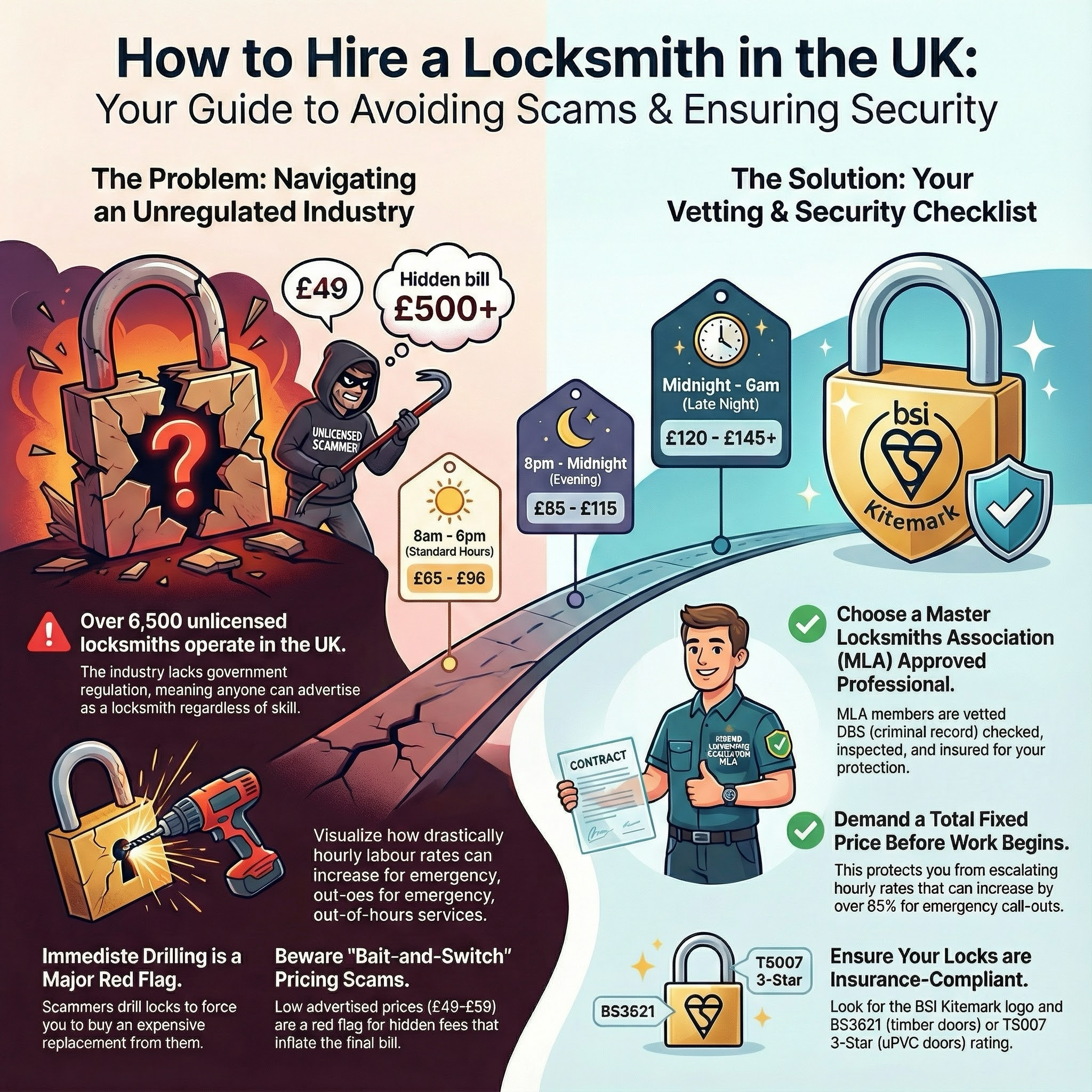
Anyone can call themselves a locksmith. MLA (Master Locksmiths Association) means vetted, DBS-checked, insured. Insist on it.
Some 'locksmith' adverts quote £29 then charge £350 on-site. MLA members quote upfront. If the price isn't fixed before they arrive, walk.
Most home insurers require BS3621 mortice deadlocks or PAS 24 multi-points on external doors. Without these, claims can be refused.
Standard euro cylinders snap in seconds. Anti-snap / Sold Secure SS312 Diamond rated are the upgrade. £30 hardware, massive security gain.
Indicative UK ranges and what affects price.
By job type
Quote spread is typically ± 18% — always get 3 quotes.
Locksmith quick-view
Locksmith explained
Emergency locksmith callouts in the UK typically cost £90–£250 for the visit, plus parts and any extra work needed. Out-of-hours rates (evenings, weekends, bank holidays) are usually 30-50% above weekday daytime rates. Most genuine emergencies — lockouts, broken keys, post break-in re-secure — are reachable within 30-60 minutes by a local locksmith.
Typical UK lockout response: locksmith arrives, picks the lock without damage, charges callout + fix. Non-destructive entry is the goal; a good locksmith doesn't drill or break the lock unless absolutely necessary.
| Service | Daytime callout | Out-of-hours |
|---|---|---|
| Standard lockout (front door) | £70–£140 | £100–£200 |
| UPVC / composite door lockout | £90–£180 | £140–£250 |
| Broken key extraction | £60–£140 | £90–£200 |
| Post break-in secure (boards + locks) | £200–£500 | £300–£700 |
| Whole-house re-key after lost keys | £200–£500 | £300–£700 |
| Lock change after mid-tenancy | £100–£250 | £150–£350 |
| Car lockout (modern transponder) | £100–£250 | £150–£400 |
Emergency locksmith scams are unfortunately common. Avoid:
Reputable indicators:
Urban areas: 30-60 minutes typical. Rural areas: 60-120 minutes. National "rapid response" services often quote 20-30 minutes but local independents are usually similarly quick and cheaper.
Reputable locksmiths use non-destructive picks and bypass tools for most lockouts. Drilling is reserved for high-security locks that resist picking, or where speed is critical. Always confirm whether destruction is needed before they start.
Use Master Locksmiths Association (MLA) finder, ask local neighbours, read recent reviews. Be wary of operators advertising £39 lockouts that mysteriously become £400 once on-site. Always get written quote before work starts.
Many home insurance policies include £150-£300 of emergency assistance cover (locksmith, plumber, electrician). Check your policy or call your insurer's emergency hotline before paying directly.
Yes — keep a spare key with a trusted neighbour, friend or relative; install a smart lock (keyless entry); keep an emergency locksmith's number saved in your phone; never lock yourself out by checking you have your keys before pulling the door closed.
Yes — even if the original locks weren't compromised, the security baseline has been disturbed and any keys may be in unknown hands. Use the opportunity to upgrade to anti-snap cylinders and BS 3621 mortice locks where applicable.
Want a local pro to handle this? An MLA-certified local locksmith with a clear pricing structure is the right call. Save their number now while everything's working — locksmith decisions made calmly are much better than under pressure during a lockout.
This guide was written with AI assistance and is intended for general information only. Prices are estimates based on UK averages and may vary by region. Always get at least three quotes and consult a qualified professional before starting any work.
Ask follow-ups in plain English. The AI explains options, sequencing and what to ask the locksmith — so you walk in informed.
Van crime in the UK remains a significant concern for tradespeople and homeowners alike, with tool theft occurring every few minutes. Standard factory-fitted lo...
READ GUIDE →GuideGetting locked out of your vehicle is a stressful experience, whether you have left the keys in the ignition, trapped them in the boot, or lost them entirely. M...
READ GUIDE →GuideGetting locked out of your home is a stressful experience that requires a fast, reliable solution. Whether you have lost your keys, snapped one in the barrel, o...
READ GUIDE →GuideA stiff or misaligned door is more than a daily nuisance; it is a significant security vulnerability. For UK homeowners, a door that doesn't latch properly can ...
READ GUIDE →GuideGetting locked out of your vehicle is more than a minor inconvenience; in the UK, it often happens at the most inopportune moments, from rain-swept supermarket ...
READ GUIDE →GuideFor UK tradespeople and homeowners, a Ford Transit is often more than just a vehicle; it is a mobile workshop and a livelihood. Unfortunately, the Transit remai...
READ GUIDE →