Instant
01 · Ask
Ask the AI a follow-up
Got more questions about door Opening & Unlocking? Describe the bit you're unsure about — the AI explains options, sequencing and what to ask the locksmith.

Locked out, lost keys or broken lock — what a locksmith does to open without damage.
You've read the brief on door Opening & Unlocking. Now lean on us to find the right locksmith — and stay in control of the job.
Got more questions about door Opening & Unlocking? Describe the bit you're unsure about — the AI explains options, sequencing and what to ask the locksmith.
Costs, timelines, pitfalls and the right questions to ask before any locksmith starts on door Opening & Unlocking.
Itemised quotes from up to 3 local locksmiths on door Opening & Unlocking — so you can compare like-for-like, not lump sums.
Ready when you are
Enter your postcode and get free quotes from local pros.
Four moves that separate a smooth job from a nightmare.
A common burglary technique on older uPVC doors; professional locksmiths should always recommend anti-snap replacements.
Often the lock isn't broken, but the door has shifted on its hinges, preventing the bolts from throwing correctly.
Non-branded locks found online often lack the internal security features required by UK insurers, potentially voiding your policy.
Caused by worn keys or dry mechanisms; regular lubrication with graphite powder (not WD-40) can prevent this.
Indicative UK ranges and what affects price.
By job type
Quote spread is typically ± 18% — always get 3 quotes.
Locksmith quick-view
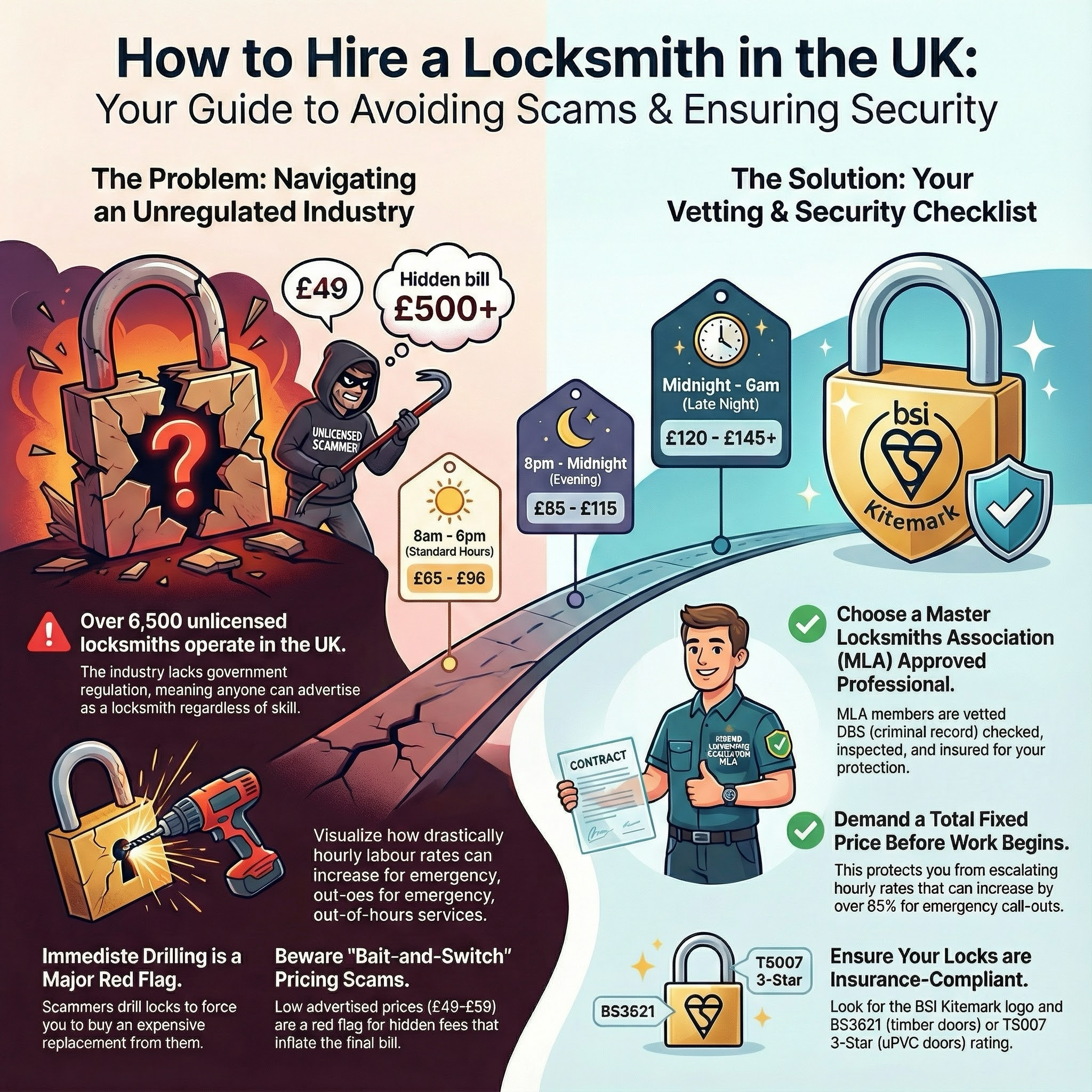
Locksmith explained
Modern UK doors use a variety of complex locking mechanisms, from traditional timber mortice locks to uPVC multi-point systems. A skilled tradesperson focuses on non-destructive entry (NDE) techniques to save you the cost of unnecessary replacements.
Prices vary based on the time of day, your location in the UK, and the security level of the hardware required. Emergency call-outs during unsociable hours typically carry a significant premium.
| Item | Low £ | High £ | Notes |
|---|---|---|---|
| Standard Call-out (Daytime) | £70 | £110 | Includes travel and first 30-60 mins of labour. |
| Emergency/OOH Call-out | £120 | £220 | Nights, weekends, and Bank Holidays. |
| Hourly Labour Rate | £60 | £95 | Charged after the initial call-out period. |
| Standard Euro Cylinder | £35 | £75 | Basic security for uPVC or composite doors. |
| High-Security Cylinder (3-Star) | £85 | £160 | Anti-snap, anti-drill, and anti-pick protection. |
| Mortice Lock (BS 3621) | £60 | £130 | Insurance-approved deadlocks or sashlocks. |
Factors affecting the final bill include the complexity of the lock (e.g., high-security brands like Avocet or Mul-T-Lock), the need for additional keys, and whether the door frame requires repair following a forced entry.
While DIY might seem tempting, modern locks are designed specifically to resist amateur tampering. Attempting to drill your own lock often results in "deadlocking" the mechanism permanently or damaging the expensive door leaf, leading to a much higher repair bill.
Professional locksmiths carry specialist "over-lifting" and "picking" tools that are not available to the public. Using a pro ensures your home remains valid for insurance purposes.
The locksmith industry in the UK is currently unregulated, meaning anyone can trade without a license. It is vital to vet your tradesperson thoroughly.
In many cases, yes. Professional locksmiths use non-destructive entry (NDE) techniques like picking or bumping. However, if the lock is high-security or the internal mechanism has failed, drilling may be the only option.
Many "Home Emergency" add-ons cover locksmith call-outs for lost keys or lock failures. Check your policy schedule; you may need to pay the locksmith upfront and claim the cost back later.
A 3-star cylinder offers the highest level of protection against snapping, drilling, and picking. While not always mandatory, they are highly recommended for uPVC and composite doors to deter burglars.
Phone quotes are often "starting from" estimates. The price can increase if the lock is a high-security model, if the job takes longer than an hour, or if expensive replacement parts are required.
Yes. This is usually a problem with the multi-point locking gearbox or door alignment rather than the key cylinder itself. A locksmith can realign the door or replace the internal gearbox.
Yes. Any reputable locksmith will ask for proof of ID and proof that you live at the property (such as a utility bill or driving licence) before they begin work to ensure they aren't assisting an unauthorised entry.
This guide was written with AI assistance and is intended for general information only. Prices are estimates based on UK averages and may vary by region. Always get at least three quotes and consult a qualified professional before starting any work.
Ask follow-ups in plain English. The AI explains options, sequencing and what to ask the locksmith — so you walk in informed.
Van crime in the UK remains a significant concern for tradespeople and homeowners alike, with tool theft occurring every few minutes. Standard factory-fitted lo...
READ GUIDE →GuideGetting locked out of your vehicle is a stressful experience, whether you have left the keys in the ignition, trapped them in the boot, or lost them entirely. M...
READ GUIDE →GuideA stiff or misaligned door is more than a daily nuisance; it is a significant security vulnerability. For UK homeowners, a door that doesn't latch properly can ...
READ GUIDE →GuideGetting locked out of your vehicle is more than a minor inconvenience; in the UK, it often happens at the most inopportune moments, from rain-swept supermarket ...
READ GUIDE →GuideFor UK tradespeople and homeowners, a Ford Transit is often more than just a vehicle; it is a mobile workshop and a livelihood. Unfortunately, the Transit remai...
READ GUIDE →GuideEnsuring your home is secure starts with high-quality locks and professional installation. Whether you have recently moved house, experienced a lockout, or simp...
READ GUIDE →