Instant
01 · Ask
Ask the AI a follow-up
Got more questions about key replacement? Describe the bit you're unsure about — the AI explains options, sequencing and what to ask the locksmith.

Lost, broken or worn keys replaced — by an auto or domestic locksmith with key-cutting on the spot.
You've read the brief on key replacement. Now lean on us to find the right locksmith — and stay in control of the job.
Got more questions about key replacement? Describe the bit you're unsure about — the AI explains options, sequencing and what to ask the locksmith.
Costs, timelines, pitfalls and the right questions to ask before any locksmith starts on key replacement.
Itemised quotes from up to 3 local locksmiths on key replacement — so you can compare like-for-like, not lump sums.
Ready when you are
Enter your postcode and get free quotes from local pros.
Four moves that separate a smooth job from a nightmare.
Fitting a cylinder that is too long for the door. This leaves it exposed to snapping and is a major security flaw.
Cheap "high street" key cuts often have burrs or slight misalignments that can wear down the internal pins of your new lock prematurely.
Never use WD-40 in a lock barrel; it attracts grit and gums up the pins. Always use a dedicated graphite-based lubricant.
If your door handle feels floppy, the problem is likely the internal spring or multipoint gearbox, not the key. Replacing the key won't fix the underlying mechanical failure.
Indicative UK ranges and what affects price.
By job type
Quote spread is typically ± 18% — always get 3 quotes.
Locksmith quick-view
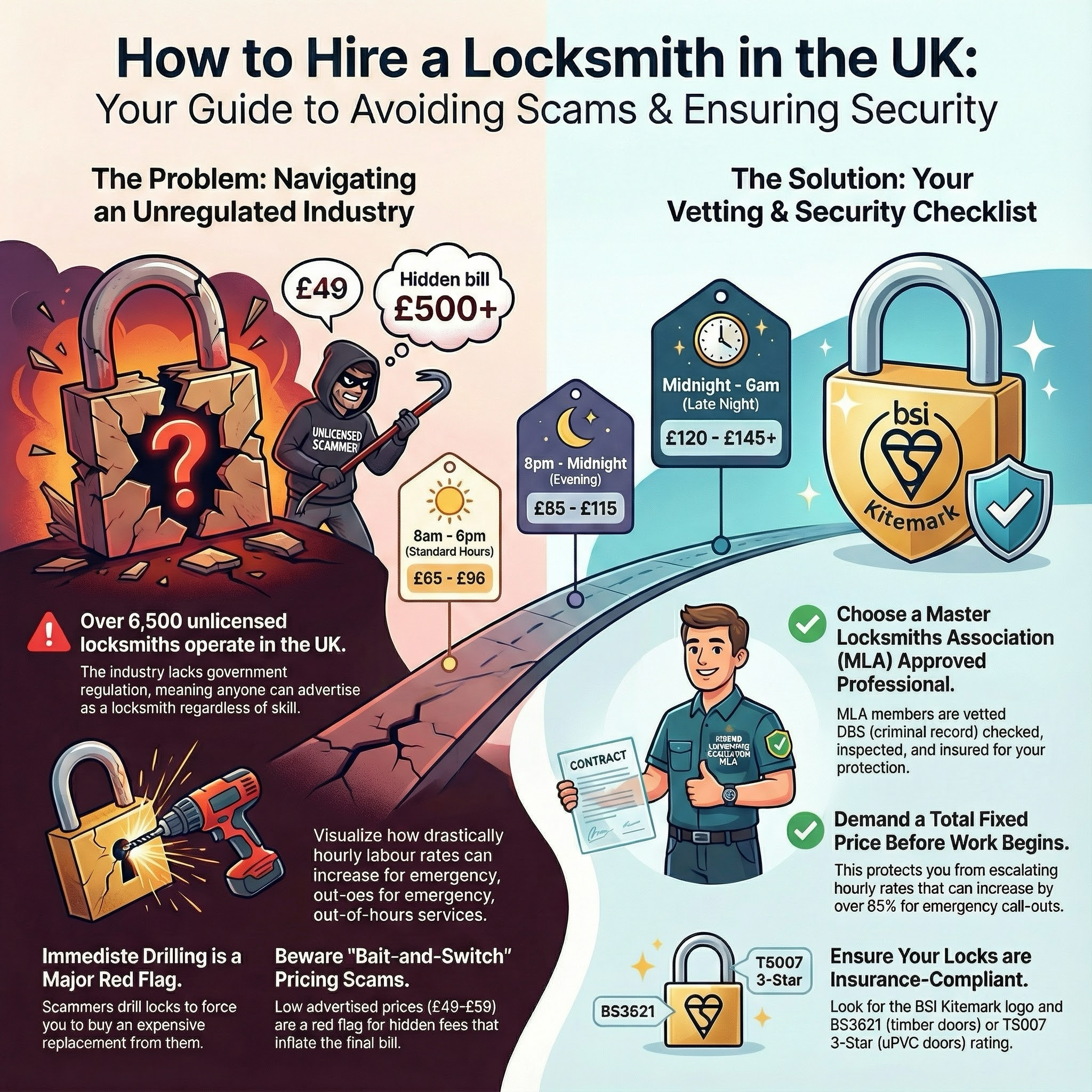
Locksmith explained
Whether you have snapped a key in the barrel or need to "rekey" your entire house for peace of mind, hiring a professional locksmith ensures your home remains secure. This guide breaks down the process, costs, and regulations involved in professional key and lock replacement in the UK.
A professional locksmith does more than just replicate keys. The scope of work typically includes several technical steps to ensure the security of your door remains intact.
Locksmith pricing in the UK varies based on your location (London and the South East typically command higher rates) and the time of day. Emergency "out-of-hours" calls will almost always incur a premium.
| Item | Low £ | High £ | Notes |
|---|---|---|---|
| Standard Call-out Fee | £60 | £120 | Covers travel and the first 30-60 minutes of assessment. |
| Hourly Labour Rate | £70 | £110 | Standard daytime rate for complex repairs. |
| Basic Euro Cylinder | £25 | £50 | Standard security for uPVC or composite doors. |
| High-Security Cylinder (3-Star) | £60 | £130 | Anti-snap, anti-drill, and anti-pick technology. |
| Mortice Lock (BS3621) | £45 | £95 | Standard 5-lever deadlock for timber doors. |
| Emergency Night/Weekend Premium | £100 | £250 | Flat fee added to the standard labour/parts cost. |
| Additional Key Cutting | £5 | £20 | Per key; restricted or "dimple" keys cost significantly more. |
Total project costs are heavily influenced by the "security rating" of the hardware. While a basic cylinder is cheap, many UK insurers now insist on 3-star Kitemarked cylinders or BS3621 compliant locks, which carry a higher price tag but offer superior protection.
Most key replacement jobs are relatively quick, provided the locksmith has the correct parts on their van. Standard UK lock types are usually stocked as "van stock."
Replacing a basic Euro cylinder is a common DIY task, but it comes with significant risks. If you measure the cylinder incorrectly and it protrudes more than 3mm from the handle, it becomes vulnerable to "lock snapping"—a common burglary technique.
Professional installation is highly recommended for external doors to ensure compliance with home insurance policies. An incorrectly fitted lock can void your theft cover entirely.
For Mortice locks or multipoint mechanisms, professional tools and knowledge are essential. A locksmith will ensure the door is balanced and the "throw" of the bolt is sufficient to meet British Standards. If you are dealing with "restricted" keys (keys that require a security card to duplicate), you will almost certainly need a registered professional.
The locksmith industry in the UK is currently unregulated, meaning anyone can trade as a locksmith. This makes it vital to do your due diligence before letting someone into your home.
Questions to ask:
While there is no "Locksmith Act," there are several standards that dictate what is acceptable for home security in the UK. Your locksmith should be well-versed in these:
Avoid these frequent pitfalls when arranging a key or lock replacement:
It is highly recommended. You have no way of knowing how many spare keys the previous owners, their family, or former tradespeople might still have. Replacing the cylinders is a small price to pay for total security.
Yes, this is known as "Keyed Alike." A locksmith can supply a set of cylinders (even if they are different sizes) that all operate from the same key code. This is very convenient but does mean that if you lose one key, you may want to replace all the barrels.
Restricted keys are protected by a patent. They cannot be copied by a standard key cutter. Only the registered owner with a security card can authorize the locksmith to produce more copies, preventing unauthorized duplication by tenants or staff.
In most cases, yes. A locksmith uses specialized "extractors" to pull the fragment out. If the lock wasn't damaged when the key snapped, you can usually keep the existing lock and just use a spare key or have a new one cut.
Most UK policies require a 5-lever Mortice deadlock conforming to BS3621 on timber doors, or a multi-point locking system on uPVC/Composite doors. Check your policy "Security Endorsement" section to ensure you stay covered.
This guide was written with AI assistance and is intended for general information only. Prices are estimates based on UK averages and may vary by region. Always get at least three quotes and consult a qualified professional before starting any work.
Ask follow-ups in plain English. The AI explains options, sequencing and what to ask the locksmith — so you walk in informed.
Van crime in the UK remains a significant concern for tradespeople and homeowners alike, with tool theft occurring every few minutes. Standard factory-fitted lo...
READ GUIDE →GuideGetting locked out of your vehicle is a stressful experience, whether you have left the keys in the ignition, trapped them in the boot, or lost them entirely. M...
READ GUIDE →GuideGetting locked out of your home is a stressful experience that requires a fast, reliable solution. Whether you have lost your keys, snapped one in the barrel, o...
READ GUIDE →GuideA stiff or misaligned door is more than a daily nuisance; it is a significant security vulnerability. For UK homeowners, a door that doesn't latch properly can ...
READ GUIDE →GuideGetting locked out of your vehicle is more than a minor inconvenience; in the UK, it often happens at the most inopportune moments, from rain-swept supermarket ...
READ GUIDE →GuideFor UK tradespeople and homeowners, a Ford Transit is often more than just a vehicle; it is a mobile workshop and a livelihood. Unfortunately, the Transit remai...
READ GUIDE →