Instant
01 · Ask
Ask the AI a follow-up
Got more questions about office door lock replacement? Describe the bit you're unsure about — the AI explains options, sequencing and what to ask the locksmith.

Office, shop or commercial door lock swapped — anti-snap cylinders, multipoint mechanisms, master-key systems.
You've read the brief on office door lock replacement. Now lean on us to find the right locksmith — and stay in control of the job.
Got more questions about office door lock replacement? Describe the bit you're unsure about — the AI explains options, sequencing and what to ask the locksmith.
Costs, timelines, pitfalls and the right questions to ask before any locksmith starts on office door lock replacement.
Itemised quotes from up to 3 local locksmiths on office door lock replacement — so you can compare like-for-like, not lump sums.
Ready when you are
Enter your postcode and get free quotes from local pros.
Four moves that separate a smooth job from a nightmare.
If the door has dropped over time, the lock may not line up with the frame, causing the bolt to jam or the handle to become stiff.
Installing a "key-to-lock" mechanism on a fire exit is a major safety violation and a common mistake.
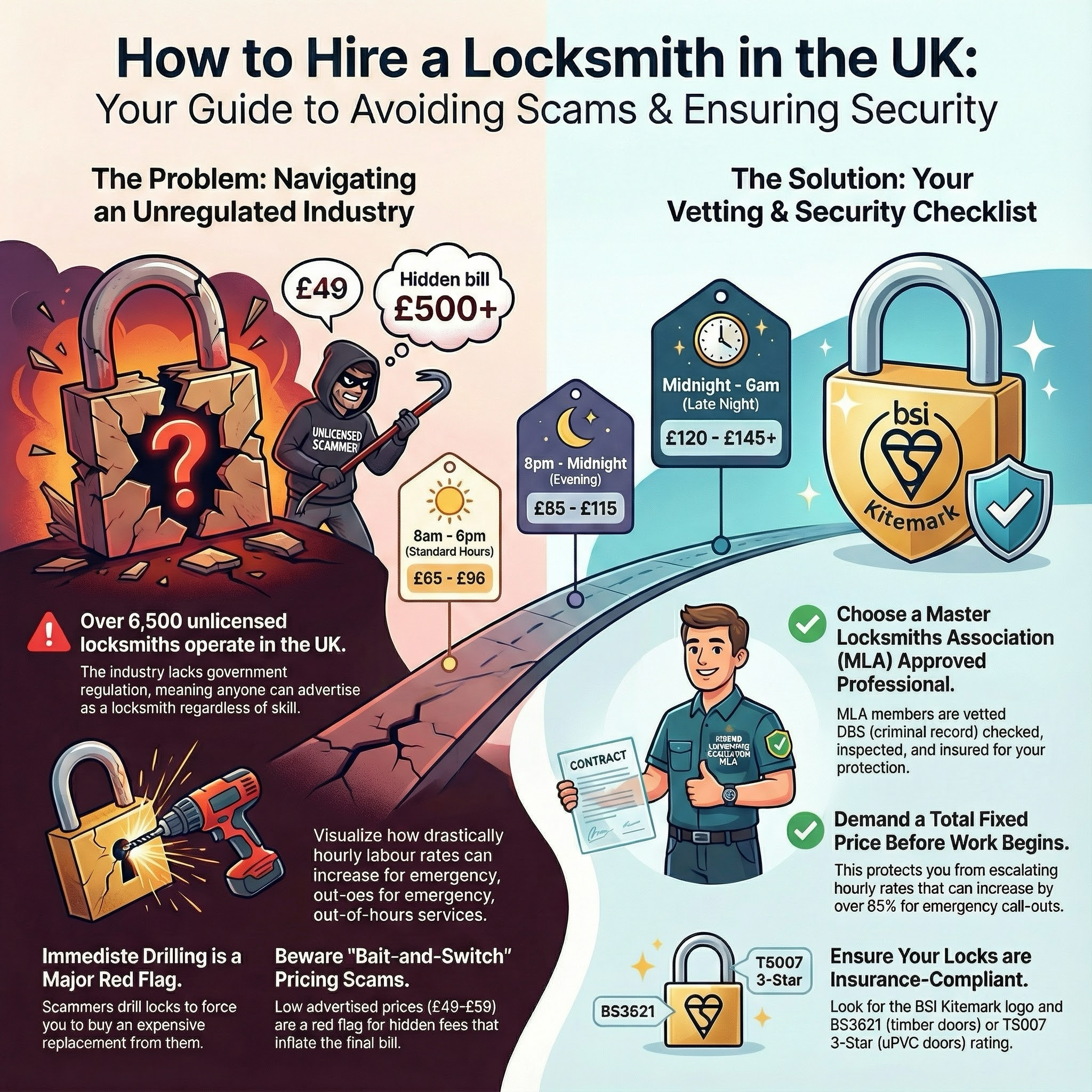
Cheap cylinders are vulnerable to "lock snapping," a common method of entry. Always insist on a 3-star Sold Secure rated cylinder.
Using standard keys for a shared office often leads to security breaches when keys are lost or not returned by former occupants.
Indicative UK ranges and what affects price.
By job type
Quote spread is typically ± 18% — always get 3 quotes.
Locksmith quick-view
Locksmith explained
In the UK, office doors often serve as fire doors or emergency exit routes. Choosing the wrong hardware can invalidate your insurance or, in a worst-case scenario, prevent a safe exit during an emergency. This guide covers everything from hardware types to the latest 2025/26 pricing for professional installation.
| Item | Low £ | High £ | Notes |
|---|---|---|---|
| Standard Euro Cylinder | £140 | £220 | Basic replacement including labour. |
| High-Security Mortice Lock | £180 | £300 | BS3621 compliant for timber doors. |
| Electronic/Smart Lock | £250 | £550 | Keypad or app-controlled units. |
| Emergency Call-out Fee | £80 | £150 | Flat fee before labour/parts. |
| Master Key Setup | £50 | £150 | Per door for complex suites. |
Pricing is primarily influenced by the level of security required and the time of day. Emergency "out-of-hours" calls in major UK cities can double the standard labour rate. High-security cylinders with "restricted" keys (which cannot be copied without a security card) will also carry a premium on the material cost.
While basic cylinder swaps on residential-style doors can be a DIY task, office door locks often require professional installation. If the door is a designated fire door, any DIY modifications can void its fire-resistance rating. Furthermore, most UK insurers require locks to meet specific British Standards (like BS3621) for the policy to remain valid.
Professional locksmiths ensure that the door remains "easy to exit" in an emergency while being "hard to enter" for intruders—a balance that is difficult for an amateur to strike.
Yes. Any hardware fitted to a fire door must be fire-rated (usually FD30 or FD60). Using non-rated locks can cause the door to fail during a fire, allowing smoke and flames to spread through the building.
Lock snapping is a technique where the cylinder is broken to expose the locking mechanism. You should choose a "3-star anti-snap" cylinder to prevent this, especially on uPVC or aluminium office doors.
Yes, this is called a 'keyed alike' system. Alternatively, a 'Master Key' system allows individual keys to open specific doors, while one master key opens everything. A locksmith can design this for you.
Smart locks are excellent for tracking who enters and when. However, ensure it has a physical override and meets your insurer's requirements for "final exit" doors if your office has its own external entrance.
BS3621 requires a key to lock and unlock from both sides. BS8621 requires a key for entry but has a thumb-turn or similar device on the inside to allow for emergency exit without a key.
Most new cylinders come with 2 or 3 keys as standard. If you require more, it is usually cheaper to have the locksmith cut them on-site during the installation than to visit a high-street cutter later.
This guide was written with AI assistance and is intended for general information only. Prices are estimates based on UK averages and may vary by region. Always get at least three quotes and consult a qualified professional before starting any work.
Ask follow-ups in plain English. The AI explains options, sequencing and what to ask the locksmith — so you walk in informed.
Van crime in the UK remains a significant concern for tradespeople and homeowners alike, with tool theft occurring every few minutes. Standard factory-fitted lo...
READ GUIDE →GuideGetting locked out of your vehicle is a stressful experience, whether you have left the keys in the ignition, trapped them in the boot, or lost them entirely. M...
READ GUIDE →GuideGetting locked out of your home is a stressful experience that requires a fast, reliable solution. Whether you have lost your keys, snapped one in the barrel, o...
READ GUIDE →GuideA stiff or misaligned door is more than a daily nuisance; it is a significant security vulnerability. For UK homeowners, a door that doesn't latch properly can ...
READ GUIDE →GuideGetting locked out of your vehicle is more than a minor inconvenience; in the UK, it often happens at the most inopportune moments, from rain-swept supermarket ...
READ GUIDE →GuideFor UK tradespeople and homeowners, a Ford Transit is often more than just a vehicle; it is a mobile workshop and a livelihood. Unfortunately, the Transit remai...
READ GUIDE →