Instant
01 · Ask
Ask the AI a follow-up
Got more questions about shed Lock Replacement? Describe the bit you're unsure about — the AI explains options, sequencing and what to ask the locksmith.

Garden shed, workshop or outbuilding lock swapped — weather-resistant hardware, restricted-key option.
You've read the brief on shed Lock Replacement. Now lean on us to find the right locksmith — and stay in control of the job.
Got more questions about shed Lock Replacement? Describe the bit you're unsure about — the AI explains options, sequencing and what to ask the locksmith.
Costs, timelines, pitfalls and the right questions to ask before any locksmith starts on shed Lock Replacement.
Itemised quotes from up to 3 local locksmiths on shed Lock Replacement — so you can compare like-for-like, not lump sums.
Ready when you are
Enter your postcode and get free quotes from local pros.
Four moves that separate a smooth job from a nightmare.
UK weather causes wood to swell in winter and shrink in summer. A lock fitted in July may not align correctly in January.
Cheap "indoor" locks used on sheds will seize within one season due to moisture. Always use galvanised or stainless steel hardware.
Screwing heavy locks into cheap, thin shed doors often leads to the wood splitting. A professional will use "back plates" to sandwich the wood.
A common mistake is using standard screws on a hasp. Thieves can simply unscrew the entire lock. Always use coach bolts that go all the way through the door.
Indicative UK ranges and what affects price.
By job type
Quote spread is typically ± 18% — always get 3 quotes.
Locksmith quick-view
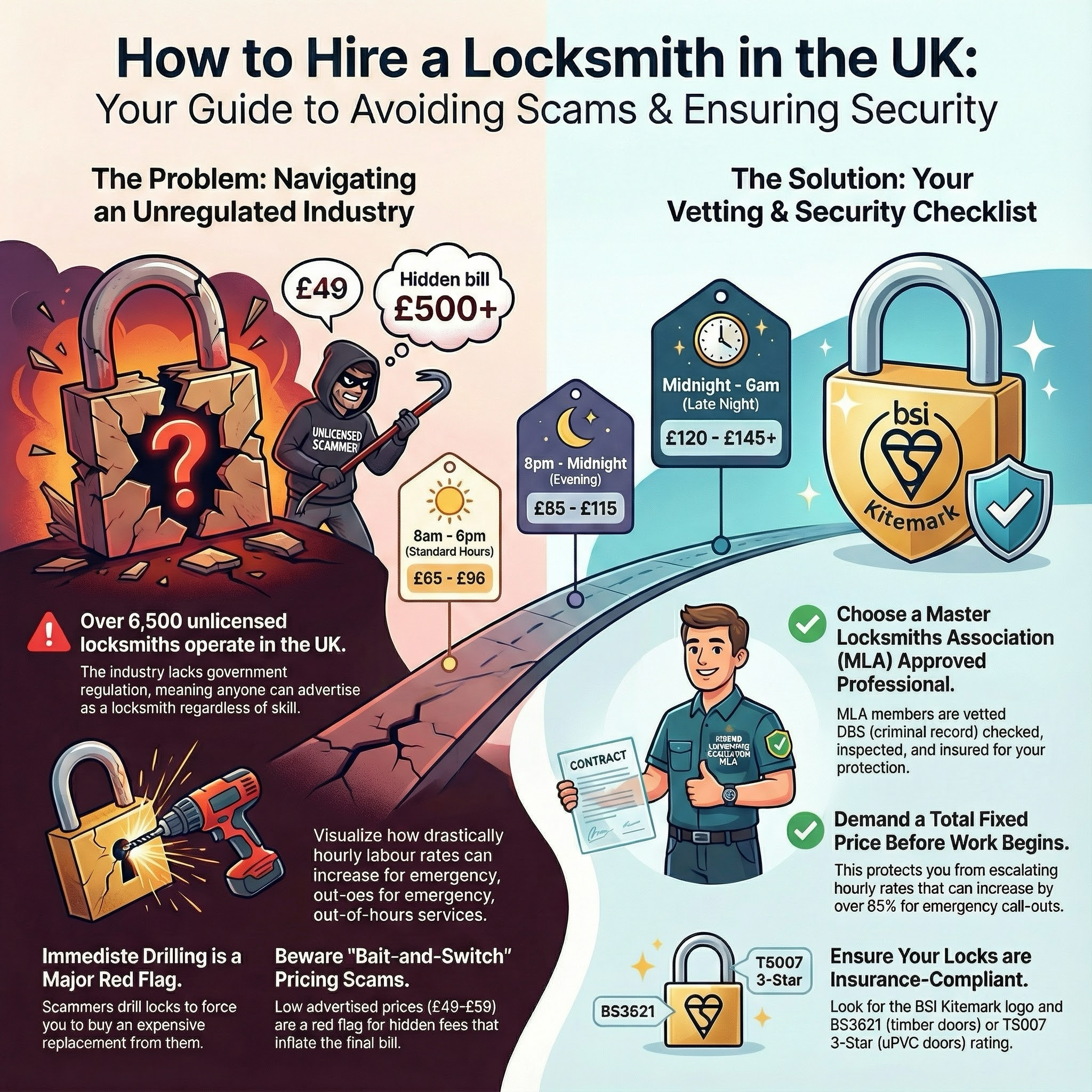
Locksmith explained
Replacing a shed lock is a cost-effective way to upgrade your outbuilding's security and satisfy insurance requirements. Whether you are dealing with a lost key, a seized mechanism, or simply want to bolster your garden's defences, a professional locksmith can ensure your valuables remain protected against opportunistic theft.
The cost of replacing a shed lock varies based on the complexity of the hardware and your location in the UK. Emergency "lock-out" calls outside of standard business hours will typically incur a premium.
| Item | Low £ | High £ | Notes |
|---|---|---|---|
| Standard Call-out Fee | £60 | £95 | Usually covers the first hour of labour. |
| Basic Hasp & Padlock | £25 | £55 | Weatherproof, high-security versions cost more. |
| Mortice Sashlock/Deadlock | £35 | £80 | Includes the lock body and cylinder/keys. |
| Rim Lock Replacement | £20 | £45 | Traditional surface-mounted shed locks. |
| Additional Labour (per hour) | £50 | £80 | Applies if the door requires significant repair. |
| Total Project Cost | £110 | £230 | Typical range for a professional installation. |
Prices are influenced by the "security grade" of the hardware chosen. Opting for a Sold Secure or British Standard (BS3621) rated lock will increase material costs but may reduce your home insurance premiums.
Fitting a basic padlock and hasp is a manageable DIY task for most homeowners with a drill and screwdriver. However, if your shed stores high-value items like e-bikes or petrol mowers, a professional installation is recommended.
Professional locksmiths can identify "weak points" in your shed's construction, such as exposed hinge pins or thin door panels, that a standard DIY lock replacement might ignore.
If you are installing a mortice lock into a thin timber door, a professional will know how to reinforce the frame so the lock doesn't actually weaken the door's structure. Furthermore, many insurance providers insist that locks are fitted to specific standards to remain valid.
Questions to ask:
While there are no specific building regulations for garden shed locks, there are standards that impact your security and insurance:
Most policies cover outbuildings, but only if they are "locked and secured." Many insurers specify that the lock must be a 5-lever mortice lock or a padlock of a certain thickness. Check your policy wording carefully.
A heavy-duty hasp and staple paired with a "closed shackle" padlock is often best. The closed shackle makes it very difficult for thieves to use bolt cutters on the lock.
Yes, if you use "keyed alike" cylinders. This is common with Euro-cylinders (used in uPVC doors). A locksmith can often build a cylinder that works with your existing house key.
Use a graphite-based lubricant rather than WD-40, which can attract gunk. Ensure you buy hardware specifically rated as "Marine Grade" or "Weatherproof."
Usually, a locksmith can realign the door or fit a "rim latch" that allows for more movement than a standard bolt. However, if the timber is rotten, the lock will have nothing to grip into.
This guide was written with AI assistance and is intended for general information only. Prices are estimates based on UK averages and may vary by region. Always get at least three quotes and consult a qualified professional before starting any work.
Ask follow-ups in plain English. The AI explains options, sequencing and what to ask the locksmith — so you walk in informed.
Van crime in the UK remains a significant concern for tradespeople and homeowners alike, with tool theft occurring every few minutes. Standard factory-fitted lo...
READ GUIDE →GuideGetting locked out of your vehicle is a stressful experience, whether you have left the keys in the ignition, trapped them in the boot, or lost them entirely. M...
READ GUIDE →GuideGetting locked out of your home is a stressful experience that requires a fast, reliable solution. Whether you have lost your keys, snapped one in the barrel, o...
READ GUIDE →GuideA stiff or misaligned door is more than a daily nuisance; it is a significant security vulnerability. For UK homeowners, a door that doesn't latch properly can ...
READ GUIDE →GuideGetting locked out of your vehicle is more than a minor inconvenience; in the UK, it often happens at the most inopportune moments, from rain-swept supermarket ...
READ GUIDE →GuideFor UK tradespeople and homeowners, a Ford Transit is often more than just a vehicle; it is a mobile workshop and a livelihood. Unfortunately, the Transit remai...
READ GUIDE →