Instant
01 · Ask
Ask the AI a follow-up
Got more questions about pipe installation? Describe the bit you're unsure about — the AI explains options, sequencing and what to ask the plumber.

Copper, plastic or push-fit pipework — installed to spec, leak-tested and labelled.
You've read the brief on pipe installation. Now lean on us to find the right plumber — and stay in control of the job.
Got more questions about pipe installation? Describe the bit you're unsure about — the AI explains options, sequencing and what to ask the plumber.
Costs, timelines, pitfalls and the right questions to ask before any plumber starts on pipe installation.
Itemised quotes from up to 3 local plumbers on pipe installation — so you can compare like-for-like, not lump sums.
Ready when you are
Enter your postcode and get free quotes from local pros.
Four moves that separate a smooth job from a nightmare.
Loud banging noises caused by pipes that aren't secured properly with clips.
Corrosion that occurs when copper pipes are joined directly to galvanised steel without a dielectric union.
Lengths of pipework leading to nowhere that can harbour Legionella bacteria; these must be removed, not just capped.
Pipes in lofts or external walls bursting during the first winter freeze due to lack of insulation.
Indicative UK ranges and what affects price.
By job type
Quote spread is typically ± 18% — always get 3 quotes.
Plumber quick-view
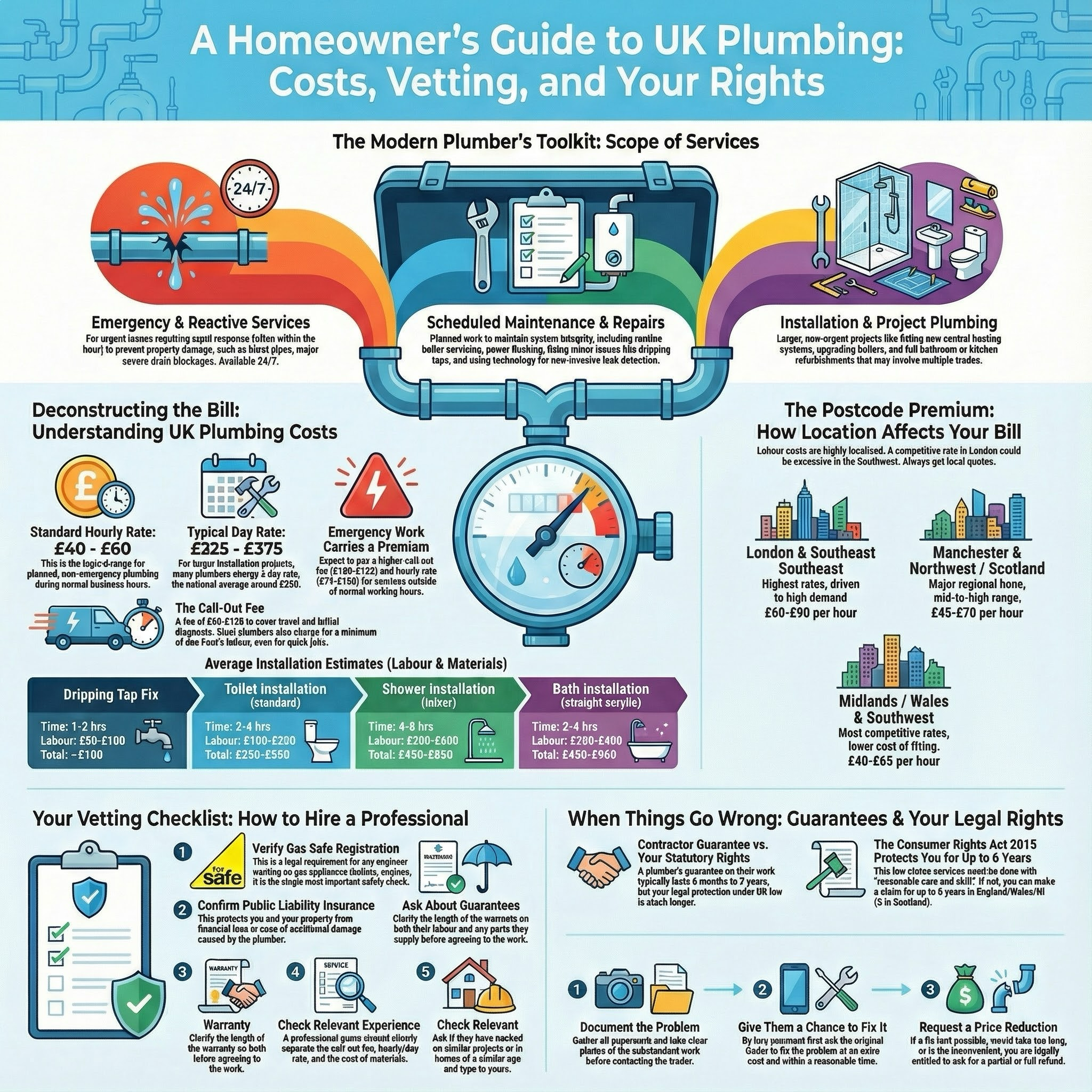
Plumber explained
Modern plumbing systems in the UK must balance water pressure, temperature control, and efficiency. Investing in high-quality pipework not only improves your home's performance but also ensures compliance with strict national water and building regulations.
The cost of pipe installation varies significantly based on the material used and how difficult it is to access the run. Copper remains more expensive than plastic due to global commodity prices and the labour-intensive nature of soldering joints.
| Item | Low £ | High £ | Notes |
|---|---|---|---|
| Call-out / Minimum Charge | £90 | £160 | Covers travel and the first hour of labour. |
| Labour (per hour) | £60 | £95 | Varies by region; London/SE is highest. |
| Small Section Repair (up to 2m) | £180 | £350 | Includes basic fittings and local isolation. |
| New Appliance Run (e.g. Dishwasher) | £250 | £500 | Includes waste pipe and valves. |
| Full House Repipe (3-bed semi) | £4,500 | £8,500+ | Comprehensive replacement of all internal pipework. |
Prices generally include VAT at 20%. Factors that will push costs toward the "High" end include concealed pipework under tiled floors, the need for scaffolding, or the removal of hazardous materials like old asbestos-lagging.
While basic push-fit plastic plumbing is marketed to DIYers, professional installation is strongly recommended for any permanent pipework. A single failed joint behind a wall can cause thousands of pounds in structural damage before it is even noticed.
Note: Any work involving gas pipes must, by law, be carried out by a Gas Safe registered engineer. For water, using a WaterSafe recognised plumber ensures the work meets the Water Supply (Water Fittings) Regulations.
Questions to ask your plumber:
Modern PEX and polybutylene pipes are excellent for long runs as they are flexible and have fewer joints. However, copper is still preferred for exposed areas because it looks better, is more rigid, and has natural antibacterial properties.
This is often caused by high water pressure or a partially closed valve. A plumber can install a pressure-reducing valve (PRV) or replace the faulty component to silence the system.
For most minor internal works, no. However, for significant alterations, new builds, or large extensions, you or your plumber may need to submit a "Regulation 5" notification to the local water authority.
Lead pipes are dull grey and soft. If you scrape the surface with a coin, the metal underneath will be shiny and silver. Lead pipes should be replaced immediately for health reasons.
Repiping is invasive. It usually involves lifting carpets, floorboards, and potentially cutting into plasterboard. A good plumber will minimize damage, but you should budget for some redecorating once the work is finished.
This guide was written with AI assistance and is intended for general information only. Prices are estimates based on UK averages and may vary by region. Always get at least three quotes and consult a qualified professional before starting any work.
Ask follow-ups in plain English. The AI explains options, sequencing and what to ask the plumber — so you walk in informed.
Upgrading a shower is one of the most impactful improvements you can make to a UK home. Whether you are replacing a tired electric unit or installing a high-end...
READ GUIDE →GuideA blocked toilet is more than just a minor inconvenience; it is a hygiene risk that can quickly lead to water damage if not handled correctly. For UK homeowners...
READ GUIDE →GuideUnderfloor heating (UFH) has moved from a luxury addition to a standard feature in modern British homes. It provides a consistent, radiant heat that eliminates ...
READ GUIDE →GuideSink Replacement Cost Guide Scope of Works Isolate water supplies and drain down local pipework. Remove the existing sink , taps, trap, silicone and fixings; ca...
READ GUIDE →GuideShower Repair Costs Guide Scope of Works Isolate water & electrics and protect adjacent finishes. Diagnose the fault (e.g. leaking mixer valve, cracked tray...
READ GUIDE →GuideA wet room is the ultimate upgrade for a modern UK home, offering a sleek, open-plan aesthetic and unparalleled accessibility. Unlike a traditional bathroom wit...
READ GUIDE →