Instant
01 · Ask
Ask the AI a follow-up
Got more questions about power Flushing : Costs & Process? Describe the bit you're unsure about — the AI explains options, sequencing and what to ask the plumber.

High-pressure chemical clean of heating system — removes years of sludge, restores flow and efficiency.
You've read the brief on power Flushing : Costs & Process. Now lean on us to find the right plumber — and stay in control of the job.
Got more questions about power Flushing : Costs & Process? Describe the bit you're unsure about — the AI explains options, sequencing and what to ask the plumber.
Costs, timelines, pitfalls and the right questions to ask before any plumber starts on power Flushing : Costs & Process.
Itemised quotes from up to 3 local plumbers on power Flushing : Costs & Process — so you can compare like-for-like, not lump sums.
Ready when you are
Enter your postcode and get free quotes from local pros.
Four moves that separate a smooth job from a nightmare.
Sludge often hides tiny holes caused by internal corrosion; once the sludge is removed, these holes may leak.
If the system isn't refilled correctly, air can get trapped in high-level pipework or towel rails.
In very old systems, the external pump may struggle to restart after being bypassed for the flush.
If the engineer rushes and doesn't flush radiators individually, sludge will remain in the bottom corners.
Indicative UK ranges and what affects price.
By job type
Quote spread is typically ± 18% — always get 3 quotes.
Plumber quick-view
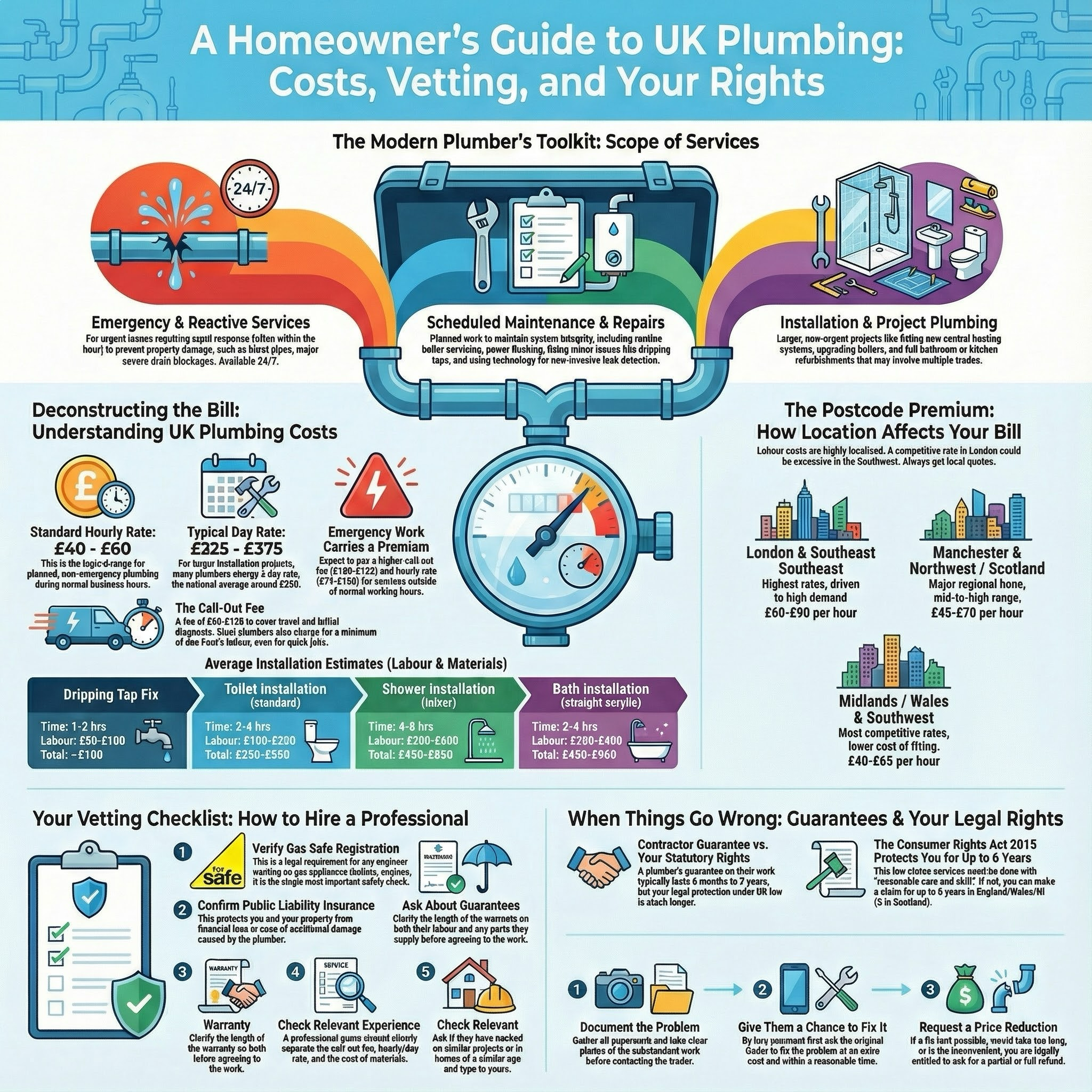
Plumber explained
For UK homeowners, a professional power flush is often the most effective way to restore heat distribution, protect a new boiler warranty, and lower monthly energy bills. It involves circulating specialist chemicals and water through your system using a powerful pumping station to dislodge and remove stubborn debris.
| Item | Low £ | High £ | Notes |
|---|---|---|---|
| Standard 2-3 Bedroom House | £400 | £600 | Includes chemicals and labour. |
| Large 4-5 Bedroom House | £650 | £950 | Often requires a full day or more. |
| Magnetic Filter Installation | £150 | £250 | Highly recommended to prevent re-sludging. |
| Combi Boiler Heat Exchanger Clean | £100 | £180 | Additional deep clean of the boiler internals. |
Prices vary based on the number of radiators and the severity of the sludge. Systems with "microbore" (very thin) copper piping may require more time and specialist equipment, increasing the overall labour cost.
Power flushing is strictly a professional task. The equipment is expensive to hire, and using it incorrectly can cause significant damage to your boiler's internal components or cause old, thin radiators to leak under the increased flow rate.
Most boiler manufacturers require a professional system flush (and a certificate of proof) to validate their 7-10 year warranties. A DIY attempt will almost certainly void these protections.
Common signs include radiators that are cold at the bottom, a noisy boiler (kettling), or the system taking a long time to heat up. If your hot water is fluctuating or your pump is frequently failing, these are also major red flags.
Yes, if the noise is caused by "kettling" (limescale and sludge build-up on the heat exchanger). However, if the noise is due to a mechanical fault or a failing fan, a flush will not resolve the issue.
No. A chemical flush is a passive process where cleaner is added to the system for a few days and then drained. A power flush uses a high-powered pump to actively force debris out, making it far more effective for heavily fouled systems.
Power flushing uses high flow rates but relatively low pressure (usually under 2 bar). It is unlikely to damage healthy pipes, but it can expose existing "pinhole" corrosion in very old, neglected radiators.
Generally, a system should be power flushed every 5 to 10 years. However, if you have a magnetic filter installed and the inhibitor levels are checked annually during your boiler service, you may never need one again.
This guide was written with AI assistance and is intended for general information only. Prices are estimates based on UK averages and may vary by region. Always get at least three quotes and consult a qualified professional before starting any work.
Ask follow-ups in plain English. The AI explains options, sequencing and what to ask the plumber — so you walk in informed.
Upgrading a shower is one of the most impactful improvements you can make to a UK home. Whether you are replacing a tired electric unit or installing a high-end...
READ GUIDE →GuideA blocked toilet is more than just a minor inconvenience; it is a hygiene risk that can quickly lead to water damage if not handled correctly. For UK homeowners...
READ GUIDE →GuideUnderfloor heating (UFH) has moved from a luxury addition to a standard feature in modern British homes. It provides a consistent, radiant heat that eliminates ...
READ GUIDE →GuideSink Replacement Cost Guide Scope of Works Isolate water supplies and drain down local pipework. Remove the existing sink , taps, trap, silicone and fixings; ca...
READ GUIDE →GuideShower Repair Costs Guide Scope of Works Isolate water & electrics and protect adjacent finishes. Diagnose the fault (e.g. leaking mixer valve, cracked tray...
READ GUIDE →GuideA wet room is the ultimate upgrade for a modern UK home, offering a sleek, open-plan aesthetic and unparalleled accessibility. Unlike a traditional bathroom wit...
READ GUIDE →