Instant
01 · Ask
Ask the AI a follow-up
Got more questions about tap replacement? Describe the bit you're unsure about — the AI explains options, sequencing and what to ask the plumber.

Kitchen, bath or basin tap swapped — supplied and fitted by a plumber, leak-tested before sign-off.
You've read the brief on tap replacement. Now lean on us to find the right plumber — and stay in control of the job.
Got more questions about tap replacement? Describe the bit you're unsure about — the AI explains options, sequencing and what to ask the plumber.
Costs, timelines, pitfalls and the right questions to ask before any plumber starts on tap replacement.
Itemised quotes from up to 3 local plumbers on tap replacement — so you can compare like-for-like, not lump sums.
Ready when you are
Enter your postcode and get free quotes from local pros.
Four moves that separate a smooth job from a nightmare.
Buying a high-pressure tap for a low-pressure (gravity-fed) system results in a pathetic "dribble" of water.
On older baths, the nuts holding the tap in place can rust solid, often requiring a specialist oscillating tool to cut them off without damaging the bath.
Cheap flexible hoses can kink or perish; professionals always use high-quality, WRAS-approved connectors.
Some modern European taps require larger mounting holes than older UK ceramic basins provide, necessitating careful drilling or a different tap choice.
Indicative UK ranges and what affects price.
By job type
Quote spread is typically ± 18% — always get 3 quotes.
Plumber quick-view
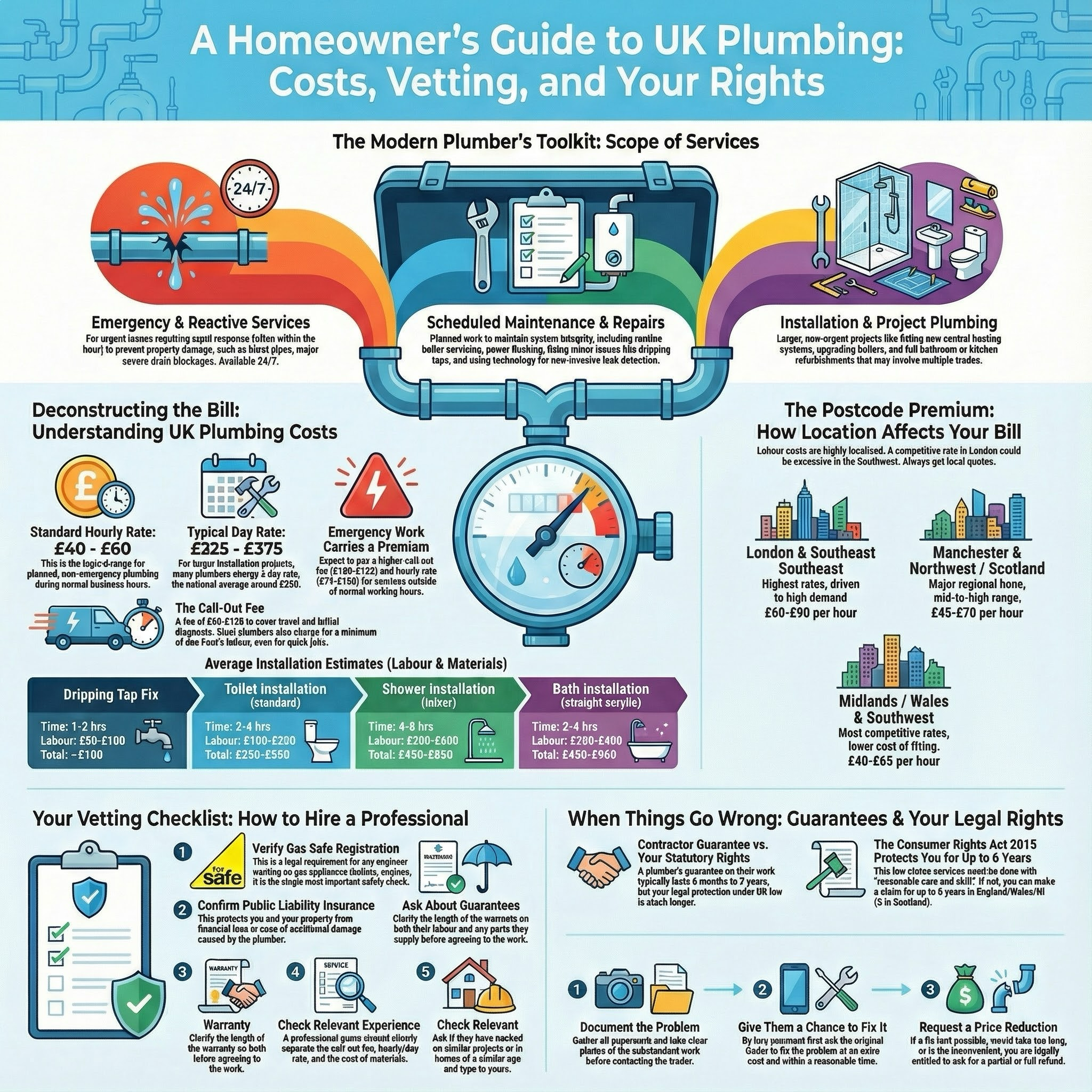
Plumber explained
While a tap swap might seem straightforward, modern plumbing systems and high-end fixtures often require specific technical knowledge. From ensuring correct water pressure compatibility to navigating awkward access behind bath panels, getting it right the first time prevents costly water damage to your flooring and cabinetry.
The total cost of tap replacement is heavily influenced by the quality of the fixture you choose and the ease of access to the pipework. Standard basin taps are generally cheaper to install than complex bath-shower mixers or specialist kitchen boiling water taps.
| Item | Low £ | High £ | Notes |
|---|---|---|---|
| Standard Basin/Sink Taps (Labour) | £90 | £150 | Simple swap with good access. |
| Bath Mixer Taps (Labour) | £120 | £250 | Includes bath panel removal/refitting. |
| Basic Chrome Mixer Tap (Materials) | £40 | £120 | Standard UK retail brands. |
| Designer or Boiling Water Tap (Materials) | £300 | £1,200+ | Specialist brands (e.g., Quooker). |
| Emergency/Short Notice Call-out | £120 | £200 | Includes first hour of labour. |
| Pipework Modifications | £40 | £100 | If old pipes don't align with new taps. |
Note: Prices include VAT at 20%. Regional variations apply, with London and the South East typically seeing rates 20-30% higher than the national average.
A basic "like-for-like" tap swap is within the reach of a confident DIYer with the right tools, such as a basin wrench. However, if your home lacks individual isolating valves, you will need to drain the entire system, which carries risks of airlocks or leaks upon refilling.
Professional plumbers bring the experience to handle "stuck" fittings and can identify if your new tap is compatible with your home's water pressure (e.g., gravity-fed vs. high-pressure systems).
For kitchen boiling water taps or any installation requiring new electrical points, you must use a professional to ensure compliance with Part P building regulations and manufacturer warranties.
Most plumbers prefer you to buy the taps so you get the exact style you want. However, they can supply standard trade-quality taps if requested, often with a better internal ceramic disc than cheap DIY store versions.
This is usually "water hammer" or a restriction in the supply. It often happens when a high-pressure tap is fitted to a system with high flow rates, or if an internal washer is loose.
Yes, but only if your basin or bath has a single hole. If you have two holes, you will need a "bridge mixer" or a "mini mono" mixer with a cover plate to hide the extra hole.
Ceramic disc taps use two sliding plates to control water flow rather than a rubber washer. They are much more durable, require only a quarter-turn to operate, and rarely drip.
Yes, but they may need to use a "freezing kit" to temporarily block the pipe or find the external water meter shut-off. This will usually add to the labour cost.
Most plumbers are not tilers. If they have to remove tiles to access pipework, they will usually let you know beforehand, but you may need a separate handyman or tiler to make good the finish.
This guide was written with AI assistance and is intended for general information only. Prices are estimates based on UK averages and may vary by region. Always get at least three quotes and consult a qualified professional before starting any work.
Ask follow-ups in plain English. The AI explains options, sequencing and what to ask the plumber — so you walk in informed.
Upgrading a shower is one of the most impactful improvements you can make to a UK home. Whether you are replacing a tired electric unit or installing a high-end...
READ GUIDE →GuideA blocked toilet is more than just a minor inconvenience; it is a hygiene risk that can quickly lead to water damage if not handled correctly. For UK homeowners...
READ GUIDE →GuideUnderfloor heating (UFH) has moved from a luxury addition to a standard feature in modern British homes. It provides a consistent, radiant heat that eliminates ...
READ GUIDE →GuideSink Replacement Cost Guide Scope of Works Isolate water supplies and drain down local pipework. Remove the existing sink , taps, trap, silicone and fixings; ca...
READ GUIDE →GuideShower Repair Costs Guide Scope of Works Isolate water & electrics and protect adjacent finishes. Diagnose the fault (e.g. leaking mixer valve, cracked tray...
READ GUIDE →GuideA wet room is the ultimate upgrade for a modern UK home, offering a sleek, open-plan aesthetic and unparalleled accessibility. Unlike a traditional bathroom wit...
READ GUIDE →