Instant
01 · Ask
Diagnose before you call
Tell the AI what's leaking, dripping or rumbling. It tells you whether you need a plumber, a gas engineer, or a drain specialist — and how urgent it is.

Where toilet leaks come from (wax seal, cistern seal, fill valve) and what each repair really costs.
You've read the costs and the questions to ask. Now lean on us to find a Gas Safe-verified plumber — and keep the bill honest.
Tell the AI what's leaking, dripping or rumbling. It tells you whether you need a plumber, a gas engineer, or a drain specialist — and how urgent it is.
Gas Safe vs WaterSafe, boiler warranty conditions, unvented cylinder rules. The plumber brief covers the regs most homeowners learn the hard way.
Up to Three local plumbers come back with itemised quotes — parts, labour and call-out fees — so you can compare like-for-like.
Ready when you are
Enter your postcode and get free quotes from local pros.
Four moves that separate a smooth job from a nightmare.
If gas work is part of the job, the engineer must show their Gas Safe registration card. Verify the number at gassaferegister.co.uk before they touch anything.
Plumbing prices vary wildly by job and area. Three quotes shows you the market — anything more than 20% out from the others is a flag.
For boiler parts, valves and cylinders, ask for manufacturer receipts. Genuine parts come with warranty; refurbished kit often doesn't.
Pay in stages, not upfront. Hold the last 10–20% until you've run hot taps, flushed the system and seen the certificate.
Indicative UK ranges and what affects price.
By job type
Quote spread is typically ± 18% — always get 3 quotes.
Plumber quick-view
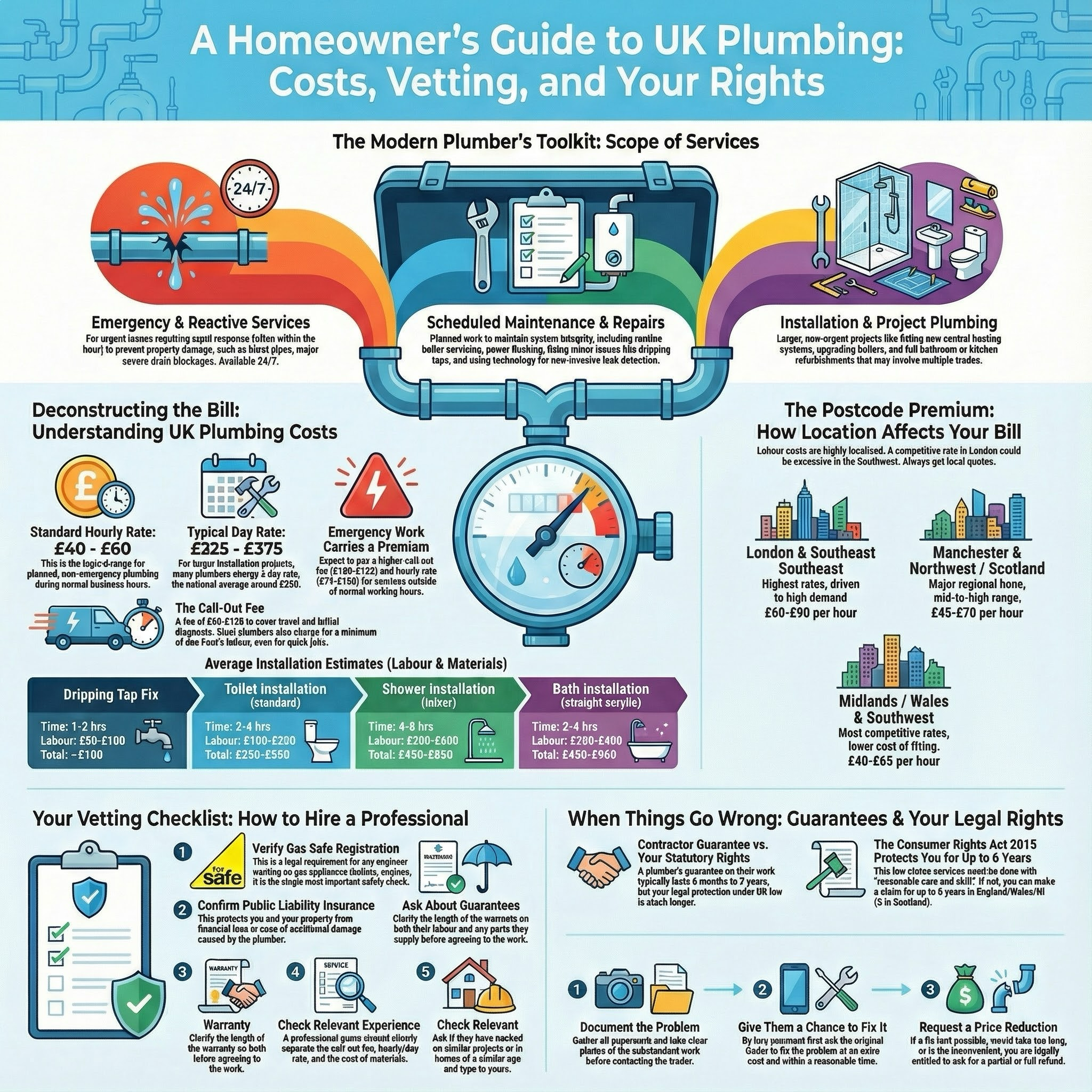
Plumber explained
Toilet leak repair in the UK typically costs £70–£300 depending on the leak source and complexity. Most toilet leaks are easily diagnosed and quickly fixed — running cisterns, leaking pan-to-cistern joints, or worn flush valves are the most common. The job typically takes 30-90 minutes for an experienced plumber.
The economic cost of an ignored toilet leak is significant. A constantly running toilet wastes 100-400 litres of water per day; a slow leak from cistern to bowl wastes water meters too. Households with water meters often see bills jump considerably from a single faulty toilet.
| Repair | Typical price |
|---|---|
| Replace flush valve / siphon | £80–£180 |
| Replace fill valve / float | £70–£150 |
| Replace cistern internals (full overhaul) | £140–£280 |
| Pan-to-cistern doughnut seal | £90–£180 |
| Replace flush button / dual flush mechanism | £60–£140 |
| Replace soil pipe seal | £100–£200 |
| Replace whole toilet (if cracked / damaged) | £250–£600 |
| Diagnose mystery leak | £60–£140 |
Quick DIY diagnostic before calling a plumber:
Either the fill valve is faulty (won't shut off when full), or the flush valve is leaking (water continuously trickles into bowl, prompting fill). Food-colouring test in cistern identifies which.
A constantly running toilet: 100-400 litres per day, which is £30-£100/year on a metered bill. Slow internal leak: 20-100 litres per day. Either way, fixing pays back within months on a metered supply.
Many leaks yes — fill valve replacement, flush valve replacement, supply hose tightening are all DIY-friendly with replacement parts £8-£40 from B&Q. Concealed-cistern toilets and pan-to-cistern reseals are less DIY-accessible.
Porcelain (pan and cistern): 50+ years. Internal mechanisms: 10-15 years before needing replacement. Soft-close seats: 5-7 years.
Most likely worn fill valve washer or flush valve. £70-£180 to fix either. Don't ignore — running toilets are the most common avoidable water-bill driver in UK homes.
Cracked porcelain (any visible crack), repeated faults that exceed cost of a new toilet (£250-£600 fitted), or as part of a bathroom refurbishment. Modern dual-flush toilets save 30-40% water compared to older single-flush models.
Want a local pro to handle this? A plumber will diagnose and fix most toilet leaks in a single visit. The £80-£200 spend pays back quickly through avoided water bills and prevented water damage. Concealed cistern toilets specifically benefit from professional handling.
This guide was written with AI assistance and is intended for general information only. Prices are estimates based on UK averages and may vary by region. Always get at least three quotes and consult a qualified professional before starting any work.
Ask follow-ups in plain English. The AI explains options, sequencing and what to ask the plumber — so you walk in informed.
Upgrading a shower is one of the most impactful improvements you can make to a UK home. Whether you are replacing a tired electric unit or installing a high-end...
READ GUIDE →GuideA blocked toilet is more than just a minor inconvenience; it is a hygiene risk that can quickly lead to water damage if not handled correctly. For UK homeowners...
READ GUIDE →GuideUnderfloor heating (UFH) has moved from a luxury addition to a standard feature in modern British homes. It provides a consistent, radiant heat that eliminates ...
READ GUIDE →GuideSink Replacement Cost Guide Scope of Works Isolate water supplies and drain down local pipework. Remove the existing sink , taps, trap, silicone and fixings; ca...
READ GUIDE →GuideShower Repair Costs Guide Scope of Works Isolate water & electrics and protect adjacent finishes. Diagnose the fault (e.g. leaking mixer valve, cracked tray...
READ GUIDE →GuideA wet room is the ultimate upgrade for a modern UK home, offering a sleek, open-plan aesthetic and unparalleled accessibility. Unlike a traditional bathroom wit...
READ GUIDE →