Instant
01 · Ask
Ask the AI a follow-up
Got more questions about solar Panel Installation? Describe the bit you're unsure about — the AI explains options, sequencing and what to ask the renewable energy.

MCS-certified solar PV install — sized to roof area, household usage and grant eligibility.
You've read the brief on solar Panel Installation. Now lean on us to find the right renewable energy — and stay in control of the job.
Got more questions about solar Panel Installation? Describe the bit you're unsure about — the AI explains options, sequencing and what to ask the renewable energy.
Costs, timelines, pitfalls and the right questions to ask before any renewable energy starts on solar Panel Installation.
Itemised quotes from up to 3 local renewable energys on solar Panel Installation — so you can compare like-for-like, not lump sums.
Ready when you are
Enter your postcode and get free quotes from local pros.
Four moves that separate a smooth job from a nightmare.
Birds love the warmth under panels. Always insist on bird mesh during the initial install to avoid expensive retrofitting.
Even a small amount of shade from a chimney or tree can "choke" a whole string of panels. Use optimisers or micro-inverters to mitigate this.
Installing panels on a roof that needs replacing in 5 years is a costly mistake. Always repair the roof first.
Inverters can get hot and hum slightly. Avoid placing them in bedrooms; a cool garage or loft is usually better.
Indicative UK ranges and what affects price.
By job type
Quote spread is typically ± 18% — always get 3 quotes.
Renewable Energy quick-view
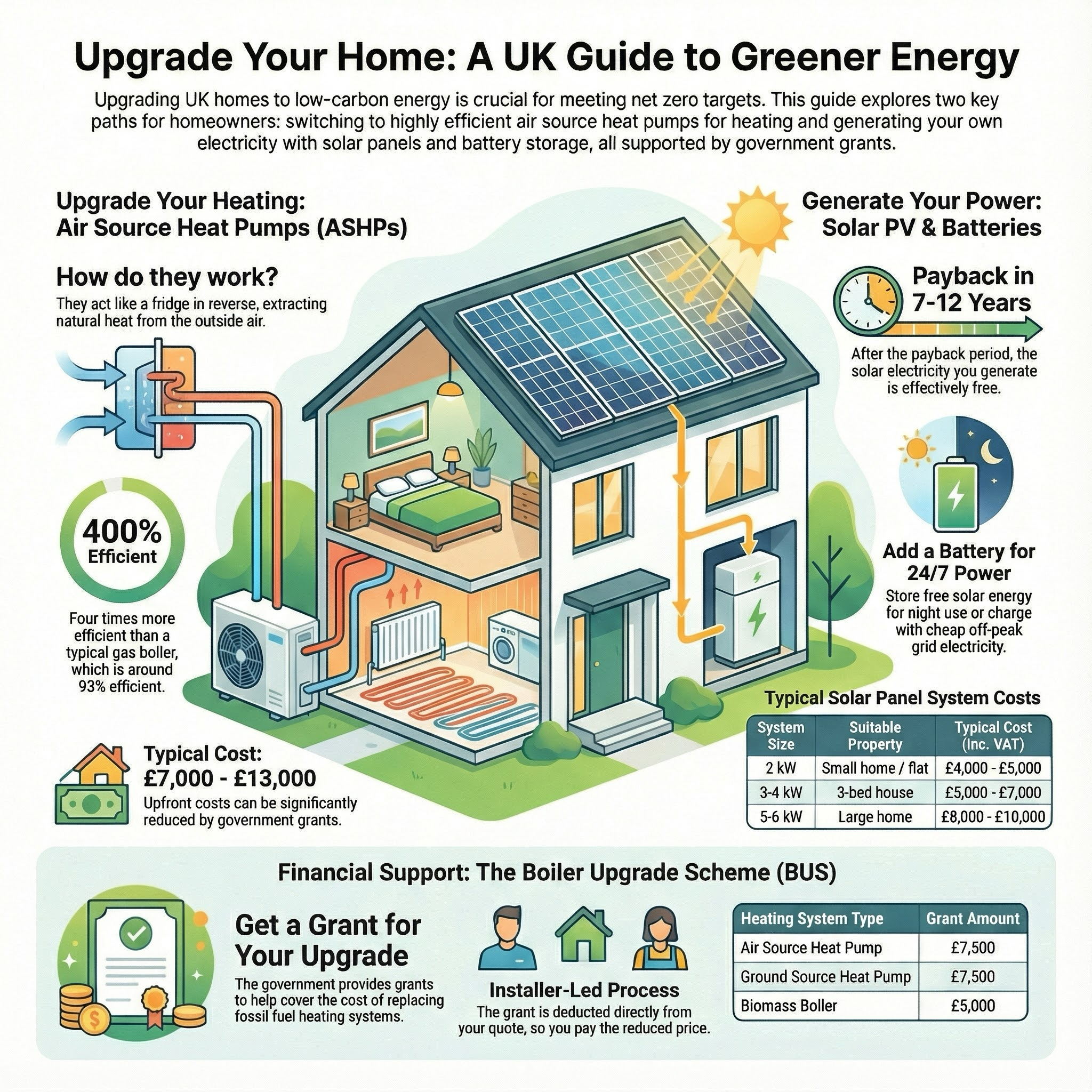
Renewable Energy explained
Most UK installations now benefit from 0% VAT on energy-saving materials, making this an ideal time to invest. Beyond the immediate bill savings, a well-installed system adds tangible value to your home and allows you to sell excess energy back to the grid via the Smart Export Guarantee (SEG).
| System Component | Low £ | High £ | Notes |
|---|---|---|---|
| 3kW System (approx. 8 panels) | £5,000 | £6,500 | Suitable for small households or terraced homes. |
| 4kW System (approx. 10 panels) | £6,000 | £8,500 | The UK standard for a 3-4 bedroom semi-detached. |
| 6kW+ System (Large/Commercial) | £9,500 | £13,000+ | Often requires G99 DNO permission before install. |
| 5kWh Hybrid Battery Storage | £2,500 | £4,500 | Price varies by brand (e.g., GivEnergy vs Tesla). |
| Bird Proofing (Mesh/Spikes) | £400 | £800 | Essential to prevent pigeons nesting under panels. |
The total cost is primarily influenced by the quality of the inverter (string vs. micro-inverters) and the complexity of the roof. Scaffolding costs can also rise significantly if your home is more than two storeys high or has difficult access.
Solar installation is not a DIY project. While a competent DIYer might physically mount a panel, the electrical work must be certified to comply with UK Building Regulations (Part P) and IET Wiring Regulations.
To access the Smart Export Guarantee (SEG) payments and ensure your home insurance remains valid, the system must be installed by an MCS-certified professional.
Questions to ask:
While not strictly necessary, a battery allows you to use the energy you generate during the day at night. Without one, you export most of your "free" energy to the grid and buy it back at a higher price later.
Yes. Solar panels work on light intensity, not just direct heat. While they produce more in direct sunlight, they still generate significant power on overcast days typical of the UK climate.
Most panels come with a 25-year performance warranty. The inverter is the "brain" of the system and typically needs replacing every 10–12 years.
SEG is a government-backed initiative that requires energy suppliers to pay you for every unit of electricity you export back to the National Grid. You must have an MCS certificate and a smart meter to apply.
If installed correctly using proper mounting kits, panels actually protect the tiles underneath from weathering. Damage only occurs if an installer uses poor quality fixings or fails to properly seal the roof penetrations.
This guide was written with AI assistance and is intended for general information only. Prices are estimates based on UK averages and may vary by region. Always get at least three quotes and consult a qualified professional before starting any work.
Ask follow-ups in plain English. The AI explains options, sequencing and what to ask the renewable energy — so you walk in informed.
Investing in renewable energy is a significant commitment for any UK homeowner. Whether you have solar PV panels, a battery storage system, or an air source hea...
READ GUIDE →GuideSolar Photovoltaic (PV) systems are one of the most effective ways for UK homeowners to shield themselves from volatile energy prices. By converting sunlight di...
READ GUIDE →GuideA biomass feasibility assessment is the essential first step for UK homeowners considering a switch from fossil fuels to renewable wood-based heating. This prof...
READ GUIDE →GuideRooftop solar PV (photovoltaic) systems have become a staple of the UK's transition to green energy, offering homeowners a way to slash electricity bills and re...
READ GUIDE →GuideSolar thermal systems are a highly efficient way for UK homeowners to reduce their carbon footprint and slash energy bills by harnessing free heat from the sun....
READ GUIDE →GuideDomestic wind turbines are an increasingly popular choice for UK homeowners looking to slash energy bills and reduce their carbon footprint. While solar panels ...
READ GUIDE →