Instant
01 · Ask
Ask the AI a follow-up
Got more questions about wind Turbine Installation? Describe the bit you're unsure about — the AI explains options, sequencing and what to ask the renewable energy.

Small wind turbine for off-grid or rural high-wind site — supplied, fitted and grid-connected (or stand-alone).
You've read the brief on wind Turbine Installation. Now lean on us to find the right renewable energy — and stay in control of the job.
Got more questions about wind Turbine Installation? Describe the bit you're unsure about — the AI explains options, sequencing and what to ask the renewable energy.
Costs, timelines, pitfalls and the right questions to ask before any renewable energy starts on wind Turbine Installation.
Itemised quotes from up to 3 local renewable energys on wind Turbine Installation — so you can compare like-for-like, not lump sums.
Ready when you are
Enter your postcode and get free quotes from local pros.
Four moves that separate a smooth job from a nightmare.
Installing a turbine too low or too close to trees/buildings results in "dirty" air, which significantly reduces output and increases wear.
Roof-mounted turbines can transmit a low-frequency hum through the house structure if not fitted with high-quality dampeners.
Often caused by failing to consider the "visual impact" or noise levels for neighbouring properties.
Unlike solar, turbines have bearings and gears that require annual servicing to prevent mechanical failure.
Indicative UK ranges and what affects price.
By job type
Quote spread is typically ± 18% — always get 3 quotes.
Renewable Energy quick-view
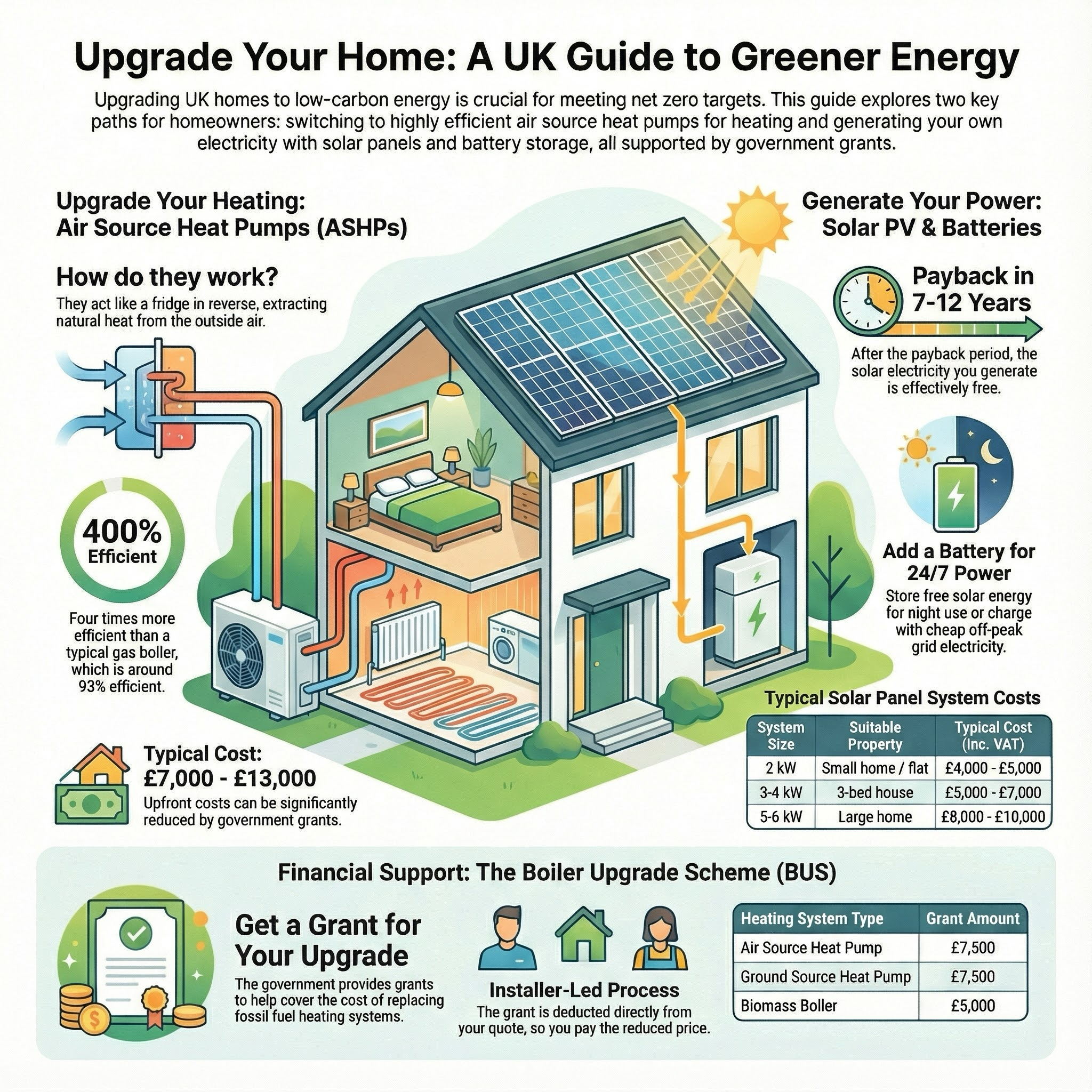
Renewable Energy explained
Installing a turbine is a significant engineering project that requires careful site assessment and specialist electrical integration. This guide covers everything you need to know about the process, costs, and regulations involved in harnessing the British weather for your home.
| Item | Low £ | High £ | Notes |
|---|---|---|---|
| Site Feasibility Survey | £250 | £600 | Includes wind speed data and structural checks. |
| Roof-Mounted System (1kW-2kW) | £2,500 | £6,000 | Includes turbine, inverter, and installation. |
| Pole-Mounted System (5kW-6kW) | £18,000 | £28,000 | Full domestic scale for off-grid or high demand. |
| Groundwork & Foundations | £1,500 | £4,000 | Variable based on soil type and tower height. |
| Annual Maintenance | £150 | £350 | Mechanical checks and lubrication. |
The total cost is heavily influenced by the size of the turbine and the complexity of the cabling run to your home. While roof-mounted systems are cheaper, they produce significantly less energy; pole-mounted turbines offer a much higher return on investment over their 20-year lifespan.
Pro Tip: Ensure your installer is MCS certified, otherwise you will not be eligible to receive payments via the Smart Export Guarantee (SEG) for the excess energy you send back to the grid.
Wind turbine installation is strictly a professional job. Beyond the obvious height and heavy lifting risks, the electrical work must comply with Part P of the Building Regulations and be signed off by a competent person.
Furthermore, domestic turbines involve complex "moving parts" that require precise mechanical balancing to prevent vibration damage to your property. Attempting a DIY installation will void manufacturer warranties and likely prevent you from connecting to the National Grid.
While not strictly necessary, batteries are highly recommended. Wind is intermittent; a battery allows you to store the energy generated during a windy night to use for your morning shower or kettle.
Modern domestic turbines are designed to be quiet, typically producing a "swish" sound. However, at high wind speeds, there is some aerodynamic noise. Proper siting is key to ensuring it doesn't bother you or your neighbours.
Most turbines need a "cut-in" speed of around 3-4 metres per second (m/s) to start turning. For a system to be financially viable in the UK, you generally need an average annual wind speed of at least 5-6 m/s.
It is rarely recommended. The turbulence from surrounding houses reduces efficiency, and the vibration can be problematic for shared walls. Pole-mounted systems in gardens are usually more effective for residential areas.
A high-quality, well-maintained domestic wind turbine should last between 20 and 25 years. The inverter may need replacing after 10-12 years, similar to a solar PV system.
This guide was written with AI assistance and is intended for general information only. Prices are estimates based on UK averages and may vary by region. Always get at least three quotes and consult a qualified professional before starting any work.
Ask follow-ups in plain English. The AI explains options, sequencing and what to ask the renewable energy — so you walk in informed.
Investing in renewable energy is a significant commitment for any UK homeowner. Whether you have solar PV panels, a battery storage system, or an air source hea...
READ GUIDE →GuideSolar Photovoltaic (PV) systems are one of the most effective ways for UK homeowners to shield themselves from volatile energy prices. By converting sunlight di...
READ GUIDE →GuideSolar panels are no longer a niche luxury; they are a core component of a modern, energy-efficient UK home. With energy prices remaining volatile, generating yo...
READ GUIDE →GuideA biomass feasibility assessment is the essential first step for UK homeowners considering a switch from fossil fuels to renewable wood-based heating. This prof...
READ GUIDE →GuideRooftop solar PV (photovoltaic) systems have become a staple of the UK's transition to green energy, offering homeowners a way to slash electricity bills and re...
READ GUIDE →GuideSolar thermal systems are a highly efficient way for UK homeowners to reduce their carbon footprint and slash energy bills by harnessing free heat from the sun....
READ GUIDE →