Instant
01 · Ask
Ask the AI a follow-up
Got more questions about removal of black bin bags? Describe the bit you're unsure about — the AI explains options, sequencing and what to ask the rubbish clearance.

Excess black bin bags removed where council won't take them — same-day pickup, licensed disposal.
You've read the brief on removal of black bin bags. Now lean on us to find the right rubbish clearance — and stay in control of the job.
Got more questions about removal of black bin bags? Describe the bit you're unsure about — the AI explains options, sequencing and what to ask the rubbish clearance.
Costs, timelines, pitfalls and the right questions to ask before any rubbish clearance starts on removal of black bin bags.
Itemised quotes from up to 3 local rubbish clearances on removal of black bin bags — so you can compare like-for-like, not lump sums.
Ready when you are
Enter your postcode and get free quotes from local pros.
Four moves that separate a smooth job from a nightmare.
Bags left outside for too long may contain maggots, rats, or foxes. Professionals may charge more for "dirty" jobs requiring extra PPE.
If bags are filled with heavy waste like wet grass or DIY debris, they may split or exceed the operative’s safe lifting limit.
Items like lithium batteries, half-full paint tins, or asbestos hidden in bags can lead to refusal of service or heavy fines at the tip.
If the van cannot park within 10-15 metres of the bags, the extra labour time will likely increase your final bill.
Indicative UK ranges and what affects price.
By job type
Quote spread is typically ± 18% — always get 3 quotes.
Rubbish Clearance quick-view
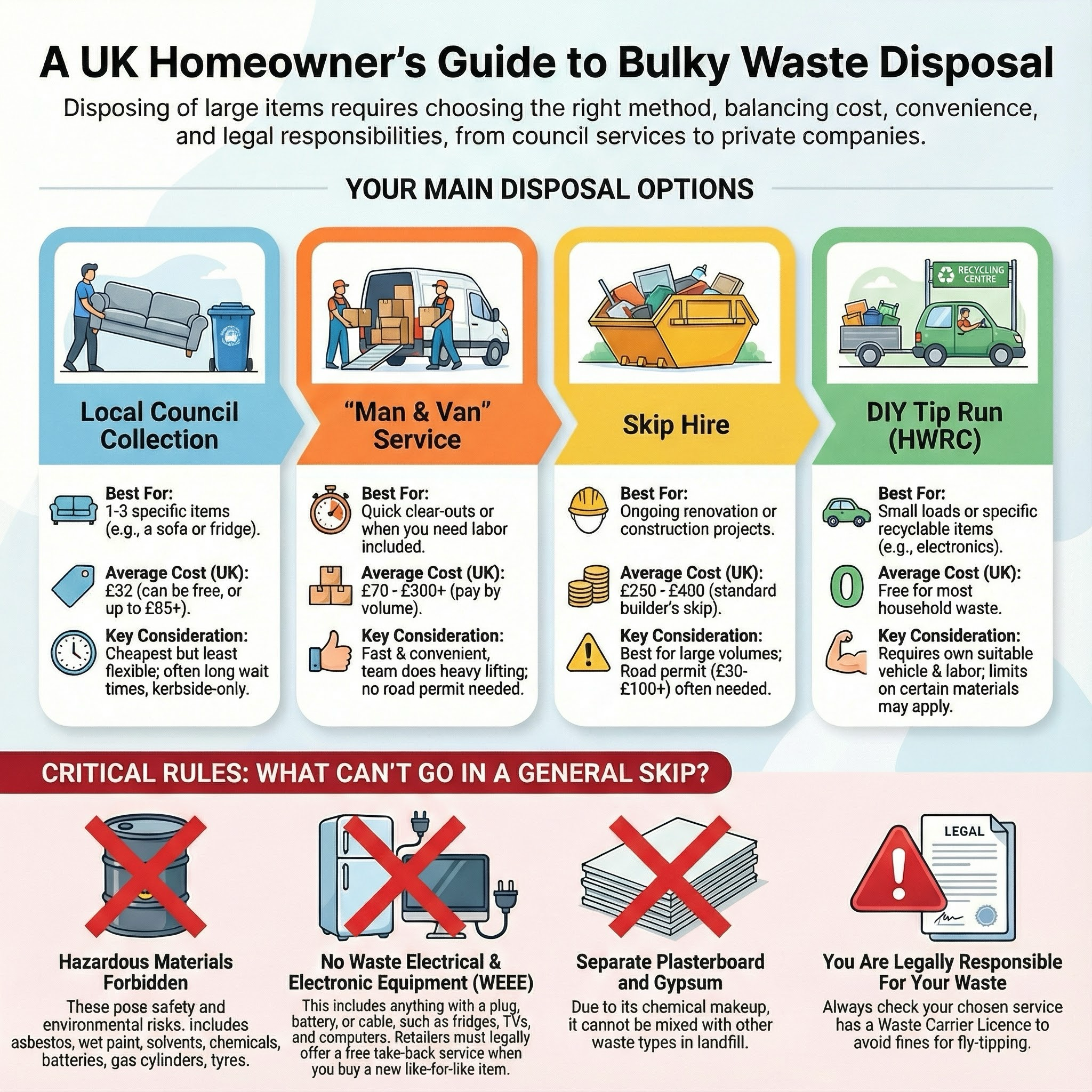
Rubbish Clearance explained
Hiring a professional waste clearance service ensures your rubbish is removed swiftly and, more importantly, disposed of legally at licensed facilities. This guide covers everything you need to know about the costs, regulations, and practicalities of professional bin bag removal in the UK.
The cost of removing black bin bags typically depends on the volume, weight, and ease of access to the waste. Most companies charge a minimum call-out fee to cover fuel and time, with additional costs per bag or per cubic yard thereafter.
| Item | Low £ | High £ | Notes |
|---|---|---|---|
| Minimum Call-out Fee | £60 | £100 | Covers travel and first 15-30 mins of labour. |
| Price per Standard Bag | £3.50 | £7.00 | Based on standard 60L-80L domestic bags. |
| Labour (per hour) | £45 | £75 | Usually charged if bags aren't ready at the kerbside. |
| Hazardous Surcharge | £30 | £120 | Extra for paints, oils, or bio-hazardous waste. |
| Total (Small load: 10-15 bags) | £90 | £160 | Includes disposal fees and VAT. |
| Total (Large load: 40+ bags) | £200 | £380 | Often requires a larger van and two operatives. |
Prices are influenced by your proximity to a waste transfer station and regional labour rates, with London and the South East usually commanding a 15-20% premium. If your bags contain heavy materials like soil or rubble, you will likely be charged by weight rather than by bag count.
Taking a few bags to the local Household Waste Recycling Centre (HWRC) in your own car is the most cost-effective method. However, many UK councils have strict rules against "van-like" vehicles or frequent visits, and you risk damaging your car’s interior with leaks or smells.
Hiring a professional is highly recommended for larger volumes or if the bags have been sitting outside for a while. Professionals have the correct PPE to handle potentially contaminated waste and, crucially, they take on the legal "Duty of Care" for the waste's final destination. Note: You must ensure the person you hire is a registered Waste Carrier, or you could be fined if they fly-tip your rubbish.
Questions to Ask: Do you provide a Waste Transfer Note? Is disposal at a licensed facility included in the price? What items do you consider "hazardous" and therefore won't take?
The disposal of domestic waste is governed by strict environmental laws in the UK to prevent fly-tipping and pollution.
No. Standard black bag removal is for general household waste. You should exclude hazardous materials like asbestos, chemicals, car batteries, and large quantities of electrical items (WEEE), as these require specialist disposal routes.
Yes, usually. Councils often refuse bags if they are too heavy, contains the wrong materials, or if you have exceeded your bag limit. Private companies are more flexible but will charge based on the volume and type of waste.
Most professionals will re-bag them for you to ensure they can be transported safely, though they may charge a small fee for the extra materials and labour involved.
Not necessarily, provided the bags are left in an accessible location and payment has been arranged. However, it is often better to be there to sign the Waste Transfer Note and confirm the final bag count.
Always ask for a receipt and a Waste Transfer Note. A legitimate business will be happy to provide their Waste Carrier Licence number. If the price seems "too good to be true," it often is, and the waste may end up in a country lane.
This guide was written with AI assistance and is intended for general information only. Prices are estimates based on UK averages and may vary by region. Always get at least three quotes and consult a qualified professional before starting any work.
Ask follow-ups in plain English. The AI explains options, sequencing and what to ask the rubbish clearance — so you walk in informed.
Disposing of an old mattress or a bulky bed frame is one of the more challenging tasks for UK homeowners. Beyond the physical strain of navigating heavy, awkwar...
READ GUIDE →GuideManaging commercial waste is a significantly different beast compared to standard residential rubbish. Whether you are a landlord clearing a shop unit, a home-b...
READ GUIDE →GuideDisposing of an old sofa or armchair in the UK has become more complex due to recent environmental legislation. Bulky furniture is difficult to move, and many i...
READ GUIDE →GuideScrapping a car in the UK is a straightforward process, but it is governed by strict environmental and legal regulations. Whether your vehicle is a non-runner, ...
READ GUIDE →GuideWhether you are decommissioning a commercial suite or simply reclaiming a spare bedroom from years of "home office" clutter, a professional office clean-out is ...
READ GUIDE →GuideDisposing of an old bed or mattress is one of the most awkward tasks a UK homeowner can face. Beyond the sheer bulk and weight, mattresses are notoriously diffi...
READ GUIDE →