Instant
01 · Ask
Ask the AI a follow-up
Got more questions about emergency Pool Service? Describe the bit you're unsure about — the AI explains options, sequencing and what to ask the swimming pools.

Pump failure, green water, leak or heating fault — same-day pool engineer call-out.
You've read the brief on emergency Pool Service. Now lean on us to find the right swimming pools — and stay in control of the job.
Got more questions about emergency Pool Service? Describe the bit you're unsure about — the AI explains options, sequencing and what to ask the swimming pools.
Costs, timelines, pitfalls and the right questions to ask before any swimming pools starts on emergency Pool Service.
Itemised quotes from up to 3 local swimming poolss on emergency Pool Service — so you can compare like-for-like, not lump sums.
Ready when you are
Enter your postcode and get free quotes from local pros.
Four moves that separate a smooth job from a nightmare.
Homeowners often mistake evaporation for a leak. A professional "bucket test" can confirm the difference before expensive detection begins.
Running a pump when the water level is too low causes it to run dry, leading to total motor failure.
Over-correcting a green pool with too many chemicals can damage the liner or heat exchanger.
Most emergencies occur in spring due to poor winterisation, causing pipes to crack from frost.
Indicative UK ranges and a typical week-by-week schedule.
By job type
Quote spread is typically ± 18% — always get 3 quotes.
Concrete in-ground pool build · week by week
Schedule slips on dependencies — pad each phase by 10–20% for real-world delays.
Swimming Pools quick-view
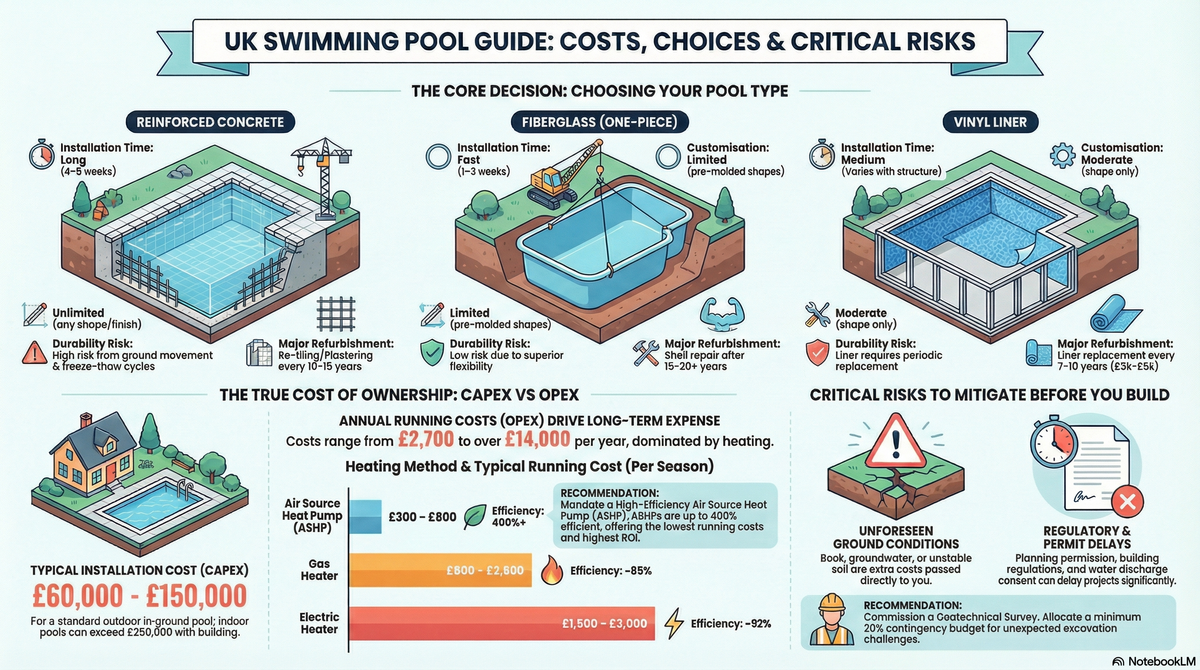
Swimming Pools explained
For UK homeowners, acting quickly prevents the "green water" spiral and protects the integrity of the pool shell and surrounding landscaping. This guide outlines what to expect during an emergency call-out and how to manage the costs involved.
| Item | Low £ | High £ | Notes |
|---|---|---|---|
| Emergency Call-out Fee | £120 | £250 | Usually covers the first hour of diagnostic work. |
| Leak Detection (Pressure Test) | £350 | £650 | Specialist equipment to find hidden pipe leaks. |
| Replacement Pool Pump | £450 | £1,300 | Price depends on flow rate and energy efficiency. |
| Chemical Shock & Recovery | £150 | £450 | Labour and high-strength chemicals for "green" pools. |
| Liner Patch/Repair | £200 | £500 | Minor underwater repairs to stop immediate leaks. |
Prices vary significantly based on your location in the UK and the time of year. Emergency call-outs during the peak summer months or over bank holidays typically carry a premium of 20-50% on standard labour rates.
While basic debris removal is a DIY task, emergency repairs should be left to professionals. Mixing electricity and water is inherently dangerous, and most pool equipment warranties are voided if not installed by a qualified technician.
Warning: Any electrical work on pool pumps or heaters must comply with Part P of the UK Building Regulations and be performed by a competent person.
Switch off the pump immediately to prevent it from running dry and burning out. Mark the water level with a piece of tape and call a specialist for a pressure test to determine if the leak is in the pipework or the shell.
No. Green water indicates a lack of sanitiser, meaning bacteria like E. coli or Cryptosporidium could be present. You should wait until the chemical levels are balanced and the water is crystal clear.
Most standard UK policies do not cover "wear and tear" or gradual leaks. However, they may cover "trace and access" or damage caused by a sudden burst pipe. Check your specific policy wording.
A full professional service should be carried out at least twice a year: once when opening the pool for spring and once when closing it for winter.
This usually indicates worn bearings or a failing motor. If left running, it will eventually seize or cause an electrical short. It requires immediate professional repair or replacement.
This guide was written with AI assistance and is intended for general information only. Prices are estimates based on UK averages and may vary by region. Always get at least three quotes and consult a qualified professional before starting any work.
Ask follow-ups in plain English. The AI explains options, sequencing and what to ask the swimming pools — so you walk in informed.
Maintaining a swimming pool in the UK requires a proactive approach to handle our variable climate and ensure the water remains safe for swimmers. Whether you o...
READ GUIDE →GuideA hot tub is a significant investment for any UK homeowner, offering a private retreat for relaxation and hydrotherapy. However, the combination of high tempera...
READ GUIDE →GuideHot tubs are a significant investment for UK homeowners, providing a year-round retreat in the garden. However, the combination of high-voltage electricity, com...
READ GUIDE →GuideInstalling a hot tub is one of the most popular ways to enhance a UK garden, offering a year-round retreat for relaxation and hydrotherapy. While the prospect o...
READ GUIDE →GuideBuilding a swimming pool is one of the most significant home improvements a UK homeowner can undertake. Beyond the lifestyle benefits, a well-constructed pool c...
READ GUIDE →GuideScope of Supply • Browse our extensive range of hot tubs, including both portable and built-in models • Undertake rigorous quality checks to ensure safety, dura...
READ GUIDE →