Instant
01 · Ask
Ask the AI a follow-up
Got more questions about swimming Pool Construction? Describe the bit you're unsure about — the AI explains options, sequencing and what to ask the swimming pools.

Outdoor or indoor pool — engineered build, designed for UK climate, by a pool specialist.
You've read the brief on swimming Pool Construction. Now lean on us to find the right swimming pools — and stay in control of the job.
Got more questions about swimming Pool Construction? Describe the bit you're unsure about — the AI explains options, sequencing and what to ask the swimming pools.
Costs, timelines, pitfalls and the right questions to ask before any swimming pools starts on swimming Pool Construction.
Itemised quotes from up to 3 local swimming poolss on swimming Pool Construction — so you can compare like-for-like, not lump sums.
Ready when you are
Enter your postcode and get free quotes from local pros.
Four moves that separate a smooth job from a nightmare.
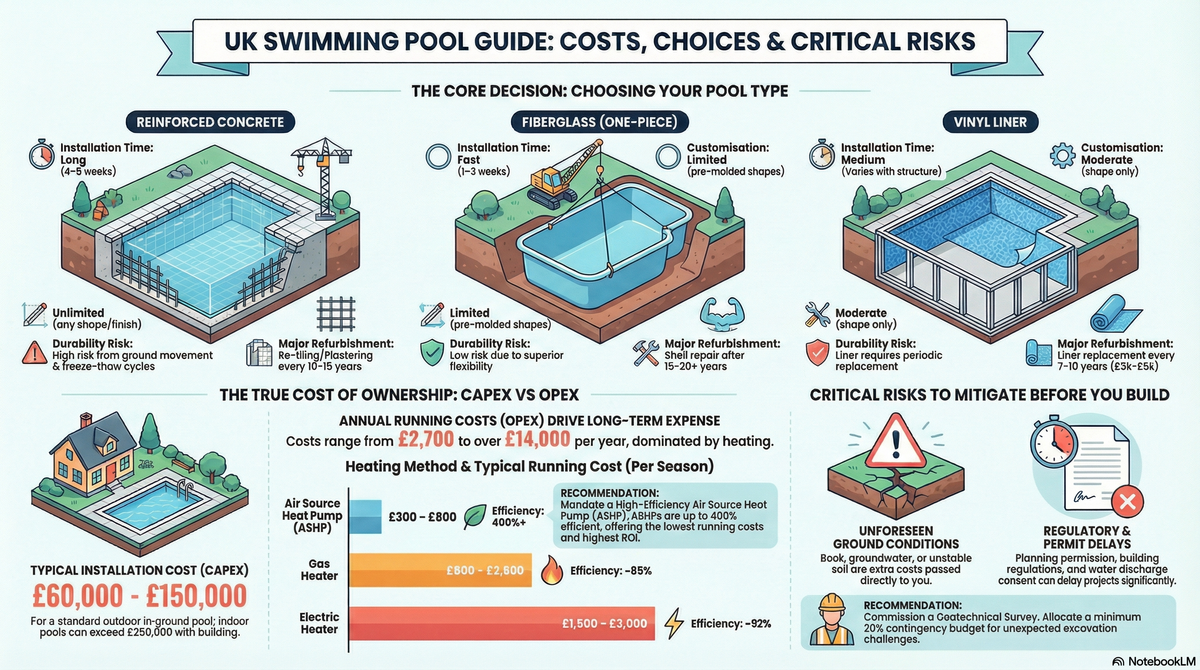
If a pool is emptied in a high water table area without a hydrostatic relief valve, the entire shell can "pop" out of the ground.
Failing to insulate the pool floor and walls during construction leads to astronomical heating bills in the UK climate.
Undersized pumps or filters lead to stagnant, cloudy water and excessive chemical use.
In vinyl pools, poor site preparation or water chemistry can cause the liner to stretch or wrinkle prematurely.
Indicative UK ranges and a typical week-by-week schedule.
By job type
Quote spread is typically ± 18% — always get 3 quotes.
Concrete in-ground pool build · week by week
Schedule slips on dependencies — pad each phase by 10–20% for real-world delays.
Swimming Pools quick-view
Swimming Pools explained
Modern pool construction has evolved to offer high thermal efficiency and lower maintenance. Whether you are considering a sleek indoor lap pool or a family-friendly outdoor garden pool, professional installation is critical to ensure the structure remains watertight and energy-efficient for decades.
The following estimates reflect professional UK installation prices for 2025/26, including VAT and standard material costs. Prices vary significantly based on excavation complexity and the chosen heating system.
| Pool Type | Low £ | High £ | Notes |
|---|---|---|---|
| Vinyl Liner (Outdoor) | £35,000 | £55,000 | The most common UK residential choice. |
| Fibreglass One-Piece | £45,000 | £80,000 | Quick install; requires crane access. |
| Concrete & Tiled | £75,000 | £150,000+ | Premium finish with maximum longevity. |
| Natural Swim Pond | £50,000 | £95,000 | Uses plants for filtration; no chemicals. |
| Automatic Safety Cover | £8,000 | £15,000 | Essential for heat retention and safety. |
Ground conditions are the biggest cost variable. Encountering a high water table or solid rock during excavation can add £5,000–£10,000 to the initial budget for drainage solutions or specialised machinery.
Swimming pool construction is not recommended as a DIY project. The structural risks are immense; a standard 10m x 5m pool holds roughly 75,000 litres of water, weighing 75 tonnes. Any failure in the shell or plumbing can cause catastrophic damage to your property and neighbouring land.
Professional installers provide warranties and ensure compliance with Part P (Electrical Safety) and Part L (Conservation of Fuel and Power) of the UK Building Regulations.
In most cases, no. Outdoor pools are generally considered garden improvements under Permitted Development. However, if the pool is in front of the house, in a National Park, or involves a large enclosure/pool house, you will likely need formal permission.
Expect to pay between £5 and £15 per day during the summer months. This covers electricity for the pump and heating (usually via an air-source heat pump) and chemical treatments. Using a high-quality solar cover can reduce these costs by up to 60%.
Liners are cheaper to install and easier to replace (every 10-15 years). Tiles are more expensive and take longer to install but offer a premium aesthetic and can last 25+ years if maintained correctly. Tiles are generally preferred for indoor pools.
Standard pool heat pumps work best when the air temperature is above 10°C. For year-round swimming in the UK, you would need an "All Season" heat pump or a heat exchanger linked to a gas/oil boiler or biomass system.
A saltwater pool still uses chlorine, but it generates it naturally from salt via a chlorinator. It is gentler on the skin and eyes than traditional chlorine tablets, but the initial equipment cost is higher and the salt can be corrosive to certain stone surrounds.
This guide was written with AI assistance and is intended for general information only. Prices are estimates based on UK averages and may vary by region. Always get at least three quotes and consult a qualified professional before starting any work.
Ask follow-ups in plain English. The AI explains options, sequencing and what to ask the swimming pools — so you walk in informed.
An emergency swimming pool failure is more than just a ruined weekend; it can lead to significant structural damage, sky-high water bills, or hazardous chemical...
READ GUIDE →GuideMaintaining a swimming pool in the UK requires a proactive approach to handle our variable climate and ensure the water remains safe for swimmers. Whether you o...
READ GUIDE →GuideA hot tub is a significant investment for any UK homeowner, offering a private retreat for relaxation and hydrotherapy. However, the combination of high tempera...
READ GUIDE →GuideHot tubs are a significant investment for UK homeowners, providing a year-round retreat in the garden. However, the combination of high-voltage electricity, com...
READ GUIDE →GuideInstalling a hot tub is one of the most popular ways to enhance a UK garden, offering a year-round retreat for relaxation and hydrotherapy. While the prospect o...
READ GUIDE →GuideScope of Supply • Browse our extensive range of hot tubs, including both portable and built-in models • Undertake rigorous quality checks to ensure safety, dura...
READ GUIDE →