Instant
01 · Ask
Ask the AI a follow-up
Got more questions about alarm noise inspection? Describe the bit you're unsure about — the AI explains options, sequencing and what to ask the alarms & security.

Why it's sounding, what's triggering it, and how to silence a faulty bell box without disabling the system.
You've read the brief on alarm noise inspection. Now lean on us to find the right alarms & security — and stay in control of the job.
Got more questions about alarm noise inspection? Describe the bit you're unsure about — the AI explains options, sequencing and what to ask the alarms & security.
Costs, timelines, pitfalls and the right questions to ask before any alarms & security starts on alarm noise inspection.
Itemised quotes from up to 3 local alarms & securitys on alarm noise inspection — so you can compare like-for-like, not lump sums.
Ready when you are
Enter your postcode and get free quotes from local pros.
Four moves that separate a smooth job from a nightmare.
The most common cause of "phantom" triggers; batteries usually need replacing every 3 to 5 years.
Spiders inside PIR (motion) sensors are a frequent cause of false alarms during the autumn months.
If a bell box or panel cover isn't fitted tightly, wind or vibrations can trigger the tamper circuit.
Moisture ingress in external sounders can cause the circuitry to short, leading to intermittent "chirping" or siren activation.
Indicative UK ranges and what affects price.
By job type
Quote spread is typically ± 18% — always get 3 quotes.
Alarms & Security quick-view
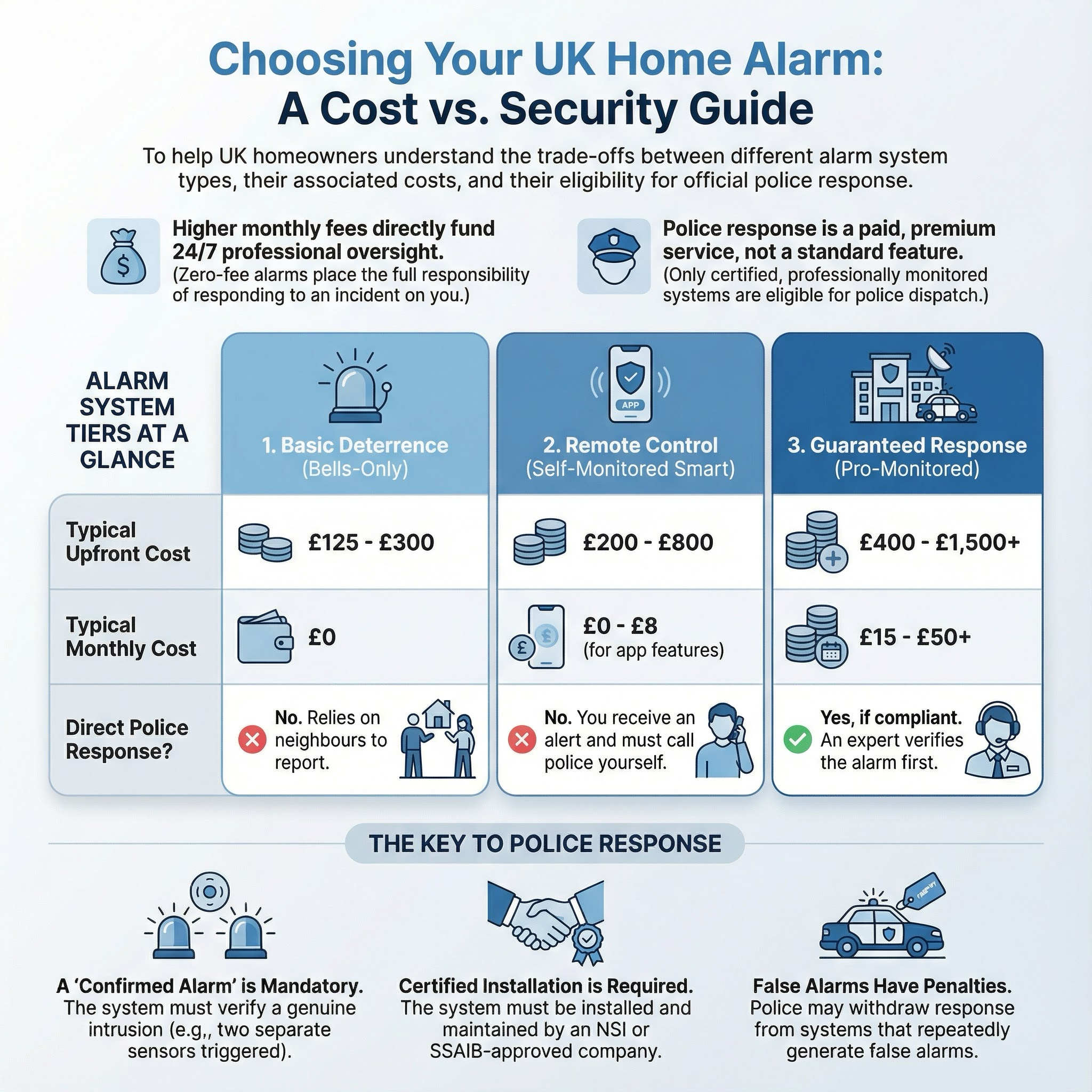
Alarms & Security explained
An alarm noise inspection identifies why your system is triggering falsely or emitting "trouble" pips and chirps. Professional diagnostics ensure your home remains secure while preventing the system from becoming a community disturbance.
Most alarm inspections are charged as a fixed call-out fee for the first hour, with additional costs for replacement parts like backup batteries or new sensors. Prices include VAT at the standard UK rate.
| Item | Low £ | High £ | Notes |
|---|---|---|---|
| Emergency Call-out (1st hour) | £80 | £150 | Higher rates for out-of-hours or weekends. |
| Standard Diagnostic Visit | £60 | £95 | Scheduled daytime appointment. |
| Replacement Backup Battery | £25 | £65 | Depends on capacity (e.g., 2.1Ah vs 7Ah). |
| Replacement External Sounder | £80 | £160 | Includes unit and installation labour. |
| Wireless Sensor Battery Change | £5 | £15 | Per sensor; usually CR123A or similar. |
| Total Typical Project | £120 | £350 | Includes call-out and minor parts. |
Factors affecting the price include your location (London and the South East carry a premium), the age of the system, and whether the engineer needs specialist ladders to reach high-level external sirens.
While you can change batteries in some wireless sensors yourself, a full noise inspection should be handled by a professional. Modern UK alarm systems often have "anti-tamper" switches that will trigger a full-volume siren if you open the panel without the engineer's code.
Warning: Alarm panels are connected to the UK mains supply (230V). Attempting DIY repairs without proper isolation poses a significant risk of electric shock.
Furthermore, if your system is "monitored" or required by your home insurance, DIY intervention may void your policy or trigger a false police dispatch.
This is usually a "trouble" signal. It often indicates a low battery, a power cut, or a communication failure with your phone line or internet. Check the keypad for an error message or a "warning" light.
No. If you turn off the mains power, the system will switch to its backup battery. If the battery is old or the system thinks it is being tampered with, the external siren will likely trigger at full volume and cannot be stopped easily.
Many UK insurers offer discounts for having an alarm, but they often stipulate it must be maintained annually by an NSI or SSAIB-approved company. If a fault occurs and you haven't had it inspected, they may refuse a claim.
Ensure your system has a 20-minute cut-off timer installed. You should also register a keyholder with your local council's environmental health department so they can be contacted if the alarm triggers while you are away.
A tamper fault means the physical security of the system has been compromised. This could be a loose screw on the keypad, a lid not being shut properly, or a cable being chewed by rodents.
Yes, an inspection includes testing the batteries. The engineer will typically replace the battery during the visit, clear the fault code from the memory, and reset the system to its normal state.
This guide was written with AI assistance and is intended for general information only. Prices are estimates based on UK averages and may vary by region. Always get at least three quotes and consult a qualified professional before starting any work.
Ask follow-ups in plain English. The AI explains options, sequencing and what to ask the alarms & security — so you walk in informed.
Removing an old or obsolete alarm system is a common task for UK homeowners, especially when upgrading to smart technology or during home renovations. A redunda...
READ GUIDE →GuideFor UK homeowners who operate home-based workshops, laboratories, or studios involving hazardous chemicals, a functioning emergency eyewash station is a critica...
READ GUIDE →GuideElectric gates are a premium addition to any UK home, offering enhanced security, privacy, and significant kerb appeal. For many homeowners, the convenience of ...
READ GUIDE →GuideA malfunctioning CCTV system is more than just a technical glitch; it is a significant security gap that can leave your UK home vulnerable and potentially inval...
READ GUIDE →GuideWhen a burglar alarm triggers unexpectedly or shows a persistent fault code, it is more than just a noise nuisance. A malfunctioning security system leaves your...
READ GUIDE →GuideA functional gate is the first line of defence for your UK home, providing essential security, privacy, and kerb appeal. Whether it is a sagging timber side gat...
READ GUIDE →