Instant
01 · Ask
Ask the AI a follow-up
Got more questions about oven Heating Element Replacement? Describe the bit you're unsure about — the AI explains options, sequencing and what to ask the appliance repair.

When to swap an element vs buy a new oven — parts, labour and the safety check that follows.
You've read the brief on oven Heating Element Replacement. Now lean on us to find the right appliance repair — and stay in control of the job.
Got more questions about oven Heating Element Replacement? Describe the bit you're unsure about — the AI explains options, sequencing and what to ask the appliance repair.
Costs, timelines, pitfalls and the right questions to ask before any appliance repair starts on oven Heating Element Replacement.
Itemised quotes from up to 3 local appliance repairs on oven Heating Element Replacement — so you can compare like-for-like, not lump sums.
Ready when you are
Enter your postcode and get free quotes from local pros.
Four moves that separate a smooth job from a nightmare.
There are hundreds of lookalike elements; using the wrong wattage can lead to undercooking or overheating.
When an element "blows," it often melts the wire connectors. Simply plugging in a new element without fixing the wires will cause it to fail again within weeks.
If the rear insulation is disturbed and touches the element, it can create a fire hazard or cause the RCD (fuse box) to trip.
High heat often causes screws to seize. Forcing them can strip the heads, making the oven difficult to service in the future.
Indicative UK ranges and what affects price.
By job type
Quote spread is typically ± 18% — always get 3 quotes.
Appliance Repair quick-view
Appliance Repair explained
Most modern electric ovens use a circular fan element, a top grill element, and sometimes a hidden bottom element. When these fail, they often "pop" or stop glowing, leaving your food cold despite the fan running and the lights being on.
Prices for oven element replacement are generally stable across the UK, though London and the South East may see slightly higher labour rates. The total cost is heavily influenced by whether you choose a genuine manufacturer (OEM) part or a high-quality "pattern" alternative.
| Item | Low £ | High £ | Notes |
|---|---|---|---|
| Call-out & Diagnosis | £80 | £120 | Often includes the first hour of labour. |
| Replacement Element (Part) | £25 | £85 | Premium brands (Miele, Neff) cost more. |
| Additional Labour | £40 | £70 | Only if the repair is complex or access is restricted. |
| Total Project Cost | £120 | £260 | Includes VAT and basic parts. |
Factors affecting the price include the brand of the oven and the ease of access. Built-in double ovens often require two people to safely lift the unit out of the cabinetry, which can increase the labour charge.
While many homeowners attempt to replace an element themselves, it involves working with high-voltage electrical components. If the wiring terminals have been damaged by the heat of the element failing, they may need to be cut back and re-crimped with high-temperature connectors—a task best left to a professional.
Safety Warning: Never attempt to work on an oven that is still connected to the power. Even if the oven is "off" at the dial, the terminals can remain live.
If the oven fan is spinning and the thermostat light is on, but the air stays cold, the element is almost certainly at fault. You may also see visible splits, bulges, or black burn marks on the element itself.
Yes, usually. On most UK ovens, the grill and the fan element are separate components. However, if the element failed by "shorting out," it might have tripped your circuit breaker, which will need to be reset first.
This is normal. Most new elements have a protective oil coating from the factory. It should burn off within 15–30 minutes of the first use. It is best to run the oven empty at a high temperature for half an hour before cooking.
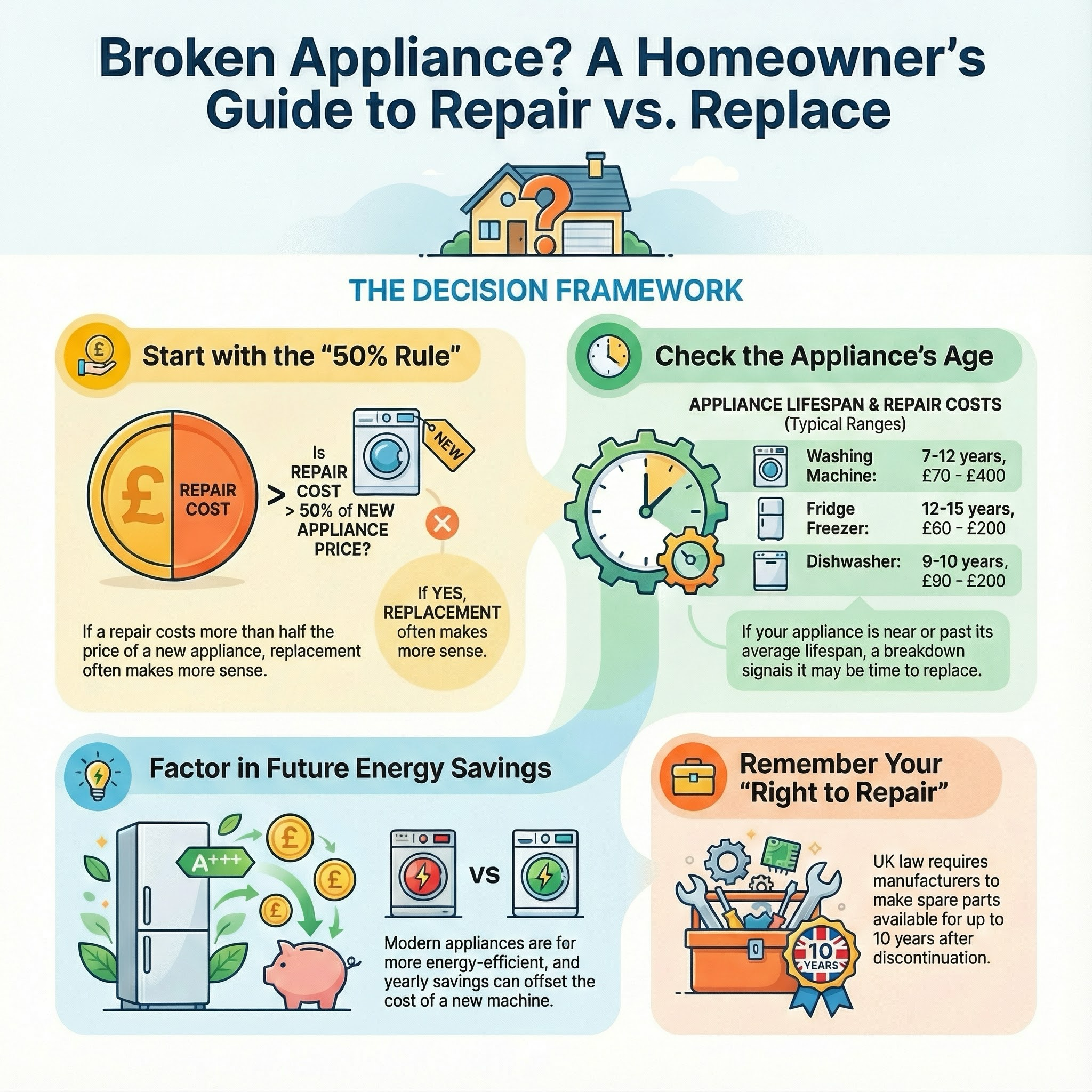
If the oven is otherwise in good condition, yes. A repair costs around £150, whereas a new high-quality oven plus installation can easily exceed £500. However, if the door seals are gone or the hinges are sagging, replacement might be better.
Elements are consumables with a finite lifespan. Over time, the internal filament expands and contracts until it eventually breaks. Frequent use at very high temperatures can accelerate this wear and tear.
This guide was written with AI assistance and is intended for general information only. Prices are estimates based on UK averages and may vary by region. Always get at least three quotes and consult a qualified professional before starting any work.
Ask follow-ups in plain English. The AI explains options, sequencing and what to ask the appliance repair — so you walk in informed.
Microwaves are a staple of the modern UK kitchen, offering convenience for everything from defrosting to full meal preparation. While basic freestanding models ...
READ GUIDE →GuideA faulty fridge or freezer is one of the most urgent domestic repairs, with food safety and waste being the primary concerns. For many UK homeowners, a professi...
READ GUIDE →GuideScope of Works • inspect appliance and perform diagnostic checks (power, suction, switches, wiring) • clean and test filters, dust bin or bag and airway for blo...
READ GUIDE →GuideA faulty microwave display is a common frustration for UK homeowners. Whether the screen has gone completely dark, is flickering, or showing unintelligible "gho...
READ GUIDE →GuideA faulty oven can bring a UK household to a standstill, turning meal times into a logistical challenge. Whether it is a failed heating element, a noisy fan, or ...
READ GUIDE →GuideHigh-end food processors from brands like Magimix, Kenwood, and KitchenAid are significant investments for any UK kitchen. When these machines stop spinning or ...
READ GUIDE →