Instant
01 · Ask
Ask the AI a follow-up
Got more questions about oven repair? Describe the bit you're unsure about — the AI explains options, sequencing and what to ask the appliance repair.

Element, fan, ignition or door seal — fixed on-site with a 12-month parts warranty.
You've read the brief on oven repair. Now lean on us to find the right appliance repair — and stay in control of the job.
Got more questions about oven repair? Describe the bit you're unsure about — the AI explains options, sequencing and what to ask the appliance repair.
Costs, timelines, pitfalls and the right questions to ask before any appliance repair starts on oven repair.
Itemised quotes from up to 3 local appliance repairs on oven repair — so you can compare like-for-like, not lump sums.
Ready when you are
Enter your postcode and get free quotes from local pros.
Four moves that separate a smooth job from a nightmare.
Usually caused by a "blown" element where the internal filament has touched the outer casing.
Often a sign that the fan motor is failing or the door seal is perished, allowing heat to escape from one side.
Typically indicates the bearings in the circulation fan are worn; if left, the motor will eventually seize.
A faulty thermostat can fail to cut the power to the elements, leading to burnt food or even shattered door glass.
Indicative UK ranges and what affects price.
By job type
Quote spread is typically ± 18% — always get 3 quotes.
Appliance Repair quick-view
Appliance Repair explained
Most oven repairs in the UK involve electrical components or mechanical wear and tear. Engaging a specialist appliance engineer ensures the work is carried out safely, maintaining the integrity of your kitchen’s electrical circuits and ensuring your manufacturer’s warranty remains valid where applicable.
The cost of oven repair in the UK generally consists of a fixed call-out fee plus the price of replacement parts. Premium brands like Miele, NEFF, or Rangemaster typically incur higher parts costs compared to budget brands like Beko or Indesit.
| Item | Low £ | High £ | Notes |
|---|---|---|---|
| Call-out / Diagnostic Fee | £60 | £110 | Often deducted from the final repair bill. |
| Labour (Hourly Rate) | £50 | £95 | Varies by region (London/SE is higher). |
| Replacement Heating Element | £25 | £90 | Part cost only; varies by oven type. |
| Fan Motor Replacement | £45 | £160 | Genuine OEM parts cost significantly more. |
| Main Control Board (PCB) | £120 | £350 | Required for digital/touch-screen faults. |
| Door Seals & Hinges | £20 | £80 | Simple mechanical fix to improve efficiency. |
Pricing is heavily influenced by whether the engineer uses "Genuine" (OEM) parts or "Universal" alternatives. While universal parts are cheaper, they may not offer the same longevity or fitment precision as the manufacturer's original components.
While changing an oven lightbulb is a standard DIY task, most oven repairs should be left to professionals. Electric ovens operate on high-current circuits; a mistake during reassembly can lead to electrical fires or fatal shocks. Furthermore, many modern ovens require specific diagnostic software or tools to reset control modules after a part is replaced.
Warning: If you have a gas or dual-fuel oven, it is illegal in the UK for anyone other than a Gas Safe registered engineer to work on the gas components of the appliance.
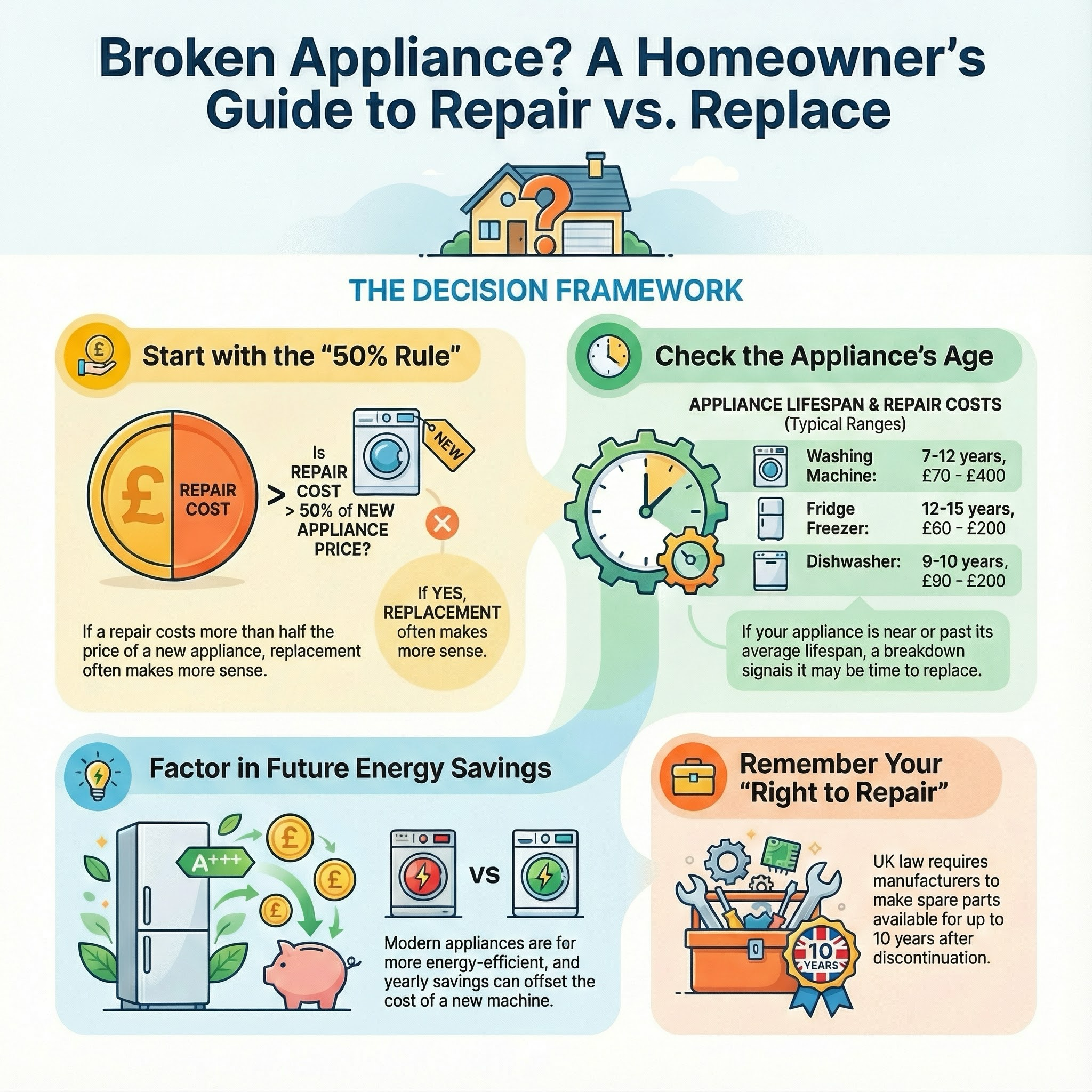
If the oven is a high-end brand and the repair is under £150, it is usually worth it. However, if the appliance is a budget model and requires an expensive part like a PCB, replacement is often more sensible as other components are likely nearing the end of their lifespan.
This is almost always a failed fan oven element. The fan will still spin and the light will stay on, but the element surrounding the fan has snapped, preventing any heat from being generated.
In the UK, call-out fees typically range from £60 to £90. Many reputable engineers will "offset" this fee against the final cost of the repair if you choose to proceed with the work.
No. Using an oven with cracked glass is dangerous as the heat stress can cause the glass to shatter completely. It also significantly reduces the energy efficiency of the appliance.
Generally, no. Most engineers prefer to move the appliance themselves to ensure no damage is done to your flooring or the integrated housing. However, clearing the area around the oven is always appreciated.
This guide was written with AI assistance and is intended for general information only. Prices are estimates based on UK averages and may vary by region. Always get at least three quotes and consult a qualified professional before starting any work.
Ask follow-ups in plain English. The AI explains options, sequencing and what to ask the appliance repair — so you walk in informed.
Microwaves are a staple of the modern UK kitchen, offering convenience for everything from defrosting to full meal preparation. While basic freestanding models ...
READ GUIDE →GuideA faulty fridge or freezer is one of the most urgent domestic repairs, with food safety and waste being the primary concerns. For many UK homeowners, a professi...
READ GUIDE →GuideA cold oven is a major disruption to any UK household, but a failed heating element is one of the most common and cost-effective repairs you can undertake. Inst...
READ GUIDE →GuideScope of Works • inspect appliance and perform diagnostic checks (power, suction, switches, wiring) • clean and test filters, dust bin or bag and airway for blo...
READ GUIDE →GuideA faulty microwave display is a common frustration for UK homeowners. Whether the screen has gone completely dark, is flickering, or showing unintelligible "gho...
READ GUIDE →GuideHigh-end food processors from brands like Magimix, Kenwood, and KitchenAid are significant investments for any UK kitchen. When these machines stop spinning or ...
READ GUIDE →