Instant
01 · Ask
Ask the AI a follow-up
Got more questions about concrete Floor Screeding? Describe the bit you're unsure about — the AI explains options, sequencing and what to ask the carpets.

Liquid or sand-cement screed — laid level for tile, carpet or vinyl, with underfloor heating where required.
You've read the brief on concrete Floor Screeding. Now lean on us to find the right carpets — and stay in control of the job.
Got more questions about concrete Floor Screeding? Describe the bit you're unsure about — the AI explains options, sequencing and what to ask the carpets.
Costs, timelines, pitfalls and the right questions to ask before any carpets starts on concrete Floor Screeding.
Itemised quotes from up to 3 local carpetss on concrete Floor Screeding — so you can compare like-for-like, not lump sums.
Ready when you are
Enter your postcode and get free quotes from local pros.
Four moves that separate a smooth job from a nightmare.
Often caused by the screed drying too quickly or a lack of expansion joints.
A weak, dusty layer on top of liquid screeds that must be sanded off before tiling.
Occurs when the screed fails to bond to the base concrete, usually due to poor priming.
If the room is not properly ventilated or is too cold, the screed may take months to dry, delaying your project.
Indicative UK ranges and what affects price.
By job type
Quote spread is typically ± 18% — always get 3 quotes.
Carpets quick-view
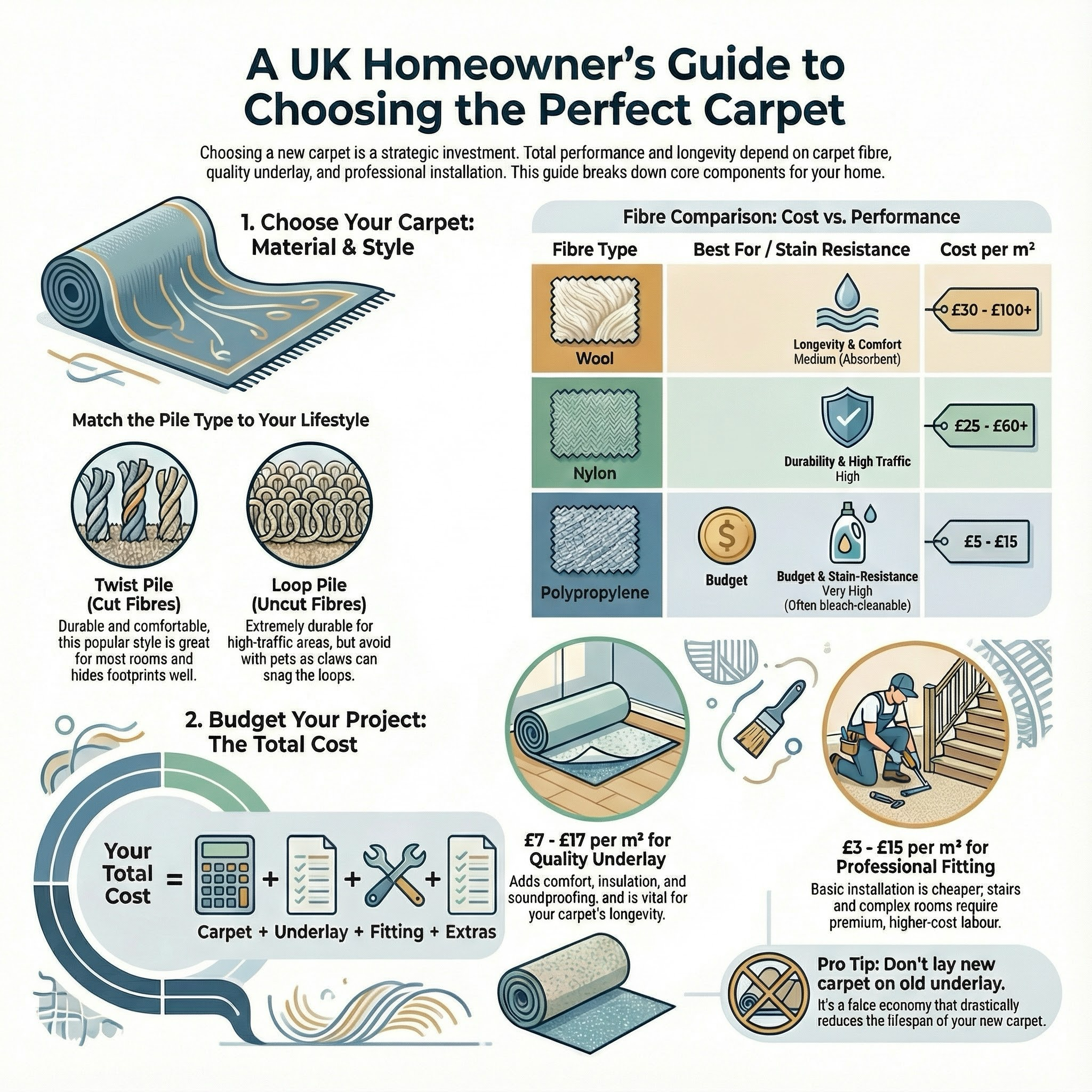
Carpets explained
Whether you are extending your home or levelling a bumpy garage floor, the quality of the screed determines the longevity of your final flooring. A poor job can lead to cracking, damp issues, or "hollow" spots that cause expensive floor tiles to snap under pressure.
| Item | Low £ | High £ | Notes |
|---|---|---|---|
| Sand & Cement (per m²) | £18 | £30 | Traditional semi-dry mix; labour and materials included. |
| Liquid / Flow Screed (per m²) | £22 | £40 | Anhydrite or cement-based; ideal for underfloor heating. |
| Minimum Call-out Charge | £500 | £850 | Required for small areas to cover pump hire and setup. |
| Latex Levelling Compound | £15 | £25 | Per m² for thin-set smoothing (3mm - 10mm). |
| DPM & Primer Prep | £6 | £12 | Per m² for moisture barriers and bonding agents. |
Prices vary significantly based on the depth of the screed and the total area. Liquid screeds often have a higher material cost but lower labour time, whereas traditional sand and cement is cheaper in materials but physically demanding and slower to install.
While DIY screeding is possible for small patches or sheds, large-scale internal floors are best left to professionals. Achieving a perfectly level finish across a large room is technically difficult; a 5mm error can result in "lippage" on your tiles or bouncy floorboards.
Professional screeders use laser levels and specialized pumping equipment to ensure consistency. Furthermore, if you are installing underfloor heating, a professional ensures the screed is compacted around the pipes to eliminate air pockets, which is vital for heat transfer.
Top Tip: Always ask your tradesperson if they will perform a moisture test (hygrometer test) before you lay your final floor covering. This is the only way to be sure the screed is dry enough for wood or LVT.
Yes, but the thickness matters. If you only need a thin layer (under 10mm), a self-levelling compound is better. For traditional screeds, you usually need at least 35mm-40mm for a bonded finish.
Liquid (flow) screed is superior for underfloor heating as it flows around pipes perfectly. Sand and cement is more cost-effective for smaller areas or floors with a fall (like a wet room).
If your base concrete is old or shows signs of moisture, a DPM is essential. It prevents ground damp from rising through the screed and ruining your floor finishes.
You must wait at least 21 days for cement-based screeds and 7 days for some liquid screeds. The heat must be introduced very gradually (5°C increments) to prevent thermal shock and cracking.
This is usually "laitance" or a sign that the mix had too much water. It must be mechanically sanded and vacuumed before any adhesive or primer is applied.
This guide was written with AI assistance and is intended for general information only. Prices are estimates based on UK averages and may vary by region. Always get at least three quotes and consult a qualified professional before starting any work.
Ask follow-ups in plain English. The AI explains options, sequencing and what to ask the carpets — so you walk in informed.
New flooring is one of the most impactful upgrades you can make to a UK home. Beyond the immediate aesthetic boost, high-quality flooring improves insulation, r...
READ GUIDE →GuideLaminate flooring remains one of the most popular choices for UK homeowners, offering the aesthetic of real hardwood with significantly higher durability and ea...
READ GUIDE →GuideInstalling new carpet is one of the most effective ways to instantly improve the comfort and insulation of your home. Whether you are opting for a durable wool-...
READ GUIDE →GuideModern vinyl flooring has evolved far beyond the basic "lino" of the past. Today, UK homeowners can choose from high-end sheet vinyl, Luxury Vinyl Tiles (LVT), ...
READ GUIDE →GuideRefinishing a wooden floor is one of the most effective ways to restore character and add significant value to a UK home. Whether you have discovered original V...
READ GUIDE →GuideWood floor restoration is one of the most effective ways to breathe new life into a UK home, especially for period properties with original pine or oak boards. ...
READ GUIDE →