Instant
01 · Ask
Ask the AI a follow-up
Got more questions about heating System Repair? Describe the bit you're unsure about — the AI explains options, sequencing and what to ask the central heating.

Boiler, radiator, pipework or controls fault — diagnosed, quoted and fixed by a heating engineer.
You've read the brief on heating System Repair. Now lean on us to find the right central heating — and stay in control of the job.
Got more questions about heating System Repair? Describe the bit you're unsure about — the AI explains options, sequencing and what to ask the central heating.
Costs, timelines, pitfalls and the right questions to ask before any central heating starts on heating System Repair.
Itemised quotes from up to 3 local central heatings on heating System Repair — so you can compare like-for-like, not lump sums.
Ready when you are
Enter your postcode and get free quotes from local pros.
Four moves that separate a smooth job from a nightmare.
Black iron oxide buildup can block heat exchangers and kill pumps. Use a magnetic filter to prevent this.
In extreme cold, the external plastic pipe can freeze, causing the boiler to shut down. Insulate these pipes to avoid the issue.
Usually caused by a small leak in the radiator network or a failing expansion vessel.
Trapped air prevents hot water from circulating, leaving radiators cold at the top. Regular bleeding usually solves this.
Indicative UK ranges and what affects price.
By job type
Quote spread is typically ± 18% — always get 3 quotes.
Central Heating quick-view
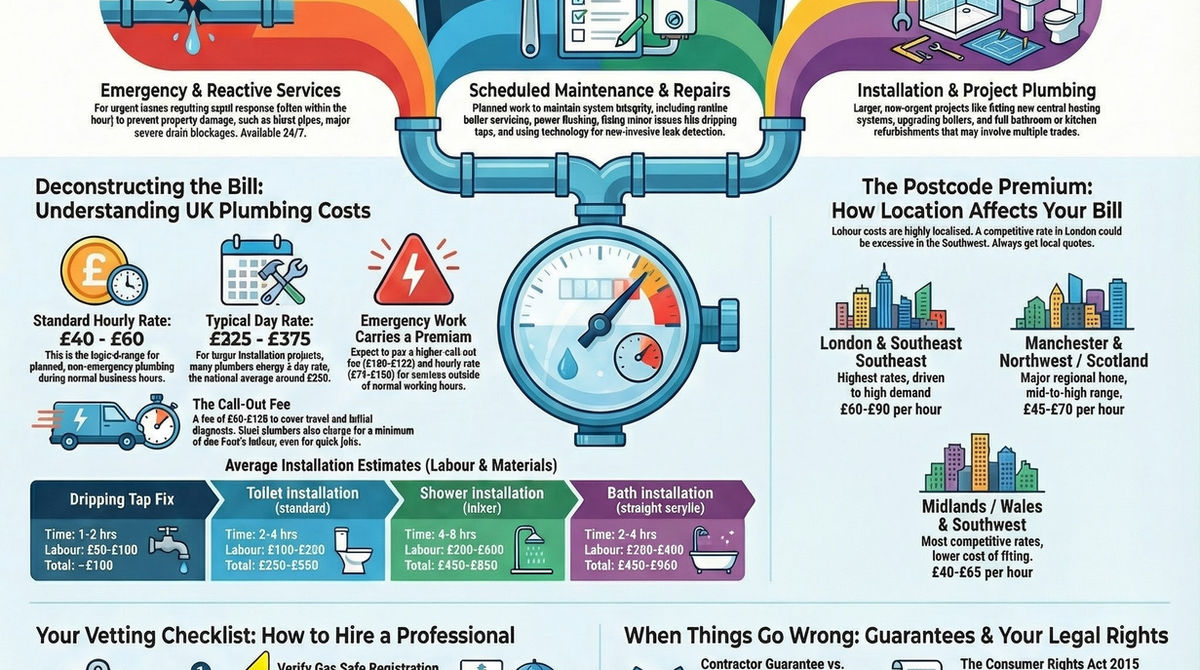
Addressing repairs promptly not only restores comfort but also prevents minor leaks or component failures from escalating into expensive emergency call-outs or full system replacements. This guide outlines what to expect when hiring a heating engineer and how to budget for common repairs.
Prices for heating repairs vary significantly based on your location (London and the SE are typically 20% higher) and the specific parts required. The figures below reflect realistic 2025/26 UK averages including VAT.
| Item | Low £ | High £ | Notes |
|---|---|---|---|
| Emergency Call-Out Fee | £90 | £180 | Usually covers the first hour of labour. |
| Circulating Pump Replacement | £180 | £350 | Includes part and 1-2 hours of labour. |
| Motorised Zone Valve | £120 | £250 | Common fix for "hot water but no heating" issues. |
| Boiler Fan or PCB | £250 | £550 | Major components; often requires manufacturer-specific parts. |
| Radiator Valve (TRV) Replacement | £60 | £120 | Per radiator; cheaper if multiple are done at once. |
| System Powerflush | £400 | £800 | Deep clean of the entire pipework network. |
The total cost is heavily influenced by the age of your system. Older boilers may require obsolete parts that are harder to source, while modern condensing boilers involve more complex electronic diagnostics.
In the UK, it is a legal requirement under the Gas Safety (Installation and Use) Regulations 1998 that any work involving the gas pathway of a boiler must be performed by a Gas Safe registered engineer. Attempting to repair gas valves, burners, or flues yourself is illegal and extremely dangerous.
Homeowners should limit DIY tasks to bleeding radiators, checking the boiler pressure, or replacing batteries in a wireless thermostat. Any task requiring the boiler casing to be removed must be handled by a professional.
This usually indicates a leak in the system or a failing expansion vessel. Even a tiny leak from a radiator valve can cause the pressure to drop over 24 hours. If there are no visible leaks, the internal pressure relief valve may be faulty.
No. A powerflush is typically only needed every 5–10 years, or when you install a brand-new boiler. If your radiators have cold spots at the bottom, a flush may be necessary to remove built-up sludge.
Yes, swapping a radiator is a legal DIY task as it does not involve the gas components of the boiler. However, you must be confident in draining the system and ensuring watertight connections to avoid significant water damage.
If you rent out your property, you are legally required to have an annual inspection of all gas appliances. This is not a repair service, but a safety check to ensure the system is not leaking carbon monoxide.
This is often caused by a failed circulating pump or a stuck motorised zone valve. The boiler is firing up, but the heat isn't being "pushed" around the house. A professional will need to test the pump's electrical supply to confirm.
This guide was written with AI assistance and is intended for general information only. Prices are estimates based on UK averages and may vary by region. Always get at least three quotes and consult a qualified professional before starting any work.
Ask follow-ups in plain English. The AI explains options, sequencing and what to ask the central heating — so you walk in informed.
A heater matrix is essentially a small radiator located deep behind your vehicle's dashboard. It is a critical component of your car's heating system, responsib...
READ GUIDE →GuideGround source heat pumps (GSHPs) are widely considered the "gold standard" of renewable heating for UK homeowners. By extracting solar energy stored in the eart...
READ GUIDE →GuideFor the four million UK households not connected to the mains gas grid, oil-fuelled central heating remains one of the most reliable and cost-effective ways to ...
READ GUIDE →GuideAn oil leak is a serious matter for any UK homeowner. Beyond the immediate loss of expensive heating fuel, a leak poses significant fire risks and can cause dev...
READ GUIDE →GuideAir source heat pumps (ASHPs) have become the leading low-carbon heating solution for UK homeowners looking to move away from fossil fuels. By extracting heat f...
READ GUIDE →GuideUpgrading to smart heating controls is one of the most effective ways for UK homeowners to reduce energy bills and improve home comfort. By replacing traditiona...
READ GUIDE →