Instant
01 · Ask
Boiler, rads or full system?
Cold rads, slow heat, noisy boiler — describe symptoms and the AI tells you scope and urgency.

Radiators, underfloor heating, smart thermostats and pipework — by Gas-Safe heating engineers.
Read the brief on heat-loss surveys, power flushes and TRVs — then let Three local engineers quote.
Cold rads, slow heat, noisy boiler — describe symptoms and the AI tells you scope and urgency.
kW sizing, S-plan vs Y-plan, weather compensation, magnetic filters, balancing. Know the spec.
Three local engineers quote on the same spec — boiler, controls, flush, balancing — so cheap doesn't mean compromised.
Ready when you are
Enter your postcode and get free quotes from local pros.
Four moves that separate a smooth job from a nightmare.
Installing a new boiler onto a sludgy old system kills the heat exchanger within 18 months. Insist on a power-flush — or a magnetic filter at minimum.
Boiler size, pump size, radiator size — all should be sized to your heat loss, not 'same as before'. A heat-loss survey is the sign of a careful installer.
After install, the engineer should balance the system — closing lockshield valves on hot rads, opening on cold. Without this, the upstairs is sauna, the back room is fridge.
Building Regs (Part L) require Thermostatic Radiator Valves on every rad except where the room thermostat is. Insist on TRVs throughout — they pay back in months.
Indicative UK ranges and what affects price.
By job type
Quote spread is typically ± 18% — always get 3 quotes.
Visual breakdown of costs, timelines and the questions you should be asking.
Central Heating quick-view
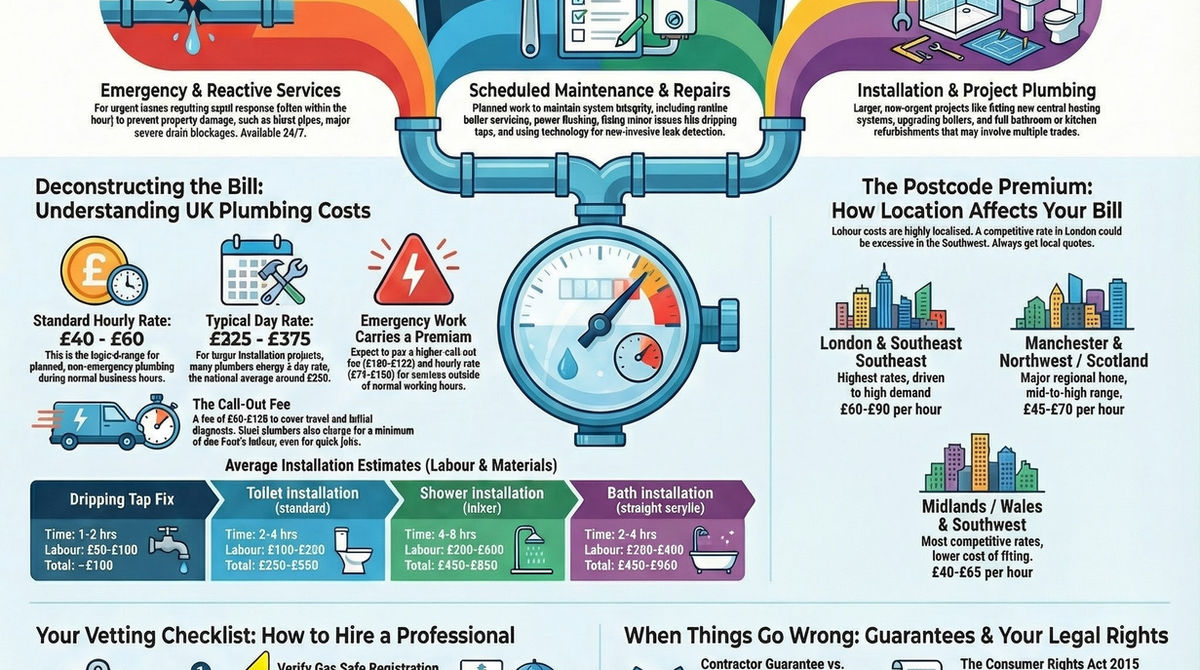
Everything you need to know before hiring a central heating.
Central heating engineers are the architects of comfort in the British home. While many people associate them solely with boilers, their expertise covers the entire network that distributes warmth, including radiators, underfloor heating, pipework, and sophisticated control systems. A well-designed system is the difference between a drafty, expensive house and a high-efficiency home that stays warm for less.
UK homeowners typically call upon central heating specialists for full system installations, upgrading old pipework, or modernising their heat distribution. Whether you are moving from traditional radiators to energy-efficient underfloor heating or simply need to replace a leaking valve, these professionals ensure your system is balanced, safe, and compliant with current building regulations.
With the UK's transition towards low-carbon heating, these tradespeople are also vital for integrating new technologies like heat pumps with existing radiator networks. Their work involves complex hydraulic calculations to ensure every room reaches the desired temperature without wasting energy.
Hiring a professional for your central heating involves more than just fitting parts; it is a technical process designed to ensure long-term reliability. Here is what you can typically expect during a standard project:
Central heating systems are complex pressurised networks. Attempting a DIY installation or hiring an unqualified "handyman" can lead to catastrophic leaks, burst pipes, and significant water damage to your property. A professional ensures that all work complies with Part L of the Building Regulations, which dictates energy efficiency standards in the UK.
If your central heating involves any work on a gas boiler, the engineer must be on the Gas Safe Register by law. Even for purely "wet" work (pipes and radiators), a professional brings tools like thermal imaging cameras to find cold spots and pressure-testing kits to ensure the integrity of the system before it is filled with water.
Furthermore, most manufacturers of radiators and underfloor heating systems will only honour warranties if the equipment was installed by a qualified professional. A pro will also ensure the correct corrosion inhibitor chemicals are added to the system, extending the life of your boiler and radiators by a decade or more.
Central heating costs vary based on the size of your property and the complexity of the pipework. The following table provides estimated costs for 2025/26, including VAT and average UK labour rates.
| Service | Low £ | High £ | Notes |
|---|---|---|---|
| Replacement Radiator (Standard) | £180 | £350 | Includes valve replacement and labour. |
| Full System Power Flush | £450 | £750 | Depends on the number of radiators. |
| Smart Thermostat Installation | £150 | £300 | e.g., Nest, Hive, or Tado. |
| Wet Underfloor Heating (per m²) | £120 | £190 | Price reduces for larger open areas. |
| Full 3-Bed House Pipework & Rads | £3,500 | £6,000 | Excludes the cost of the boiler itself. |
| Magnetic System Filter Install | £150 | £250 | Protects the boiler from sludge. |
Several factors will influence the final quote, such as whether you choose designer vertical radiators, the accessibility of your floorboards, and whether you require "zoned" heating where different floors are controlled independently.
Finding a reliable specialist is key to a warm home and peace of mind. Follow these steps to ensure you hire the right person:
3 Questions to ask before hiring:
For a standard 3-bedroom semi-detached house, a full replacement of pipework and radiators usually takes between 3 to 5 days. This can be longer if you are opting for underfloor heating, which requires floor preparation and drying time for screed.
Not necessarily, but it is often recommended if your pipes are very old (microbore) or have significant internal corrosion. An engineer will assess the condition of your existing pipework during a site survey to see if it can handle the pressure of a modern system.
A standard flush uses gravity and mains pressure to rinse the system. A power flush uses a high-velocity pump and specialised chemicals to strip away stubborn limescale and "black sludge" that a standard flush cannot move, significantly improving heat output.
Yes, this is very common. It usually involves installing a "pumped manifold" that connects to your existing boiler. This allows the underfloor heating to run at a lower temperature than your radiators, ensuring comfort and efficiency.
Describe the job in plain English. The AI asks a few smart questions, then tells you whether a central heating is the right call, what it should cost, and what to ask before they start.
Boilers fail in cold weather. UK costs for common faults and when to repair vs replace.
READ GUIDE →GuideAnnual boiler service keeps efficiency up and warranty valid. UK costs and what's actually checked.
READ GUIDE →GuideAn annual boiler service is the single most important maintenance task for any UK homeowner. Beyond ensuring your home stays warm during the winter months, a pr...
READ GUIDE →GuideThe 2025 Homeowner’s Boiler Survival Guide: 6 Surprising Truths About Your Heating 1. Introduction: The Quiet Crisis in Your Cupboard Few things trigger more im...
READ GUIDE →GuideCorrosion inhibitor protects your central heating from sludge. UK guide and how often to top up.
READ GUIDE →GuideCirculating pumps fail at 8-12 years. UK costs to replace and how to spot a failing pump.
READ GUIDE →GuideBoiler condensate pipes freeze in cold snaps. UK guide to fix the emergency and prevent recurrence.
READ GUIDE →GuideHard water shortens UK boiler life. Costs for descaling, water softeners and electromagnetic limescale prevention.
READ GUIDE →GuideMagnetic filters catch sludge before it damages your boiler. UK costs and why every system should have one.
READ GUIDE →GuidePower flushing clears sludge from central heating. UK costs and when your system needs it.
READ GUIDE →GuideCold radiators often need bleeding or balancing. UK guide and when to call a plumber.
READ GUIDE →Cast iron radiators add Victorian character. UK costs for new, restored and salvage and how to size.
READ GUIDE →GuideCompare boiler cover plans (British Gas, HomeServe, EDF). UK costs and what each plan actually covers.
READ GUIDE →GuideWhat central heating really costs in the UK in 2026. Reference for installation, repair and upgrade prices.
READ GUIDE →GuideA new central heating system is a major home upgrade. UK costs, system types and what's involved from boiler to radiator.
READ GUIDE →GuideDesigner radiators add character while delivering heat. UK costs for vertical, horizontal, cast iron and column.
READ GUIDE →GuideInstalling or upgrading a gas central heating system is one of the most significant investments you will make in your UK home. Beyond providing essential warmth...
READ GUIDE →GuideA heater matrix is essentially a small radiator located deep behind your vehicle's dashboard. It is a critical component of your car's heating system, responsib...
READ GUIDE →GuideHot water cylinders store domestic hot water. UK costs for unvented Megaflo, vented and which suits.
READ GUIDE →GuideRadiator replacement transforms a room. UK costs, sizing for room volume and modern designer options.
READ GUIDE →GuideWhole-house UFH replaces radiators with even warm floors. UK costs, wet vs electric and which works for which home.
READ GUIDE →GuideMulti-zone heating heats only used rooms. UK costs for zone valves, smart TRVs and per-room control.
READ GUIDE →When and why to replace your boiler. UK costs, brands and the upgrade options.
READ GUIDE →GuideCombi or system boiler? UK guide to which suits your house, family size and hot water demand.
READ GUIDE →GuideUpgrading your gas boiler is one of the most significant investments you will make in your UK home. A modern, A-rated condensing boiler not only provides reliab...
READ GUIDE →GuideHydrogen-ready boilers will burn future hydrogen gas. UK current options and the transition timeline.
READ GUIDE →