Instant
01 · Ask
Ask the AI a follow-up
Got more questions about oil-Fuelled Heating Installation? Describe the bit you're unsure about — the AI explains options, sequencing and what to ask the central heating.

Off-grid oil-fired central heating — tank, boiler and radiators, OFTEC-registered install.
You've read the brief on oil-Fuelled Heating Installation. Now lean on us to find the right central heating — and stay in control of the job.
Got more questions about oil-Fuelled Heating Installation? Describe the bit you're unsure about — the AI explains options, sequencing and what to ask the central heating.
Costs, timelines, pitfalls and the right questions to ask before any central heating starts on oil-Fuelled Heating Installation.
Itemised quotes from up to 3 local central heatings on oil-Fuelled Heating Installation — so you can compare like-for-like, not lump sums.
Ready when you are
Enter your postcode and get free quotes from local pros.
Four moves that separate a smooth job from a nightmare.
Placing a tank too close to a boundary or window can lead to a failed inspection, requiring costly relocation.
Old tanks can collect condensation or rainwater; if this reaches the boiler, it can cause a total system lockout.
Failing to power flush the system before installing a new boiler can lead to the new heat exchanger becoming blocked within weeks.
Pluming (visible steam) from modern condensing boilers can be a nuisance to neighbours if the flue isn't positioned correctly.
Indicative UK ranges and what affects price.
By job type
Quote spread is typically ± 18% — always get 3 quotes.
Central Heating quick-view
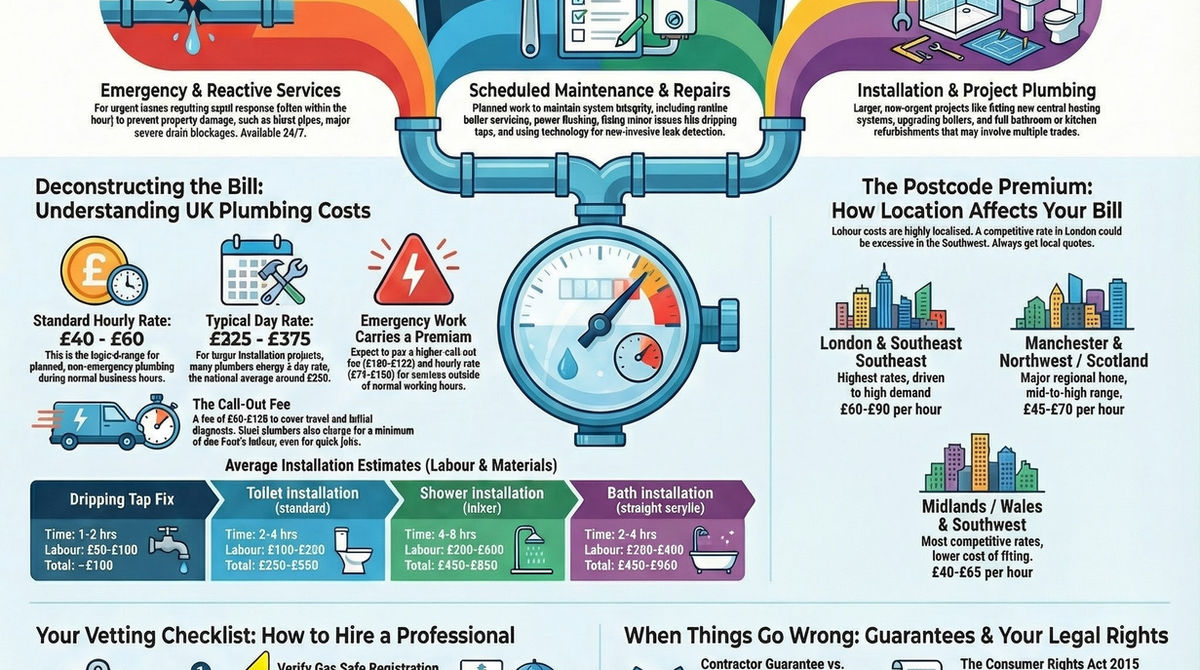
Installing a new oil system is a significant investment that involves more than just the boiler; it requires a compliant storage tank, secure fuel lines, and precise calibration. This guide covers everything you need to know about the installation process, costs, and regulations for 2025/26.
| Item | Low £ | High £ | Notes |
|---|---|---|---|
| Standard Boiler Replacement | £2,800 | £4,500 | Like-for-like swap in the same location. |
| New Oil Tank (Bunded) | £1,800 | £3,200 | Includes base construction and fuel line. |
| Full Central Heating System | £6,500 | £12,000 | Boiler, tank, 8-10 radiators, and pipework. |
| Annual Service / Commissioning | £120 | £200 | Essential for warranty and safety. |
Several factors will influence your final quote, including whether you choose an internal or external boiler and the distance between the tank and the house. Upgrading from a single-skinned tank to a modern bunded tank is now a standard requirement in many scenarios to meet environmental regulations.
This is strictly a professional-only job. In the UK, oil heating systems must be installed by a competent person to comply with Building Regulations.
Attempting to install an oil boiler or tank yourself is not only dangerous but will also void your home insurance and make it impossible to sell your property without a valid OFTEC certificate.
While you can legally perform your own plumbing on the water side of the system, the fuel storage, supply lines, and the boiler itself must be handled by a specialist. Professionals ensure the system is "HVO ready" (Hydrotreated Vegetable Oil), allowing you to switch to greener fuels in the future.
Questions to ask:
Oil boilers should be serviced annually. Unlike gas, oil is a "dirty" fuel that leaves soot deposits, which can reduce efficiency and lead to breakdowns if not cleaned regularly.
Most modern oil boilers can be converted to run on HVO with a simple kit or minor adjustments. This can reduce your carbon emissions by up to 90%.
Generally, no. Oil tanks are usually considered "permitted development" as long as they are below a certain height and located behind the front wall of the house.
A bunded tank is essentially a tank within a tank. The outer shell acts as a secondary containment area that catches any leaks from the inner tank, preventing environmental pollution.
A well-installed plastic bunded tank typically has a lifespan of 15 to 20 years. Steel tanks can last longer if they are painted and maintained to prevent rust.
This guide was written with AI assistance and is intended for general information only. Prices are estimates based on UK averages and may vary by region. Always get at least three quotes and consult a qualified professional before starting any work.
Ask follow-ups in plain English. The AI explains options, sequencing and what to ask the central heating — so you walk in informed.
A heater matrix is essentially a small radiator located deep behind your vehicle's dashboard. It is a critical component of your car's heating system, responsib...
READ GUIDE →GuideGround source heat pumps (GSHPs) are widely considered the "gold standard" of renewable heating for UK homeowners. By extracting solar energy stored in the eart...
READ GUIDE →GuideA reliable heating system is the backbone of any UK home, especially during the damp winter months. When a boiler fails or radiators stay cold, it often signals...
READ GUIDE →GuideAn oil leak is a serious matter for any UK homeowner. Beyond the immediate loss of expensive heating fuel, a leak poses significant fire risks and can cause dev...
READ GUIDE →GuideAir source heat pumps (ASHPs) have become the leading low-carbon heating solution for UK homeowners looking to move away from fossil fuels. By extracting heat f...
READ GUIDE →GuideUpgrading to smart heating controls is one of the most effective ways for UK homeowners to reduce energy bills and improve home comfort. By replacing traditiona...
READ GUIDE →