Instant
01 · Ask
Ask the AI a follow-up
Got more questions about smart Heating Control Installation? Describe the bit you're unsure about — the AI explains options, sequencing and what to ask the central heating.

Multi-zone smart heating — thermostat, TRVs and hub set up for zone-by-zone control.
You've read the brief on smart Heating Control Installation. Now lean on us to find the right central heating — and stay in control of the job.
Got more questions about smart Heating Control Installation? Describe the bit you're unsure about — the AI explains options, sequencing and what to ask the central heating.
Costs, timelines, pitfalls and the right questions to ask before any central heating starts on smart Heating Control Installation.
Itemised quotes from up to 3 local central heatings on smart Heating Control Installation — so you can compare like-for-like, not lump sums.
Ready when you are
Enter your postcode and get free quotes from local pros.
Four moves that separate a smooth job from a nightmare.
Thick walls in older UK homes can prevent the thermostat from talking to the boiler. Signal boosters or "mesh" systems are often required.
Many older UK radiators have manual valves that cannot accept smart heads without being fully replaced by a plumber.
Some older systems with header tanks in the loft require specific smart controllers designed for two-channel (heating and hot water) operation.
If Smart TRVs are poorly positioned, they may "hunt" for a signal constantly, draining batteries in weeks rather than months.
Indicative UK ranges and what affects price.
By job type
Quote spread is typically ± 18% — always get 3 quotes.
Central Heating quick-view
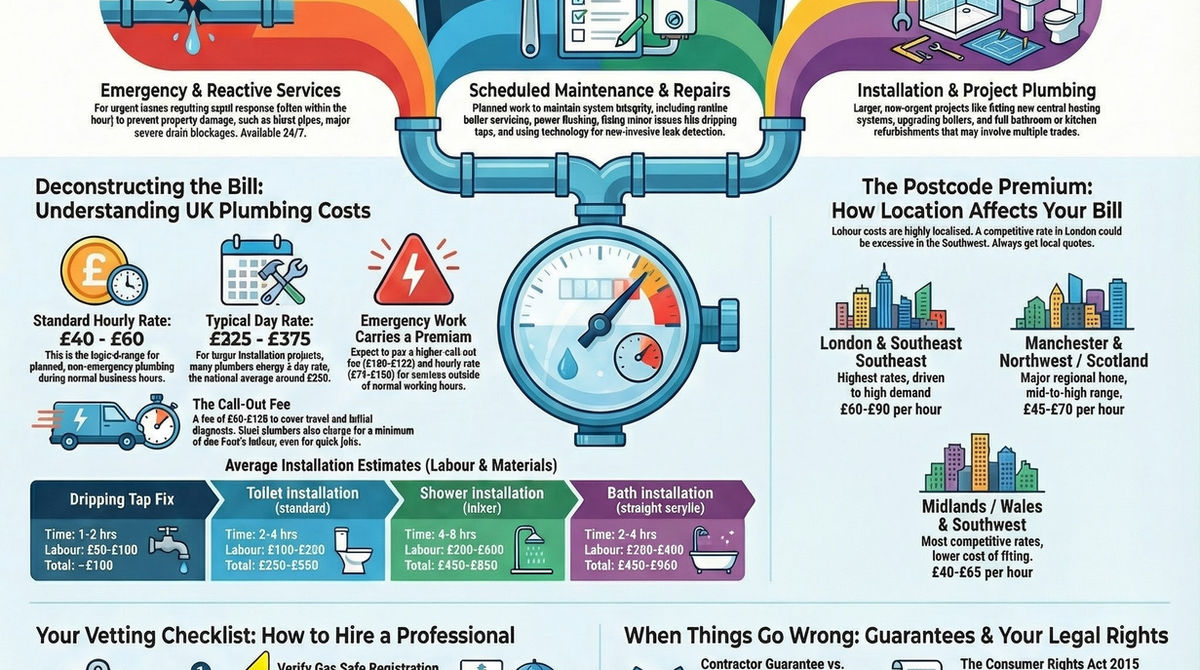
Modern systems like Nest, Hive, and Tado do more than just turn the boiler on and off. They use "load compensation" and "weather compensation" to adjust the boiler's output, ensuring your home stays at a consistent temperature while using the minimum amount of gas or electricity possible.
Prices for smart heating installations vary depending on the brand chosen and whether you are adding smart valves to individual radiators. The figures below include 2025/26 UK average rates for both hardware and professional labour, including VAT.
| Item | Low £ | High £ | Notes |
|---|---|---|---|
| Basic Smart Thermostat (Labour only) | £80 | £150 | Simple swap of an existing wired thermostat. |
| Standard System (Supply & Fit) | £280 | £450 | Includes Hive or Nest with professional setup. |
| Multi-zone System (Supply & Fit) | £600 | £1,500+ | Includes main unit plus 6-10 Smart TRVs. |
| Smart TRV Installation (Per Valve) | £60 | £90 | Cost per radiator including the valve itself. |
Total costs are primarily driven by the complexity of your plumbing. If your system requires new wiring or if your old radiator valves are stuck and need physical replacement, labour costs will increase significantly.
While some battery-powered smart thermostats are marketed as DIY-friendly, most UK installations involve 230V mains wiring at the boiler. This falls under Part P of the Building Regulations, meaning it should be handled by a competent person.
If your installation requires opening the boiler casing to access the circuit board, you must use a Gas Safe registered engineer by law.
A professional ensures that "Boiler Plus" standards are met, which mandate that new heating controls must provide specific energy-saving functions. They can also ensure your smart system correctly communicates with the boiler via OpenTherm rather than a simple on/off switch, which saves more money in the long run.
Most UK households save between 10% and 25% on their heating bills. The biggest savings come from using "Geofencing," which turns the heating off automatically when the last person leaves the house.
Your heating will still work. You can manually adjust the temperature using the wall-mounted dial or buttons on the receiver, though you won't be able to use the smartphone app until the connection is restored.
You can, but it is often better to leave it as a selling point. If you do take it, you must reinstall a standard thermostat so the new owners can control the heating, which may require a professional visit.
No, you typically have one main thermostat. However, adding Smart TRVs to individual radiators allows you to heat only the rooms you are using, which is much more efficient than heating the whole house at once.
Almost any boiler with a standard thermostat or programmer can be upgraded. Even very old boilers can usually be controlled via a simple "switched live" connection, though you may miss out on advanced modulation features.
This guide was written with AI assistance and is intended for general information only. Prices are estimates based on UK averages and may vary by region. Always get at least three quotes and consult a qualified professional before starting any work.
Ask follow-ups in plain English. The AI explains options, sequencing and what to ask the central heating — so you walk in informed.
A heater matrix is essentially a small radiator located deep behind your vehicle's dashboard. It is a critical component of your car's heating system, responsib...
READ GUIDE →GuideGround source heat pumps (GSHPs) are widely considered the "gold standard" of renewable heating for UK homeowners. By extracting solar energy stored in the eart...
READ GUIDE →GuideA reliable heating system is the backbone of any UK home, especially during the damp winter months. When a boiler fails or radiators stay cold, it often signals...
READ GUIDE →GuideFor the four million UK households not connected to the mains gas grid, oil-fuelled central heating remains one of the most reliable and cost-effective ways to ...
READ GUIDE →GuideAn oil leak is a serious matter for any UK homeowner. Beyond the immediate loss of expensive heating fuel, a leak poses significant fire risks and can cause dev...
READ GUIDE →GuideAir source heat pumps (ASHPs) have become the leading low-carbon heating solution for UK homeowners looking to move away from fossil fuels. By extracting heat f...
READ GUIDE →