Instant
01 · Ask
Ask the AI a follow-up
Got more questions about door Frame Replacement? Describe the bit you're unsure about — the AI explains options, sequencing and what to ask the doors.

Rotten, twisted or storm-damaged frame — supplied, fitted and re-rendered or made good around it.
You've read the brief on door Frame Replacement. Now lean on us to find the right doors — and stay in control of the job.
Got more questions about door Frame Replacement? Describe the bit you're unsure about — the AI explains options, sequencing and what to ask the doors.
Costs, timelines, pitfalls and the right questions to ask before any doors starts on door Frame Replacement.
Itemised quotes from up to 3 local doorss on door Frame Replacement — so you can compare like-for-like, not lump sums.
Ready when you are
Enter your postcode and get free quotes from local pros.
Four moves that separate a smooth job from a nightmare.
Old houses have walls 5–10mm out of plumb. The frame must be set plumb regardless — shimming compensates for the wall.
If the frame rotted, the lintel may have too. Probe with a screwdriver before re-fitting.
New architrave profile rarely matches old. Either replace all architrave in the room, or scribe and join carefully.
Over-foaming pushes the frame out of square as it cures. Use low-expansion frame foam, not loft foam.
Indicative UK ranges and what affects price.
By job type
Quote spread is typically ± 18% — always get 3 quotes.
Doors quick-view
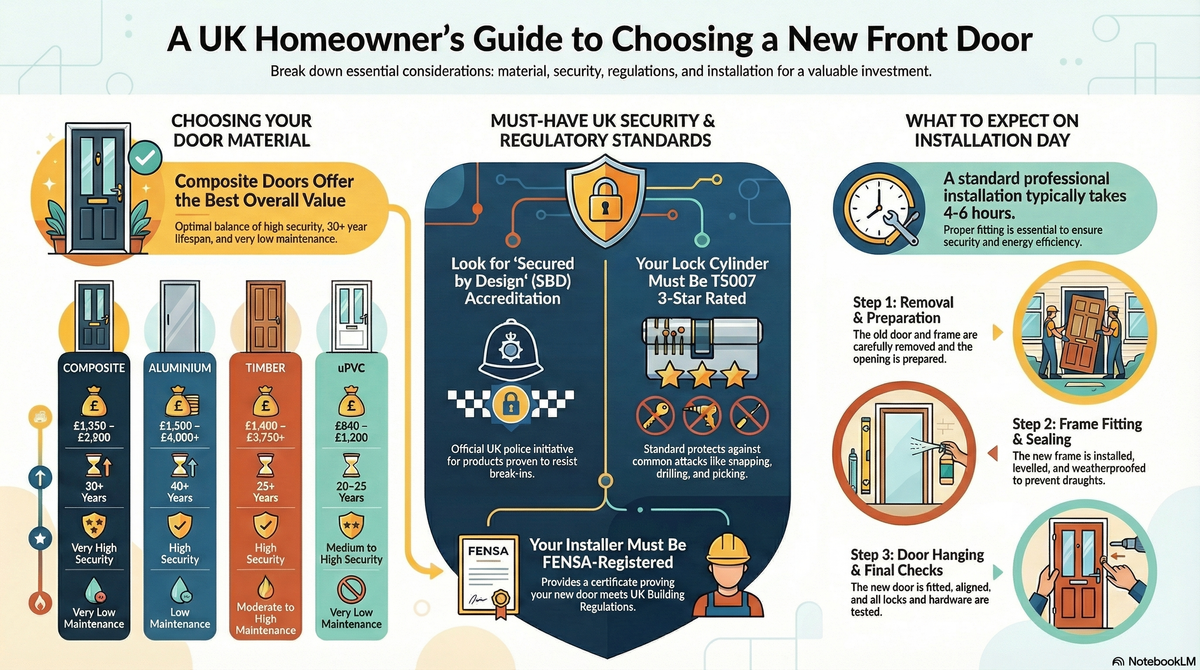
Doors explained
Damaged, rotten or warped door frames need full replacement, not just patching. Rot, settling cracks, woodworm and kicked-in break-in damage are the four most common causes. Expect to pay £200–£1,200 fitted in the UK for internal frames; external frames are typically part of a full door replacement project.
The carpenter removes the door slab and architrave, prises the existing frame out of the opening (often it's nailed through skirting and architrave into the rough opening), checks the lintel above is sound, fits the new frame plumb and square (packing with timber shims), mechanically fixes through the jambs into the rough opening, foam-fills the perimeter, re-fits the architrave (often new to match), and re-hangs the door slab. Plastering make-good is usually needed where the architrave was removed.
| Item | Low (£) | High (£) | Notes |
|---|---|---|---|
| Internal pine lining set | 30 | 120 | Paint-grade |
| Internal oak lining set | 80 | 250 | Oak veneer or solid |
| Architrave set | 20 | 120 | 4 lengths per opening |
| External hardwood frame | 180 | 500 | Engineered hardwood, weather-rated |
| Carpenter labour (internal) | 180 | 400 | Half to one day |
| Carpenter labour (external) | 350 | 700 | One day, two fitters |
| Plastering make-good | 80 | 250 | Edges around new architrave |
Internal frame replacement: half to full day. External frame as part of door replacement: 1–2 days. Add 1 day for plastering and 1–2 days for decoration to complete.
Professional. Frame plumb and square tolerance is ±2mm — get it wrong and the door won't shut or bind permanently. Solid-wall openings need the lintel checked for soundness; if it's failing the frame replacement turns into a structural job.
Use a carpenter for internal, FENSA/Certass-registered installer for external. Ask whether the price includes architrave, foam, plaster make-good and decoration — these often add 30–50% to the headline frame-only quote.
External door frame replacement is notifiable to Building Regs (Part L thermal performance) — covered by FENSA/Certass registration. Internal frame replacement is not notifiable. Listed buildings need consent for any external frame change.
No — the frame and slab must be separated first. The slab is rehung after the new frame is set plumb.
If the existing architrave is in good condition and the new frame is the same size, you can re-fit the old. Most of the time it's split or damaged during removal and needs replacing.
Up to 50mm wider by re-cutting the rough opening (if it's a stud wall — easy; solid wall — needs a lintel check). Beyond that, treat it as a new opening with full Building Regs.
For internal, match the slab — oak slab gets oak frame. For external, hardwood (accoya is most rot-resistant), composite or aluminium are all better than pine.
Often, yes — but the damaged section (usually the bottom 200mm where rot starts) needs scarfing in with new timber. A specialist joiner is required for this.
Frame foam fully cures in 24 hours. Plastering needs 7–10 days drying before painting. Allow 2 weeks before full re-decoration.
This guide was written with AI assistance and is intended for general information only. Prices are estimates based on UK averages and may vary by region. Always get at least three quotes and consult a qualified professional before starting any work.
Ask follow-ups in plain English. The AI explains options, sequencing and what to ask the doors — so you walk in informed.
Internal doors: timber, glass, composite. UK 2026 install costs, sizing, and how to choose a fitter.
READ GUIDE →GuideFront doors UK 2026: composite, uPVC, timber, aluminium compared. Security, install costs, choose a fitter.
READ GUIDE →GuideComposite front doors: GRP skin, insulated core, multi-point locks. UK 2026 prices and brand comparison.
READ GUIDE →GuideuPVC front doors: budget-friendly options for UK homes. Costs, security, and when uPVC suits.
READ GUIDE →GuideTimber front doors: heritage character, premium look, full maintenance commitment. UK 2026 costs.
READ GUIDE →GuideAluminium front doors offer slim sightlines, modern aesthetics and long lifespans. UK costs, security, thermal performance and install.
READ GUIDE →