Instant
01 · Ask
Ask the AI a follow-up
Got more questions about sticking Door Fix? Describe the bit you're unsure about — the AI explains options, sequencing and what to ask the doors.

Hinges packed, top or bottom planed, latch realigned — fixed properly, not just sanded off.
You've read the brief on sticking Door Fix. Now lean on us to find the right doors — and stay in control of the job.
Got more questions about sticking Door Fix? Describe the bit you're unsure about — the AI explains options, sequencing and what to ask the doors.
Costs, timelines, pitfalls and the right questions to ask before any doors starts on sticking Door Fix.
Itemised quotes from up to 3 local doorss on sticking Door Fix — so you can compare like-for-like, not lump sums.
Ready when you are
Enter your postcode and get free quotes from local pros.
Four moves that separate a smooth job from a nightmare.
Planing the wrong edge makes it worse. Always identify which edge actually rubs by sliding paper between the door and frame as it closes.
Take off 1mm passes until it just clears — not aggressive 3mm passes. You can't add wood back.
Bare timber swells more than painted. Always re-paint or re-prime planed surfaces.
Worn hinge knuckles let the door swing 3–5mm out of true even when closed — replace, don't pack.
Indicative UK ranges and what affects price.
By job type
Quote spread is typically ± 18% — always get 3 quotes.
Doors quick-view
Doors explained
A sticking door is the most common internal-door complaint in UK homes. Most are quick fixes — a loose hinge, seasonal swelling or new flooring rubbing the bottom. Expect to pay £40–£90 for a carpenter to diagnose and fix one, or DIY in 30 minutes once you've identified the cause.
First, diagnose the cause. Open the door slowly and feel where it binds — top, bottom, lock side or hinge side. Top-of-frame binding usually means hinge sag (top hinge loose). Bottom binding means new flooring, swollen slab, or dropped hinges. Lock-side binding mid-height means a swollen door or a moved frame. Once diagnosed, the fix is one of: tighten or replace hinges, plane the binding edge, or re-position the latch strike plate.
| Item | Low (£) | High (£) | Notes |
|---|---|---|---|
| Tighten hinges (DIY) | 0 | 5 | Screwdriver and longer screws |
| Plane sticking edge (DIY) | 10 | 30 | Block plane £20–£30 |
| Carpenter call-out | 40 | 90 | Half to one hour |
| Replace 3 hinges | 60 | 150 | Hinges + labour |
| Trim door bottom for new floor | 40 | 90 | One hour |
| Replace slab if warped | 120 | 350 | If beyond planing |
Tightening hinges: 10 minutes. Planing a binding edge: 30–60 minutes. Hinge replacement: 1 hour. Trimming the bottom: 30 minutes plus dust cleanup.
A confident DIYer can do all of the above with a screwdriver, a block plane (£20–£30) and a sharp chisel. The risk is taking off too much wood — once it's off, it's off. If the door is solid oak, expensive veneer or fire-rated, call a carpenter.
A handyman or general carpenter is sufficient. Ask whether they have their own plane and chisels — some don't. Get the call-out rate and per-15-minute rate clarified.
No regulations apply to repairing internal doors. The exception: planing or trimming an FD30 fire-rated door is risky — too much material removed voids the 30-minute fire rating. Always check for a Certifire/BM TRADA label in the top edge before planing.
Seasonal humidity. Pine and softwood doors swell 2–4mm when humidity rises. Plane the swollen edge slightly — it'll be just loose enough in winter.
If the frame is plumb but the door binds, plane the door. If the frame is twisted (most often after a wall settles), repositioning the frame is structural work — usually cheaper to plane.
Hinges have probably dropped under the weight, or the new flooring pushed the threshold up. Pack the top hinge with cardboard, or trim 3–5mm off the bottom.
Yes — but use a very sharp plane and take 1mm passes. Oak is hard and tears easily with a blunt blade.
Either the door is bowed (warped) or the frame is bowed. Hold a straight edge against the door — if it's bowed, the slab probably needs replacing.
Only if hinges are squeaky or stiff. Sticking caused by friction between door and frame is not solved by lubricant — you have to remove material.
This guide was written with AI assistance and is intended for general information only. Prices are estimates based on UK averages and may vary by region. Always get at least three quotes and consult a qualified professional before starting any work.
Ask follow-ups in plain English. The AI explains options, sequencing and what to ask the doors — so you walk in informed.
Internal doors: timber, glass, composite. UK 2026 install costs, sizing, and how to choose a fitter.
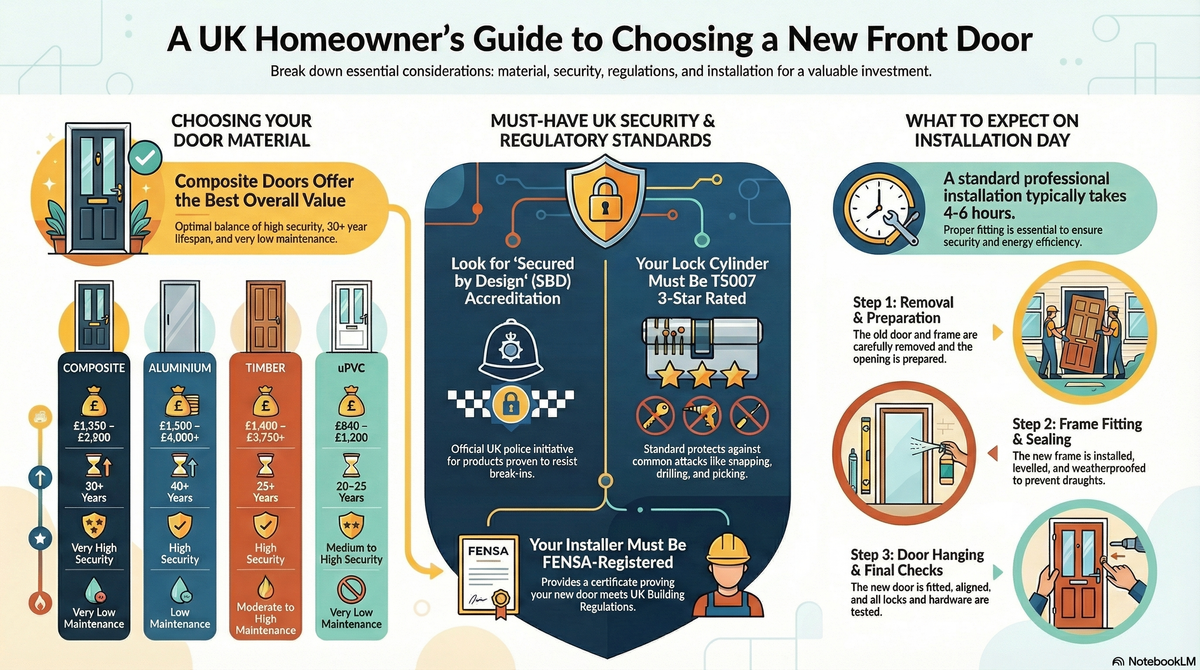
READ GUIDE →GuideFront doors UK 2026: composite, uPVC, timber, aluminium compared. Security, install costs, choose a fitter.
READ GUIDE →GuideComposite front doors: GRP skin, insulated core, multi-point locks. UK 2026 prices and brand comparison.
READ GUIDE →GuideuPVC front doors: budget-friendly options for UK homes. Costs, security, and when uPVC suits.
READ GUIDE →GuideTimber front doors: heritage character, premium look, full maintenance commitment. UK 2026 costs.
READ GUIDE →GuideAluminium front doors offer slim sightlines, modern aesthetics and long lifespans. UK costs, security, thermal performance and install.
READ GUIDE →