Instant
01 · Ask
Ask the AI a follow-up
Got more questions about general Electrical Work? Describe the bit you're unsure about — the AI explains options, sequencing and what to ask the electrician.

What's notifiable, what's not, and how to know if your electrician's certificate is valid.
You've read the brief on general Electrical Work. Now lean on us to find the right electrician — and stay in control of the job.
Got more questions about general Electrical Work? Describe the bit you're unsure about — the AI explains options, sequencing and what to ask the electrician.
Costs, timelines, pitfalls and the right questions to ask before any electrician starts on general Electrical Work.
Itemised quotes from up to 3 local electricians on general Electrical Work — so you can compare like-for-like, not lump sums.
Ready when you are
Enter your postcode and get free quotes from local pros.
Four moves that separate a smooth job from a nightmare.
Older properties often have insufficient earthing, which must be rectified before any new work can safely proceed.
Adding too many sockets to an existing circuit can lead to frequent tripping or overheating.
If cables aren't buried at the correct depths or in "safe zones," they risk being hit by nails or screws later.
Homeowners often forget to ask for certificates, which causes significant delays during the house-selling process.
Indicative UK ranges and what affects price.
By job type
Quote spread is typically ± 18% — always get 3 quotes.
Electrician quick-view
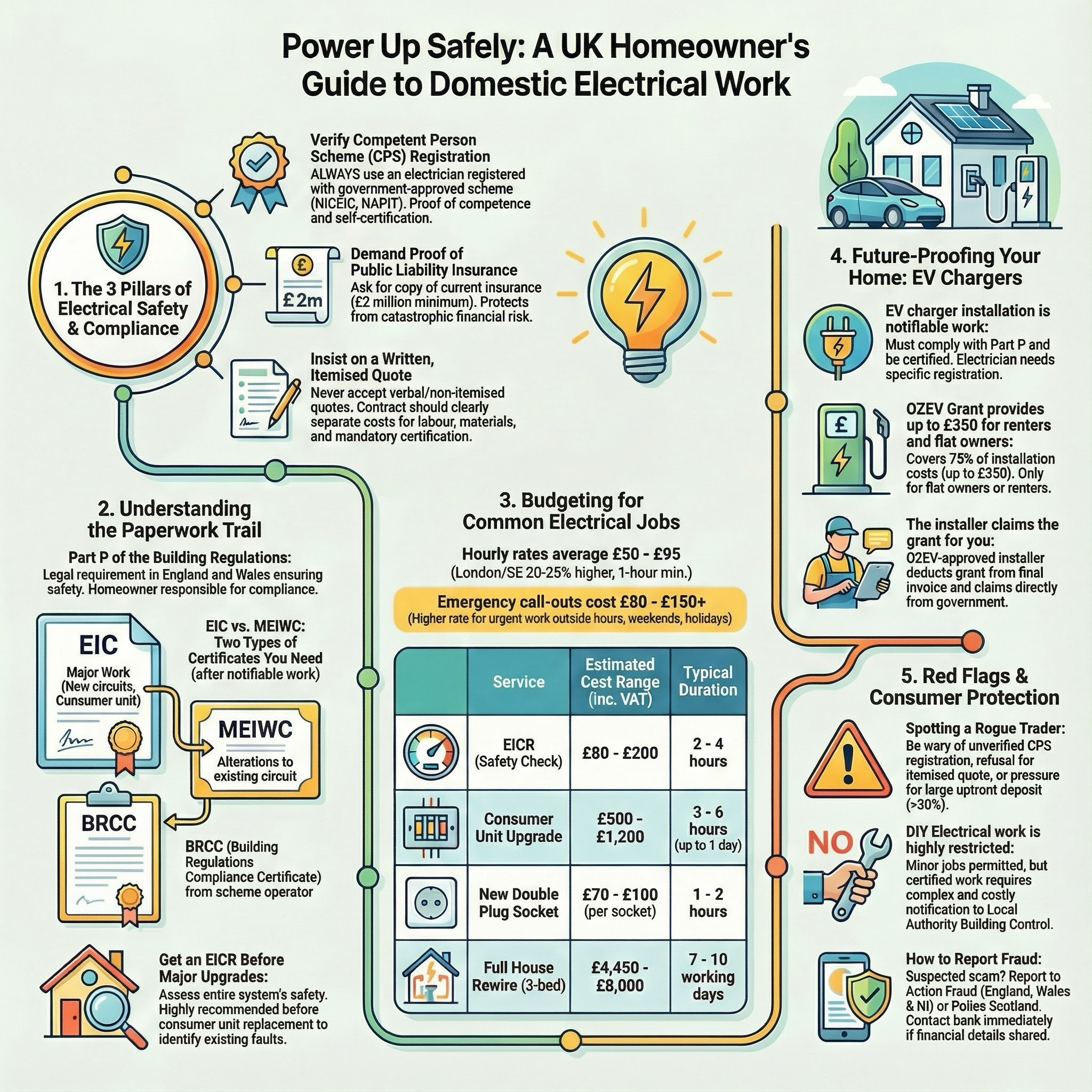
Electrician explained
Maintaining a modern, safe electrical system protects your household from fire risks and ensures your property remains compliant with insurance requirements. Whether you are upgrading lighting or adding power to a home office, professional installation ensures your home meets the latest BS 7671 wiring regulations.
| Item | Low £ | High £ | Notes |
|---|---|---|---|
| Call-out / Minimum Charge | £75 | £150 | Covers the first hour or diagnostic visit; higher in London/SE. |
| Labour (Hourly Rate) | £55 | £95 | Standard rate for a qualified electrician in 2025/26. |
| New Socket Installation | £120 | £250 | Includes materials and testing for a standard twin socket. |
| Light Fitting Replacement | £60 | £120 | Simple like-for-like swap (excluding the cost of the fitting). |
| Materials & Accessories | £30 | £300 | Varies based on cable length, brand of sockets, or RCBO needs. |
| Part P Notification Fee | £20 | £50 | Administrative cost for notifying local building control. |
Total project costs are primarily driven by the complexity of cable routing and the age of your existing consumer unit. If your fuse box is outdated and lacks RCD protection, an electrician may need to upgrade it before adding new circuits, which can significantly increase the final bill.
While DIY is tempting for simple tasks like changing a decorative light switch, most electrical work in the UK should be left to the professionals. Electricity is inherently dangerous, and poorly executed work is a leading cause of domestic fires and accidental shocks.
Under Part P of the Building Regulations, many electrical jobs in "wet rooms" (kitchens and bathrooms) or the installation of new circuits are legally required to be certified by a competent person.
Attempting these jobs yourself can invalidate your home insurance and create legal headaches when you try to sell your property. Always use a registered electrician who can self-certify their work and provide the necessary paperwork.
Yes. Even for minor alterations like adding a socket, a Minor Works Certificate confirms the circuit was tested and is safe. It is vital for insurance and future house sales.
Electricians charge a minimum fee to cover travel time, fuel, and the use of expensive calibrated testing equipment, even if the actual repair takes ten minutes.
Usually, yes. The electrician will need to isolate the specific circuit they are working on, and may need to turn off the main power briefly for final testing.
Only if the existing cables are in good condition and the circuit is not already overloaded. They will test the cable's integrity before deciding.
A fuse or circuit breaker protects the wiring from overheating. An RCD (Residual Current Device) is a life-saving switch that disconnects the power in milliseconds if it detects a leak to earth, preventing fatal shocks.
If your consumer unit has wooden backing, cast-iron switches, or replaceable wire fuses instead of "click" switches, it likely needs upgrading to meet modern safety standards.
This guide was written with AI assistance and is intended for general information only. Prices are estimates based on UK averages and may vary by region. Always get at least three quotes and consult a qualified professional before starting any work.
Ask follow-ups in plain English. The AI explains options, sequencing and what to ask the electrician — so you walk in informed.
What Is Emergency Lighting? Emergency lighting is a safety system designed to illuminate escape routes, exits, and high-risk areas when the normal mains power f...
READ GUIDE →GuideA full house rewire or a consumer unit (fuse box) upgrade is one of the most critical safety investments a UK homeowner can make. As our reliance on electrical ...
READ GUIDE →GuideWhile many floor lamps are marketed as simple flat-pack items, high-end designer models, heavy arched lamps, and vintage restorations often require professional...
READ GUIDE →GuideElectric boilers are an increasingly popular choice for UK homeowners, particularly in modern flats or properties without a mains gas connection. While they are...
READ GUIDE →GuideReplacing a bathroom light switch is a common home improvement task that balances aesthetics with vital safety requirements. Given the high levels of moisture a...
READ GUIDE →GuideA blown fuse in your consumer unit (fuse box) is more than just a minor inconvenience; it is a safety mechanism designed to protect your home from electrical fi...
READ GUIDE →