Instant
01 · Ask
Ask the AI a follow-up
Got more questions about ePC Assessment Guidelines and Costs? Describe the bit you're unsure about — the AI explains options, sequencing and what to ask the epc assessor.

What the assessor checks, what it costs and how to improve the band before assessment.
You've read the brief on ePC Assessment Guidelines and Costs. Now lean on us to find the right epc assessor — and stay in control of the job.
Got more questions about ePC Assessment Guidelines and Costs? Describe the bit you're unsure about — the AI explains options, sequencing and what to ask the epc assessor.
Costs, timelines, pitfalls and the right questions to ask before any epc assessor starts on ePC Assessment Guidelines and Costs.
Itemised quotes from up to 3 local epc assessors on ePC Assessment Guidelines and Costs — so you can compare like-for-like, not lump sums.
Ready when you are
Enter your postcode and get free quotes from local pros.
Four moves that separate a smooth job from a nightmare.
If the assessor cannot see the insulation, they must assume the "worst-case scenario" based on the age of the house, which lowers your score.
Without certificates for cavity wall insulation or FENSA records for windows, the assessor may have to use "default" values which are less efficient.
If an extension was built to higher standards than the original house but there is no paperwork, it might be rated the same as the old structure.
If the assessor cannot read the data plate on the boiler, they cannot accurately record its efficiency.
Indicative UK ranges and what affects price.
By job type
Quote spread is typically ± 18% — always get 3 quotes.
EPC Assessor quick-view
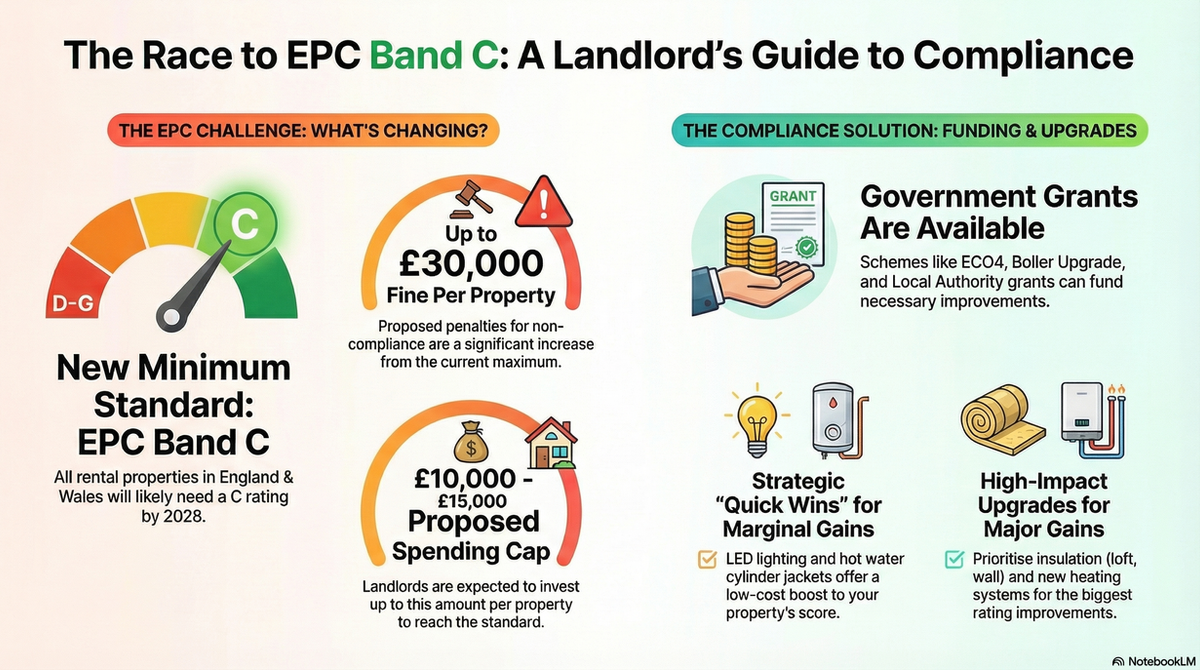
EPC Assessor explained
Valid for 10 years, an EPC is more than just a piece of paperwork; it is a vital tool for understanding your home’s running costs. In an era of high energy prices, a better rating can significantly increase a property's market value and appeal to prospective tenants or buyers.
| Property Type | Low £ | High £ | Notes |
|---|---|---|---|
| Studio or 1-Bedroom Flat | £60 | £85 | Quickest to assess; minimal zones. |
| 3-Bedroom Semi-Detached | £80 | £110 | Standard family home assessment. |
| Large Detached (5+ Beds) | £120 | £180+ | Complex layouts or multiple heating zones. |
| Commercial EPC | £200 | £500+ | Based on square footage and complexity. |
Prices for EPCs are not fixed by the government, so they vary based on your location and the size of the property. You will often find lower rates by booking directly with a local assessor rather than through an estate agent, who may add a commission fee.
You cannot carry out your own EPC assessment. By law, the inspection must be performed by an accredited Domestic Energy Assessor (DEA) to be valid for legal transactions.
While you cannot do the assessment yourself, you can "prep" your home by ensuring the assessor has clear access to the loft, boiler, and any hot water cylinders to ensure the most accurate rating possible.
No, it is only legally required when a property is built, sold, or rented. However, many homeowners get one to identify the most cost-effective ways to lower their energy bills.
The average UK property rating is 'D'. Anything 'C' or above is considered very good, while 'A' and 'B' are typically reserved for modern builds with high-spec insulation and renewables.
The fastest wins are usually switching all bulbs to LEDs, increasing loft insulation to 270mm, and installing a cylinder jacket on your hot water tank.
You don't "fail" an EPC, but a low rating (F or G) can prevent you from legally renting out the property. For sellers, a low rating isn't a legal barrier but may lead to lower offers.
Yes, significantly. Solar PV panels and solar thermal systems are heavily weighted in the calculation and can often jump a property up an entire letter grade.
This guide was written with AI assistance and is intended for general information only. Prices are estimates based on UK averages and may vary by region. Always get at least three quotes and consult a qualified professional before starting any work.
Ask follow-ups in plain English. The AI explains options, sequencing and what to ask the epc assessor — so you walk in informed.
An Energy Performance Certificate (EPC) is a legal requirement for almost every UK property being built, sold, or rented. It provides an objective rating of a h...
READ GUIDE →GuideFor UK landlords, an Energy Performance Certificate (EPC) is a non-negotiable legal requirement. It provides an efficiency rating from A (most efficient) to G (...
READ GUIDE →GuideA Commercial Energy Performance Certificate (EPC) is a legal requirement for almost all non-domestic buildings in the UK when they are sold, rented, or construc...
READ GUIDE →GuideAn Energy Performance Certificate (EPC) is a legally required document for almost every home in the UK that is being built, sold, or rented. It provides an obje...
READ GUIDE →GuideScope of Services • Review current sustainability practices and conduct data analysis • Analyse energy consumption, waste management and resource efficiency • A...
READ GUIDE →GuideAn Energy Performance Certificate (EPC) is a legal requirement for anyone selling or renting out a property in the UK. Beyond the legalities, a comprehensive en...
READ GUIDE →