Instant
01 · Ask
Sale, lettings or commercial?
Different EPCs for different uses. Describe what you need and the AI tells you which type and urgency.

Energy Performance Certificates for sales and lettings — accredited assessor, lodged same day.
Read the brief on accreditation schemes, MEES rules and improvement tips — then let three DEAs quote.
Different EPCs for different uses. Describe what you need and the AI tells you which type and urgency.
Elmhurst/Stroma accreditation, MEES rules (EPC E+ for lettings), 10-year validity, what a SAP rating means. Know the requirements.
Three accredited DEAs quote on the same property — turnaround, scheme, included advice — so you're not paying premium for the standard.
Ready when you are
Enter your postcode and get free quotes from local pros.
Four moves that separate a smooth job from a nightmare.
Only DEAs accredited by an approved scheme (Elmhurst, Stroma, RICS) can issue valid EPCs. Anyone else's report has no legal status.
Estate agents legally need a valid EPC at marketing stage. Order it as soon as you decide to sell — it takes 5–10 days to land.
Valid EPCs require a full site visit, room-by-room measurement and photos. A 'remote' EPC is not legally valid for sale or letting.
Loft top-up, low-energy bulbs and a smart meter can push a D up to a C — and buyers pay a premium for higher ratings.
Indicative UK ranges and what affects price.
By job type
Quote spread is typically ± 18% — always get 3 quotes.
Visual breakdown of costs, timelines and the questions you should be asking.
EPC Assessor quick-view
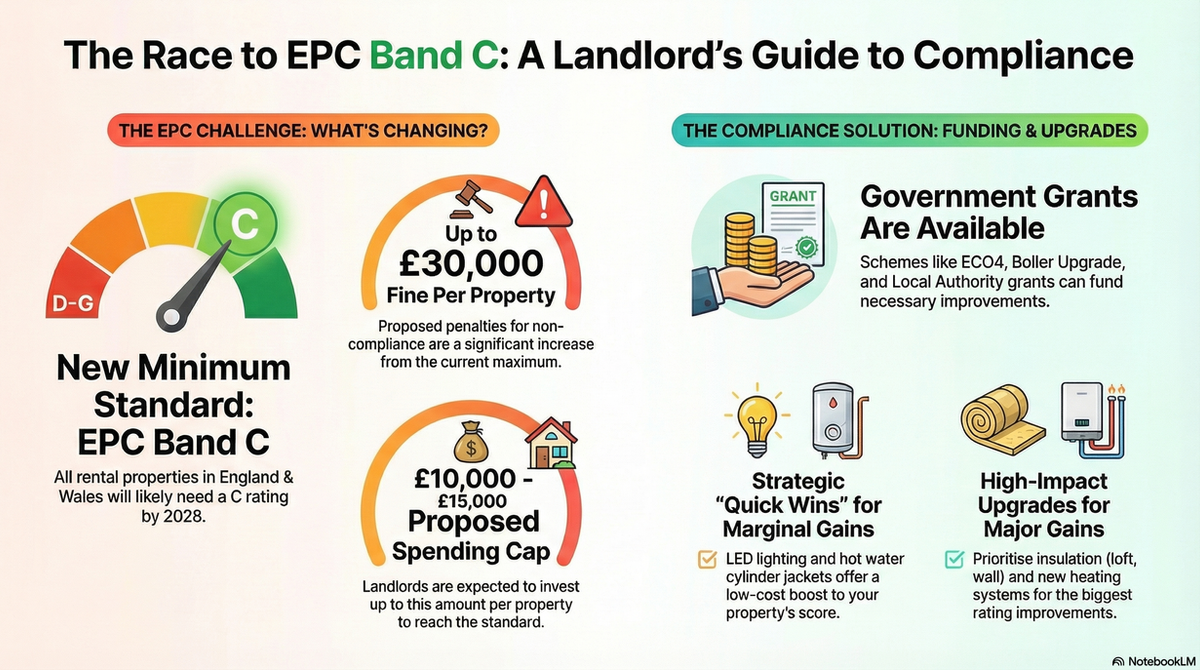
EPC Assessor explained
Everything you need to know before hiring a epc assessor.
Domestic Energy Assessors (DEAs) provide the vital Energy Performance Certificate (EPC) required whenever a property is built, sold, or rented in the UK. This document gives prospective buyers or tenants an objective view of the property's energy costs and carbon footprint, rated from A (most efficient) to G (least efficient).
Beyond legal compliance, an EPC assessor identifies where heat is being lost and recommends specific improvements, such as insulation or heating upgrades. For homeowners looking to reduce energy bills or access government grants like the Boiler Upgrade Scheme, a professional assessment is the essential first step.
A standard domestic energy assessment is a non-invasive visual inspection. The assessor will need access to every room in the house, including the loft and any basement areas.
In the UK, you cannot produce your own EPC. By law, the certificate must be produced by a qualified and accredited Domestic Energy Assessor to be valid for a property sale or let.
Hiring a professional ensures your property is assessed against the latest Part L Building Regulations. For landlords, this is particularly critical; under Minimum Energy Efficiency Standards (MEES), most domestic rental properties must have a rating of 'E' or higher to be legally let. A professional assessor can provide a "draft" EPC and advise on the most cost-effective ways to reach the required rating before the final certificate is lodged.
EPC costs are generally flat fees based on the size and complexity of the property. Prices are not regulated by the government, so they can vary by region and the individual assessor’s travel distance.
| Service | Low £ | High £ | Notes |
|---|---|---|---|
| Studio or 1-Bedroom Flat | £60 | £85 | Prices are often lower in urban areas. |
| 3-Bedroom Semi-Detached | £80 | £110 | Includes assessment of loft and heating controls. |
| 4+ Bedroom Detached House | £100 | £150 | Complex layouts or extensions take longer to map. |
| New Build (SAP Assessment) | £150 | £300+ | Requires detailed plan analysis for Part L compliance. |
| Commercial EPC (Level 3) | £200 | £500+ | Based on square footage and HVAC complexity. |
Prices typically include the lodgement fee (the cost of registering the certificate on the central database). If you book through an estate agent, they may add a commission; booking a local independent assessor directly is usually the most cost-effective route.
When selecting an assessor, it is important to verify their credentials to ensure the certificate is legally binding and accurate.
Questions to ask before hiring:
An EPC is valid for 10 years from the date of issue. You can use the same certificate for multiple tenancies or sales within that decade, provided you haven't made significant structural changes that would drastically improve the rating.
For a standard sale, there is no "pass" or "fail"—it is simply a disclosure of efficiency. However, for landlords, a rating of F or G is considered a failure to meet Minimum Energy Efficiency Standards (MEES), meaning the property cannot be legally rented out without an exemption.
To get the most accurate rating, provide evidence of any "hidden" improvements. This includes certificates for cavity wall insulation, receipts for high-performance glazing, or documentation for underfloor insulation that may not be visible during a walk-through.
Yes. Commercial EPCs (Non-Domestic) require a higher level of qualification (Level 3, 4, or 5). They involve more complex calculations for air conditioning, lighting systems, and business-use zones, and are generally more expensive than domestic surveys.
Describe the job in plain English. The AI asks a few smart questions, then tells you whether a epc assessor is the right call, what it should cost, and what to ask before they start.
A Commercial Energy Performance Certificate (EPC) is a legal requirement for almost all non-domestic buildings in the UK when they are sold, rented, or construc...
READ GUIDE →GuideAn Energy Performance Certificate (EPC) is a legal requirement for almost every UK homeowner looking to sell, rent out, or build a property. It provides an effi...
READ GUIDE →GuideEPC Report Overview • Collect property details and historical data. • Analyse energy consumption and temperature settings. • Benchmark energy performance agains...
READ GUIDE →GuideAn Energy Performance Certificate (EPC) is a legally required document for almost every home in the UK that is being built, sold, or rented. It provides an obje...
READ GUIDE →GuideFor UK landlords, an Energy Performance Certificate (EPC) is a non-negotiable legal requirement. It provides an efficiency rating from A (most efficient) to G (...
READ GUIDE →GuideAn Energy Performance Certificate (EPC) is a legal requirement for almost every UK homeowner looking to sell their property. It provides potential buyers with a...
READ GUIDE →GuideAn Energy Performance Certificate (EPC) is a legal requirement for any UK property being built, sold, or rented. It provides an energy efficiency rating from A ...
READ GUIDE →GuideAn Energy Performance Certificate (EPC) is a legal requirement for homeowners in England, Scotland, and Wales who are looking to sell or rent out their property...
READ GUIDE →GuideAn Energy Performance Certificate (EPC) is a legal requirement for anyone selling or renting out a property in the UK. Beyond the legalities, a comprehensive en...
READ GUIDE →GuideAn Energy Performance Certificate (EPC) is a legal requirement for almost every UK property being built, sold, or rented. It provides an objective rating of a h...
READ GUIDE →GuideScope of Services • Review current sustainability practices and conduct data analysis • Analyse energy consumption, waste management and resource efficiency • A...
READ GUIDE →