Instant
01 · Ask
Ask the AI a follow-up
Got more questions about gutter Replacement? Describe the bit you're unsure about — the AI explains options, sequencing and what to ask the fascia & soffits.

Whole-house uPVC gutter replacement — sized, supplied and fitted with proper fall and joint seal.
You've read the brief on gutter Replacement. Now lean on us to find the right fascia & soffits — and stay in control of the job.
Got more questions about gutter Replacement? Describe the bit you're unsure about — the AI explains options, sequencing and what to ask the fascia & soffits.
Costs, timelines, pitfalls and the right questions to ask before any fascia & soffits starts on gutter Replacement.
Itemised quotes from up to 3 local fascia & soffitss on gutter Replacement — so you can compare like-for-like, not lump sums.
Ready when you are
Enter your postcode and get free quotes from local pros.
Four moves that separate a smooth job from a nightmare.
Gutters installed too flat will pool water, leading to silt build-up, sagging, and eventual leaks.
Using too few brackets causes the gutter to bow under the weight of snow or heavy rain.
Installing new gutters onto rotten timber fascias will cause the entire system to pull away within months.
Failing to leave gaps in joints can cause uPVC to "creak" and eventually pop out of the seals during temperature changes.
Indicative UK ranges and what affects price.
By job type
Quote spread is typically ± 18% — always get 3 quotes.
Fascia & Soffits quick-view
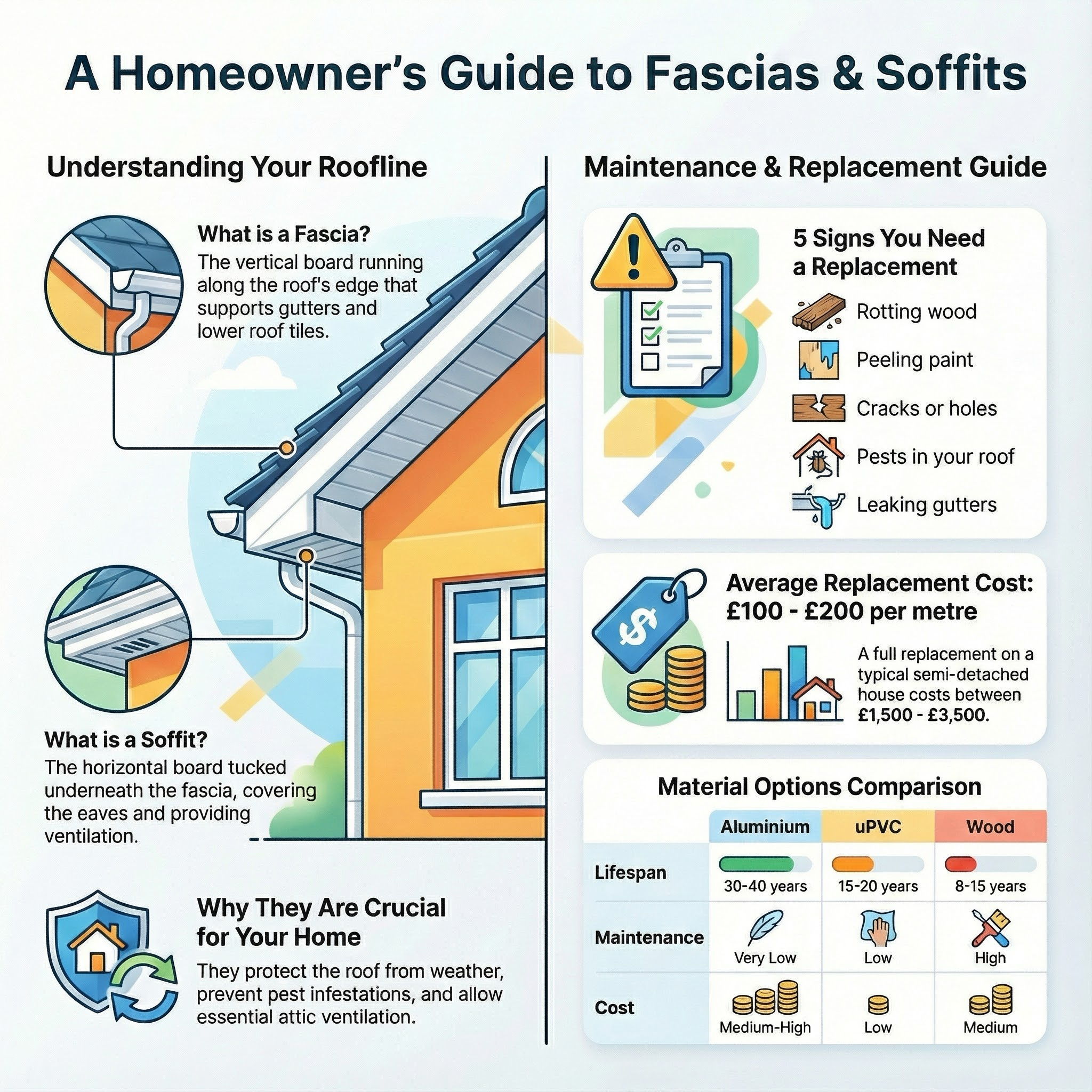
Fascia & Soffits explained
Replacing old, leaking, or sagging gutters ensures rainwater is efficiently diverted away from your property. Modern uPVC and aluminium systems offer a long-lasting, low-maintenance solution that also enhances your home's kerb appeal.
The total cost depends primarily on the size of your home and the materials chosen. While uPVC is the most common option, premium materials like seamless aluminium or cast-iron effect will increase the budget.
| Item / Property Type | Low £ | High £ | Notes |
|---|---|---|---|
| Terraced House (Front & Back) | £450 | £850 | Standard uPVC; approx 10-12m. |
| Semi-Detached (3 sides) | £750 | £1,400 | Includes downpipes and waste removal. |
| Detached House (Full perimeter) | £1,300 | £2,800 | Varies by roof complexity and height. |
| Aluminium Upgrade | +£45 | +£80 | Per linear metre vs uPVC. |
| Scaffolding (if required) | £400 | £950 | Required for 3+ storeys or over conservatories. |
Pro Tip: Always check the condition of your fascias during a gutter replacement. It is significantly cheaper to replace rotten timber boards while the guttering is already removed.
While guttering components are available at most DIY stores, professional installation is strongly recommended. Working at height carries significant risk, and getting the "fall" of the gutter wrong can lead to standing water and structural dampness.
A professional installer will ensure the system handles heavy UK downpours and usually provides a 10-year workmanship guarantee. They also have the specialist equipment to work safely over conservatories or high gables.
Quality uPVC gutters typically last 20–30 years. You should consider replacement if you notice persistent leaks, warped sections, or if the brackets are pulling away from the house.
A single leak or a loose bracket is a cheap repair. However, if the system is brittle or several joints are failing, a full replacement is more cost-effective than constant piecemeal fixes.
Yes, modern systems come in black, white, grey, brown, and even anthracite. Most homeowners choose a colour that complements their window frames or roof tiles.
Leaf guards are mesh or "hedgehog" inserts that prevent debris from blocking the flow. They are highly recommended if your property is near tall trees to reduce maintenance frequency.
For most two-storey homes, an alloy tower or ladders with stay-bars are sufficient. Scaffolding is usually only required for three-storey buildings or where access is restricted by a conservatory.
This guide was written with AI assistance and is intended for general information only. Prices are estimates based on UK averages and may vary by region. Always get at least three quotes and consult a qualified professional before starting any work.
Ask follow-ups in plain English. The AI explains options, sequencing and what to ask the fascia & soffits — so you walk in informed.
Finlock gutters were a popular architectural choice for UK homes built between the 1950s and 1970s. These heavy, precast concrete blocks were designed to serve ...
READ GUIDE →GuideMaintaining the exterior woodwork of your UK home is about more than just kerb appeal. In our damp climate, timber fascias, soffits, and windowsills act as the ...
READ GUIDE →GuideSoffits are the horizontal boards tucked under your roof’s eaves, bridging the gap between the siding and the roofline. While often overlooked, they are critica...
READ GUIDE →GuideFascia boards are the unsung heroes of your home’s exterior, acting as the primary barrier between the British weather and your roof’s timber structure. These b...
READ GUIDE →GuideGuttering is your home's first line of defence against the British weather. While often overlooked, a functioning gutter system is essential for directing rainw...
READ GUIDE →GuideYour fascia boards do more than just provide a neat finish to your roofline; they are a critical structural component that supports your guttering and protects ...
READ GUIDE →