Instant
01 · Ask
Ask the AI a follow-up
Got more questions about exterior Woodwork Repair? Describe the bit you're unsure about — the AI explains options, sequencing and what to ask the fascia & soffits.

Bargeboards, fascia, soffits and timber detail — repaired, primed and painted to last.
You've read the brief on exterior Woodwork Repair. Now lean on us to find the right fascia & soffits — and stay in control of the job.
Got more questions about exterior Woodwork Repair? Describe the bit you're unsure about — the AI explains options, sequencing and what to ask the fascia & soffits.
Costs, timelines, pitfalls and the right questions to ask before any fascia & soffits starts on exterior Woodwork Repair.
Itemised quotes from up to 3 local fascia & soffitss on exterior Woodwork Repair — so you can compare like-for-like, not lump sums.
Ready when you are
Enter your postcode and get free quotes from local pros.
Four moves that separate a smooth job from a nightmare.
If a repair is done in damp weather, moisture gets trapped under the paint, causing it to blister and peel within months.
Rot in fascias is almost always caused by leaking or blocked gutters; if the gutters aren't fixed, the new wood will rot just as fast.
Standard interior "poly" fillers absorb water and will pop out of the wood during the first frost.
The cut ends of timber act like straws for moisture; they must be saturated with preservative and primer before being joined.
Indicative UK ranges and what affects price.
By job type
Quote spread is typically ± 18% — always get 3 quotes.
Fascia & Soffits quick-view
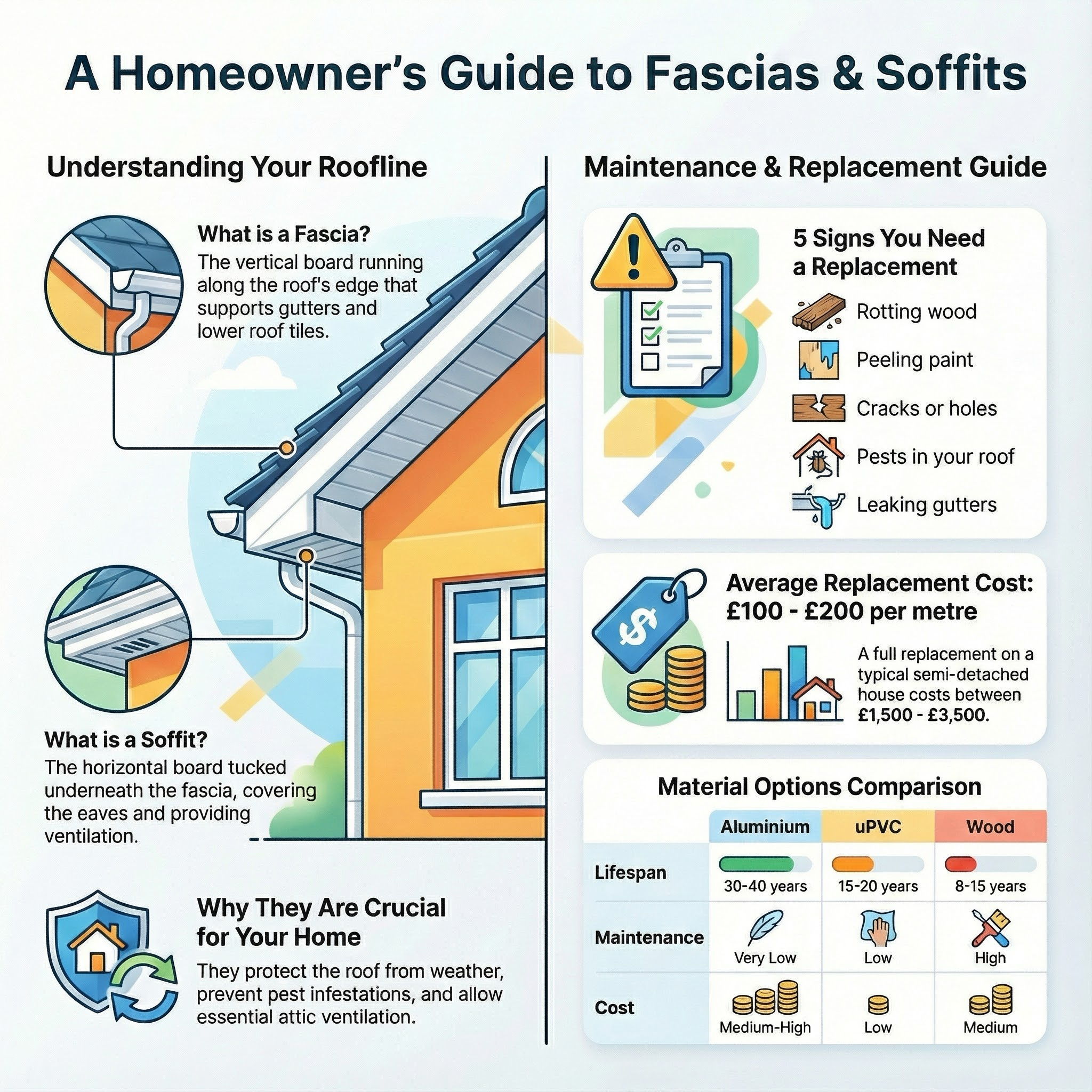
Fascia & Soffits explained
Professional exterior woodwork repair focuses on "splicing" or "filling" rather than total replacement. This approach preserves original features, particularly on period properties, while ensuring the roofline remains watertight and structurally sound for years to come.
Prices for exterior woodwork repair vary based on the height of the property and the extent of the rot. Working at height usually requires a cherry picker or an alloy tower, which adds to the initial setup cost.
| Item | Low £ | High £ | Notes |
|---|---|---|---|
| Call-out / Minimum Charge | £75 | £150 | Covers travel and the first hour of inspection/prep. |
| Labour (per hour) | £45 | £80 | Rates are higher in London and the South East. |
| Timber & Resin Materials | £40 | £250 | High-quality epoxy resins (e.g., Repair Care) are expensive. |
| Scaffold / Access Tower | £150 | £500 | Required for safe working on 2nd storeys or gables. |
| Full Windowsill Repair | £180 | £400 | Includes splicing in a new nose or "cill" section. |
| Total Small Job | £250 | £750 | Typical cost for 1-2 minor repairs including VAT. |
Note: If more than 30% of a fascia board is rotten, your tradesperson may recommend a full replacement rather than a repair, as the labour cost of intricate splicing can eventually exceed the cost of new timber or uPVC.
Small repairs to ground-floor windowsills are well within the reach of a confident DIYer using a two-part wood filler. However, working on fascias and soffits involves significant heights and often requires working around power lines or delicate guttering. Professional carpenters or roofline specialists have the correct access equipment and high-build resins that last far longer than standard DIY fillers. Furthermore, any work involving gas flues or electrical cables near the roofline must be handled by qualified professionals to ensure compliance with safety standards.
Timber is more aesthetically pleasing for traditional UK homes and is more environmentally friendly if maintained. However, uPVC is virtually maintenance-free. If your timber is structurally sound, repair is cheaper; if it is riddled with rot, uPVC replacement may be more cost-effective long-term.
It is difficult. Most high-performance resins and paints require a minimum temperature (usually 5°C or 10°C) and dry conditions to cure. Winter repairs are often "emergency" patches that may need to be redone properly in the spring.
This is usually due to "moisture trap." If the timber wasn't bone-dry when painted, or if a knotting agent wasn't used on new timber sections, the natural resins or moisture will push the paint off the surface.
A professional will look for "softness" behind the fascia board. If the ends of the rafters (the "feet") are soft to the touch, they will need to be "sistering" (reinforced with new timber), which is a more significant structural job.
For a quick 30-minute task, a secured ladder may suffice. However, for sanding, filling, and multi-coat painting, a stable platform is a legal requirement for most businesses to ensure the safety of the tradesperson.
This guide was written with AI assistance and is intended for general information only. Prices are estimates based on UK averages and may vary by region. Always get at least three quotes and consult a qualified professional before starting any work.
Ask follow-ups in plain English. The AI explains options, sequencing and what to ask the fascia & soffits — so you walk in informed.
Finlock gutters were a popular architectural choice for UK homes built between the 1950s and 1970s. These heavy, precast concrete blocks were designed to serve ...
READ GUIDE →GuideSoffits are the horizontal boards tucked under your roof’s eaves, bridging the gap between the siding and the roofline. While often overlooked, they are critica...
READ GUIDE →GuideFascia boards are the unsung heroes of your home’s exterior, acting as the primary barrier between the British weather and your roof’s timber structure. These b...
READ GUIDE →GuideGuttering is your home's first line of defence against the British weather. While often overlooked, a functioning gutter system is essential for directing rainw...
READ GUIDE →GuideYour guttering system is the first line of defence against the British weather. In the UK, failing gutters can quickly lead to saturated masonry, internal damp,...
READ GUIDE →GuideYour fascia boards do more than just provide a neat finish to your roofline; they are a critical structural component that supports your guttering and protects ...
READ GUIDE →