Instant
01 · Ask
Ask the AI a follow-up
Got more questions about stove Installation Cost &? Describe the bit you're unsure about — the AI explains options, sequencing and what to ask the fireplaces & stoves.

Wood-burning, multi-fuel or pellet stove — installed by HETAS engineers with full certification.
You've read the brief on stove Installation Cost &. Now lean on us to find the right fireplaces & stoves — and stay in control of the job.
Got more questions about stove Installation Cost &? Describe the bit you're unsure about — the AI explains options, sequencing and what to ask the fireplaces & stoves.
Costs, timelines, pitfalls and the right questions to ask before any fireplaces & stoves starts on stove Installation Cost &.
Itemised quotes from up to 3 local fireplaces & stovess on stove Installation Cost & — so you can compare like-for-like, not lump sums.
Ready when you are
Enter your postcode and get free quotes from local pros.
Four moves that separate a smooth job from a nightmare.
Often caused by an unlined chimney or incorrect flue height, leading to smoke leaking into the room.
Installing a 10kW stove in a small room can cause discomfort and excessive fuel consumption.
Modern homes are often too airtight for stoves to breathe, requiring a dedicated external air supply.
Placing a stove too close to a wooden mantelpiece or plasterboard is a significant fire risk.
Indicative UK ranges and what affects price.
By job type
Quote spread is typically ± 18% — always get 3 quotes.
Fireplaces & Stoves quick-view
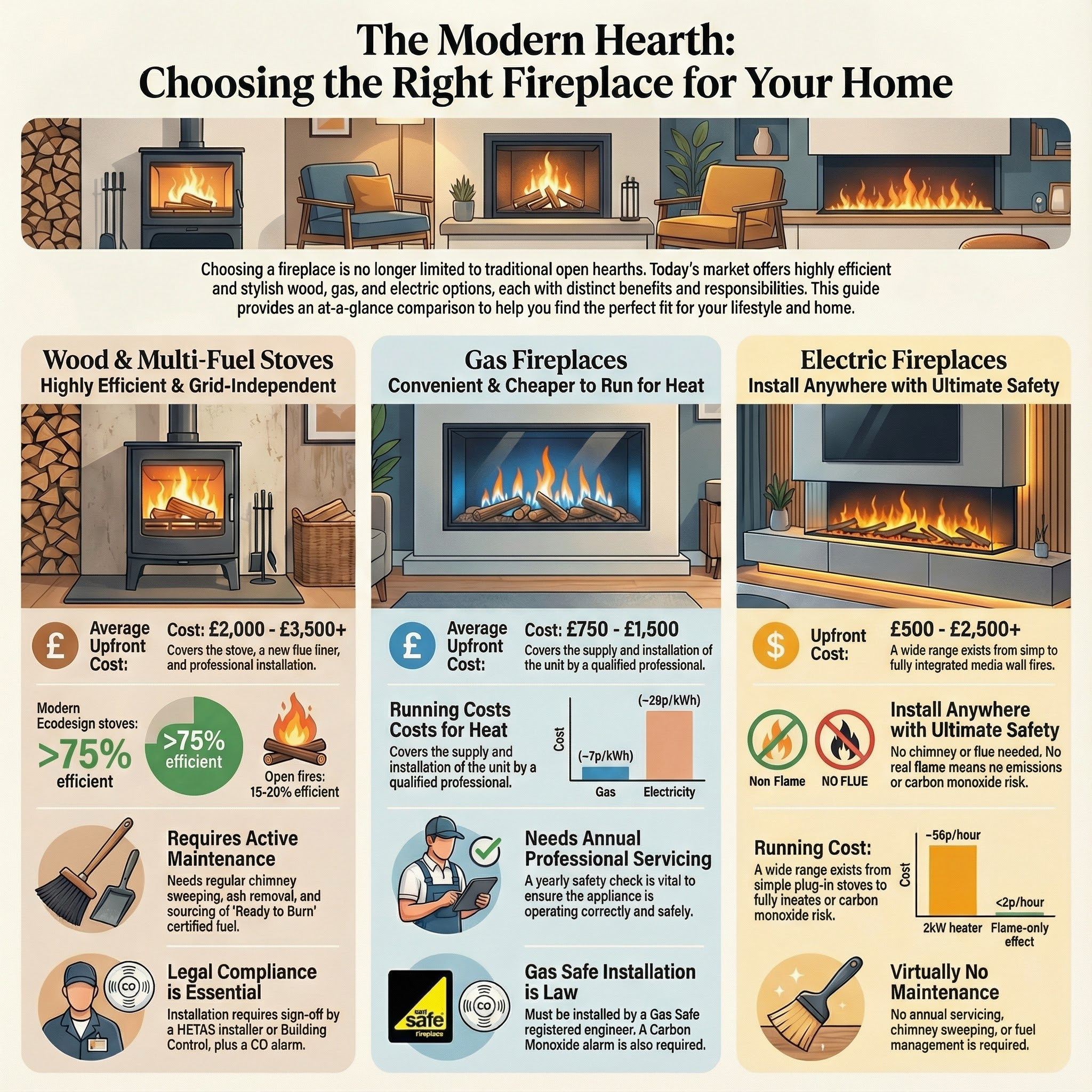
Fireplaces & Stoves explained
Beyond the aesthetic appeal, a correctly installed stove provides a reliable secondary heat source that can help reduce energy bills. However, because these appliances involve high temperatures and combustible fuels, following strict UK building regulations is non-negotiable for insurance and safety purposes.
The total cost of a stove installation varies significantly based on whether you have an existing chimney and the type of fuel used. Prices below include VAT and represent 2025/26 UK averages.
| Item | Low £ | High £ | Notes |
|---|---|---|---|
| Wood-Burning Stove (Unit only) | £600 | £2,500 | Depends on brand and kW output. |
| Chimney Lining Kit (10m) | £400 | £800 | Includes liner, cowl, and adapters. |
| Labour (Standard Install) | £500 | £950 | Two-person team for 1 day. |
| Twin-Wall Flue System | £1,500 | £2,500 | Required if you have no chimney. |
| Hearth Construction | £250 | £600 | Materials like slate, granite, or stone. |
| Gas Stove Connection | £300 | £600 | Labour for Gas Safe registered engineer. |
Factors affecting the price include the height of your property (scaffolding may be needed), the requirement for a twin-wall flue if no chimney exists, and whether your home is located in a Smoke Control Area, which requires a DEFRA-exempt appliance.
While you can physically position a stove yourself, the installation must be certified. In the UK, solid fuel installations are governed by Building Regulations (Part J). You must either have the work done by a HETAS or OFTEC registered installer or notify your local Building Control office before starting, which involves a fee and an inspection.
Gas stove installations are legally required to be carried out by a Gas Safe registered engineer. Attempting this yourself is illegal and extremely dangerous.
While not always a legal requirement for very old chimneys in perfect condition, it is highly recommended. A liner improves safety, increases efficiency, and prevents tar from seeping through your masonry.
No. You should only burn "Ready to Burn" certified wood with a moisture content below 20%. Burning wet wood creates soot, damages your flue, and contributes to air pollution.
These are stoves that have been tested and passed UK emission standards, allowing them to be used to burn wood even if you live in a designated Smoke Control Area.
If you use your stove regularly throughout the winter, you should have the chimney swept at least once a year—ideally before the heating season begins.
If your stove is over 5kW, or if your home was built after 2008, you will almost certainly need a permanent air vent to ensure the fire has enough oxygen to burn safely.
This guide was written with AI assistance and is intended for general information only. Prices are estimates based on UK averages and may vary by region. Always get at least three quotes and consult a qualified professional before starting any work.
Ask follow-ups in plain English. The AI explains options, sequencing and what to ask the fireplaces & stoves — so you walk in informed.
A fireplace surround is the visual centrepiece of a British living room, but its role goes beyond aesthetics. A correctly installed surround ensures heat is saf...
READ GUIDE →GuideA Rayburn range cooker is often the heart of a British home, providing warmth, hot water, and a reliable cooking platform. Because these appliances often run 24...
READ GUIDE →GuideA fireplace is often the focal point of a British home, providing essential warmth and a sense of comfort during the colder months. Whether you are looking to r...
READ GUIDE →GuideInstalling a gas fire is one of the most effective ways to add both warmth and a striking focal point to your UK home. Beyond the aesthetic appeal, modern gas f...
READ GUIDE →GuideA fireplace is often the focal point of a British home, providing essential warmth and character. However, a malfunctioning fireplace is more than just an incon...
READ GUIDE →GuideRegular maintenance of a gas fire is more than just a cleaning exercise; it is a critical safety requirement for UK homeowners. Annual servicing ensures your ap...
READ GUIDE →