Instant
01 · Ask
Ask the AI a follow-up
Got more questions about wood Stove Installation? Describe the bit you're unsure about — the AI explains options, sequencing and what to ask the fireplaces & stoves.

Wood-only or multi-fuel stove — fitted, lined and HETAS-certified, ready to burn the same week.
You've read the brief on wood Stove Installation. Now lean on us to find the right fireplaces & stoves — and stay in control of the job.
Got more questions about wood Stove Installation? Describe the bit you're unsure about — the AI explains options, sequencing and what to ask the fireplaces & stoves.
Costs, timelines, pitfalls and the right questions to ask before any fireplaces & stoves starts on wood Stove Installation.
Itemised quotes from up to 3 local fireplaces & stovess on wood Stove Installation — so you can compare like-for-like, not lump sums.
Ready when you are
Enter your postcode and get free quotes from local pros.
Four moves that separate a smooth job from a nightmare.
Installing an 8kW stove in a small room leads to "slumbering" the fire, which creates excessive soot and creosote.
If the chimney is too short or the room is too airtight, smoke may blow back into the room.
Burning wood with over 20% moisture content will damage the liner and blacken the glass.
Stoves over 5kW usually require a permanent air vent in the room to prevent carbon monoxide build-up.
Indicative UK ranges and what affects price.
By job type
Quote spread is typically ± 18% — always get 3 quotes.
Fireplaces & Stoves quick-view
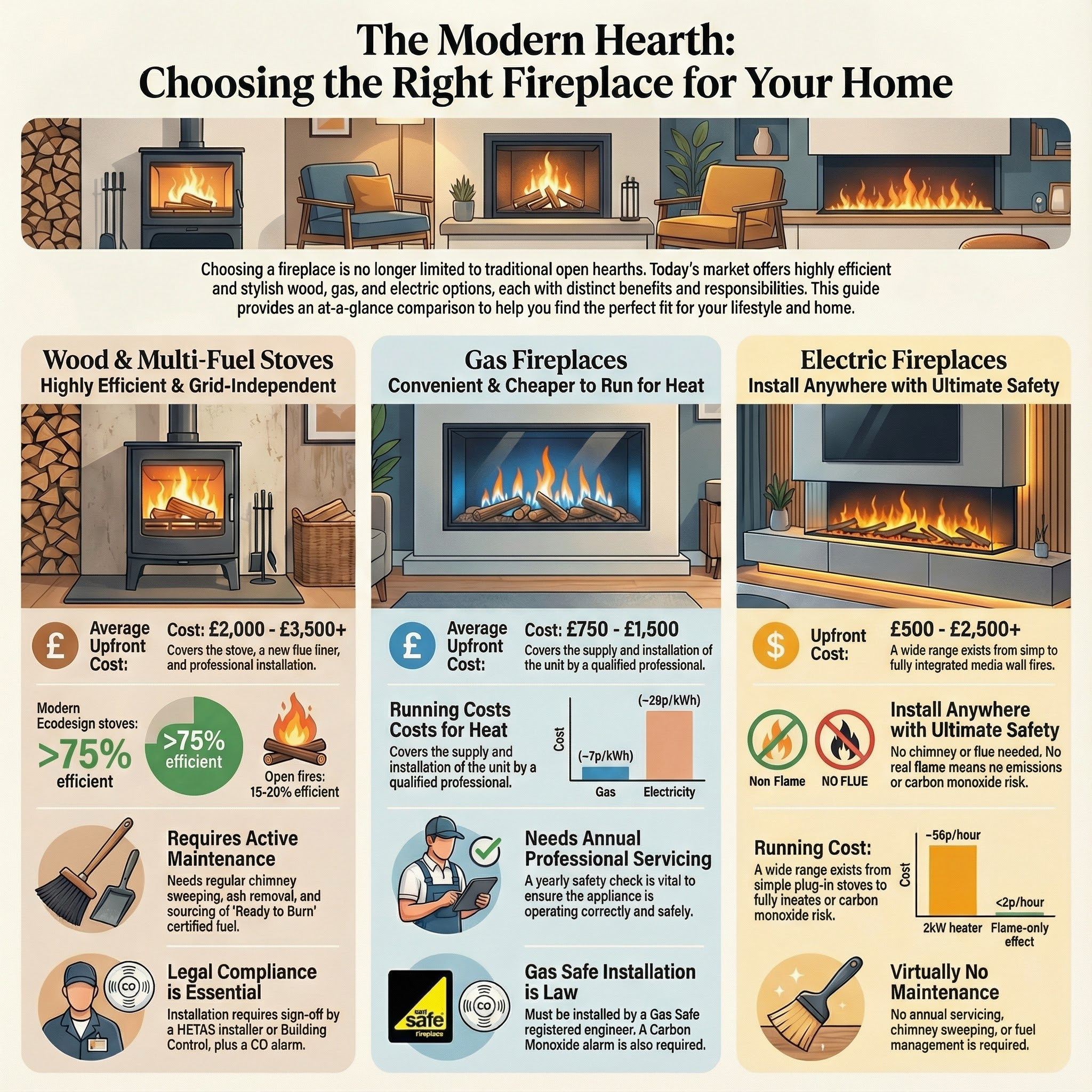
Fireplaces & Stoves explained
Professional installation is essential not just for performance, but for safety and legal compliance. In the UK, strict building regulations govern how stoves are fitted, ensuring proper ventilation and the safe extraction of combustion gases.
| Item | Low £ | High £ | Notes |
|---|---|---|---|
| EcoDesign Wood Stove (5kW) | £600 | £2,000 | Price varies by brand and design. |
| Flue Liner Kit (per metre) | £250 | £600 | Includes liner, cowl, and adapter. |
| Twin-Wall Flue System | £1,500 | £2,500 | Required for homes without a chimney. |
| Labour (HETAS Installer) | £500 | £1,000 | Standard 1-day installation. |
| Hearth & Fireplace Prep | £200 | £800 | Depends on materials (stone, slate, glass). |
Total project costs typically range between £1,800 and £3,500 for a standard chimney installation. Prices increase significantly if you require a twin-wall system through the roof or if structural fireplace alterations are needed.
While you can physically install a stove yourself, it is highly discouraged. In the UK, the installation must be "signed off" to comply with Building Regulations. If you use a non-certified installer, you must pay your local Building Control department (approx. £300) to inspect the work, which can be difficult to pass retrospectively.
Hiring a HETAS or OFTEC registered installer is the safest route; they self-certify their work and provide the necessary compliance certificate for your home insurance.
No. If your home doesn't have a chimney, a professional can install a twin-wall flue system. This is a series of insulated stainless steel pipes that can go through an external wall or up through the roof.
Wood burners have a flat bed because wood burns best on a bed of ash with air from above. Multi-fuel stoves have a grate for coal or smokeless fuels to sit on, allowing air to circulate from underneath.
For a wood stove in regular use, you should have the chimney swept at least twice a year—once before the heating season and once after. This prevents soot fires and ensures a clear draw.
It is possible but risky. You must follow strict clearance distances to combustibles. You will likely need a deep non-combustible mantle or a recessed niche to shield the TV from rising heat.
Many UK urban areas are designated Smoke Control Areas. In these zones, you can only burn wood if you use a DEFRA-exempt appliance. Your installer can confirm if your property is in one of these zones.
This guide was written with AI assistance and is intended for general information only. Prices are estimates based on UK averages and may vary by region. Always get at least three quotes and consult a qualified professional before starting any work.
Ask follow-ups in plain English. The AI explains options, sequencing and what to ask the fireplaces & stoves — so you walk in informed.
A fireplace surround is the visual centrepiece of a British living room, but its role goes beyond aesthetics. A correctly installed surround ensures heat is saf...
READ GUIDE →GuideA Rayburn range cooker is often the heart of a British home, providing warmth, hot water, and a reliable cooking platform. Because these appliances often run 24...
READ GUIDE →GuideA fireplace is often the focal point of a British home, providing essential warmth and a sense of comfort during the colder months. Whether you are looking to r...
READ GUIDE →GuideInstalling a gas fire is one of the most effective ways to add both warmth and a striking focal point to your UK home. Beyond the aesthetic appeal, modern gas f...
READ GUIDE →GuideA fireplace is often the focal point of a British home, providing essential warmth and character. However, a malfunctioning fireplace is more than just an incon...
READ GUIDE →GuideRegular maintenance of a gas fire is more than just a cleaning exercise; it is a critical safety requirement for UK homeowners. Annual servicing ensures your ap...
READ GUIDE →