Instant
01 · Ask
Ask the AI a follow-up
Got more questions about garden levelling? Describe the bit you're unsure about — the AI explains options, sequencing and what to ask the landscaper.

Bumpy or sloping garden levelled — by groundworks team with proper plant. Pairs with re-turf or hard landscape.
You've read the brief on garden levelling. Now lean on us to find the right landscaper — and stay in control of the job.
Got more questions about garden levelling? Describe the bit you're unsure about — the AI explains options, sequencing and what to ask the landscaper.
Costs, timelines, pitfalls and the right questions to ask before any landscaper starts on garden levelling.
Itemised quotes from up to 3 local landscapers on garden levelling — so you can compare like-for-like, not lump sums.
Ready when you are
Enter your postcode and get free quotes from local pros.
Four moves that separate a smooth job from a nightmare.
Levelling a central area but leaving the perimeter higher, which turns your lawn into a pond during winter.
Not compacting the soil properly, leading to "sinkholes" appearing six months later when the soil naturally settles.
Finding old foundations or "builder's rubble" just beneath the surface, which can double the cost of excavation.
Burying good quality topsoil under poor subsoil (the "wrong way round"), making it impossible for anything to grow.
Indicative UK ranges and a typical week-by-week schedule.
By job type
Quote spread is typically ± 18% — always get 3 quotes.
Mid-size garden redesign · week by week
Schedule slips on dependencies — pad each phase by 10–20% for real-world delays.
Landscaper quick-view
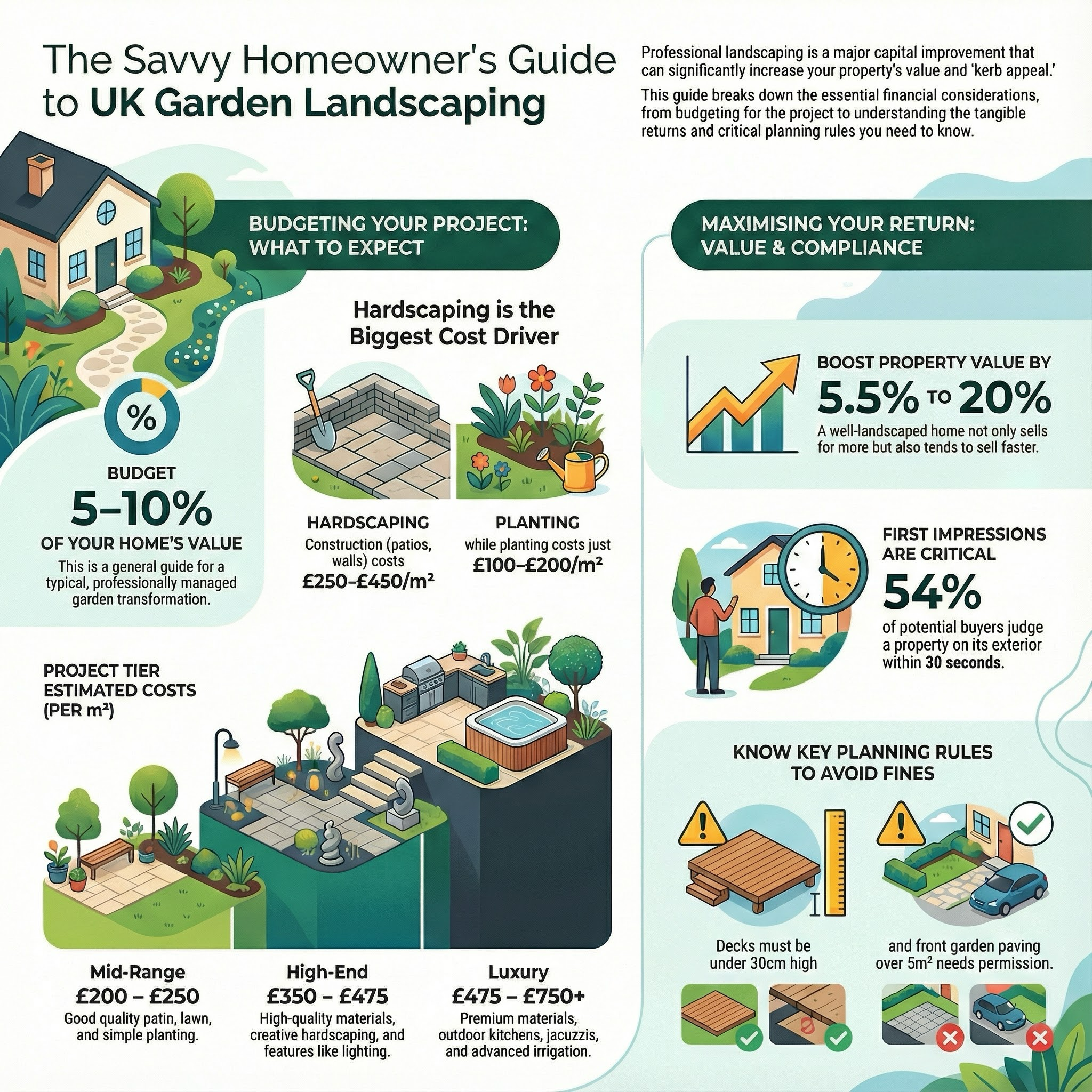
Landscaper explained
For many UK homeowners, particularly those with new-build properties or older sloped plots, garden levelling is a transformative investment. It maximises usable space and significantly reduces the maintenance headaches caused by uneven terrain and poor soil structure.
The cost of garden levelling varies based on the volume of soil moved and how easy it is to get machinery into your back garden. Prices below include labour, plant hire, and VAT at current UK rates.
| Item / Scale | Low £ | High £ | Notes |
|---|---|---|---|
| Small Garden (up to 50m²) | £1,200 | £2,800 | Basic grading and re-turfing. |
| Medium Garden (50-100m²) | £3,000 | £6,500 | May require mini-digger and several skips. |
| Large/Sloped Garden (100m²+) | £7,000 | £15,000+ | Often requires retaining walls and drainage. |
| Waste Removal (per 8-yard skip) | £280 | £450 | Price varies significantly by UK region. |
| Bulk Topsoil (per 850kg bag) | £80 | £120 | Includes delivery; cheaper if bought loose. |
The biggest price drivers are access (can a digger fit through a side gate?) and waste. Disposing of "muck" is expensive in the UK due to landfill taxes, so keeping soil on-site through clever landscaping can save thousands.
Minor "bumps and hollows" in a lawn can be fixed by a confident DIYer with a spade, a straight edge, and some top-dressing. However, any project involving a change in height of more than 15-20cm, or anything requiring a mini-digger, should be handled by a professional.
Professional landscapers understand "falls" and drainage. A DIY error could accidentally direct rainwater toward your house walls, leading to rising damp or foundation damage.
Furthermore, professionals are equipped to handle Part M of the building regs (access) and ensure that any changes don't violate Party Wall agreements if you are excavating near a neighbour’s fence or wall.
Questions to ask:
If the slope is steep (usually a gradient of more than 1:3), you will likely need a retaining wall to hold the earth in place. Without one, the soil will eventually wash away or collapse due to gravity and rain.
No. Topsoil is for growing, not for structural height. If you use deep layers of topsoil to fill a hole, it will eventually compress and sink. You should use a compacted sub-base or subsoil for the bulk of the height and finish with 100-150mm of topsoil.
Yes, potentially. You must ensure that by raising or lowering your land, you aren't causing water to drain into their garden or undermining the stability of their fences or walls. You should always discuss plans with neighbours first.
This is a technique where soil taken from a high part of the garden is used to fill a low part. This is the most cost-effective way to level a garden as it reduces the need to pay for soil removal or new soil delivery.
Spring and early Autumn are best. In winter, the ground is often too boggy for machinery; in the height of summer, the ground can be too hard to dig easily, and new turf or seed will struggle to survive the heat.
This guide was written with AI assistance and is intended for general information only. Prices are estimates based on UK averages and may vary by region. Always get at least three quotes and consult a qualified professional before starting any work.
Ask follow-ups in plain English. The AI explains options, sequencing and what to ask the landscaper — so you walk in informed.
Professional garden design is the blueprint for a successful outdoor transformation. It bridges the gap between a vague idea and a functional, beautiful space t...
READ GUIDE →GuideA crisp, well-defined lawn edge is often the difference between a garden that looks "done" and one that looks truly professional. In the UK, our damp climate an...
READ GUIDE →GuideProfessional landscaping is one of the most effective ways to increase your home’s kerb appeal and market value, often adding up to 20% to a UK property's price...
READ GUIDE →GuideRevitalising your outdoor space often starts with the basics: a lush, level lawn and a clean, stable patio. In the UK, our damp winters and variable summers tak...
READ GUIDE →GuideProfessional landscaping and garden design involve much more than just planting flowers or mowing a lawn. It is the process of modifying the visible features of...
READ GUIDE →GuideCombining a pond installation with a decking replacement is a popular way for UK homeowners to create a multi-layered, tranquil garden space. This project not o...
READ GUIDE →