Instant
01 · Ask
Ask the AI a follow-up
Got more questions about lawn re-edging and relaying? Describe the bit you're unsure about — the AI explains options, sequencing and what to ask the landscaper.

Lawn edges sharpened and tired turf relaid — restores the cut-line and front-of-house finish.
You've read the brief on lawn re-edging and relaying. Now lean on us to find the right landscaper — and stay in control of the job.
Got more questions about lawn re-edging and relaying? Describe the bit you're unsure about — the AI explains options, sequencing and what to ask the landscaper.
Costs, timelines, pitfalls and the right questions to ask before any landscaper starts on lawn re-edging and relaying.
Itemised quotes from up to 3 local landscapers on lawn re-edging and relaying — so you can compare like-for-like, not lump sums.
Ready when you are
Enter your postcode and get free quotes from local pros.
Four moves that separate a smooth job from a nightmare.
If the ground isn't properly compacted before relaying, the lawn will develop "hollows" within six months.
Using cheap plastic edging that expands and contracts in UK temperatures can cause unsightly gaps or "heaving" out of the ground.
If turf is laid too loosely or not watered immediately, the rolls will shrink, leaving brown gaps between each strip.
Failing to address compacted subsoil before relaying often leads to moss problems and waterlogging in the winter.
Indicative UK ranges and a typical week-by-week schedule.
By job type
Quote spread is typically ± 18% — always get 3 quotes.
Mid-size garden redesign · week by week
Schedule slips on dependencies — pad each phase by 10–20% for real-world delays.
Landscaper quick-view
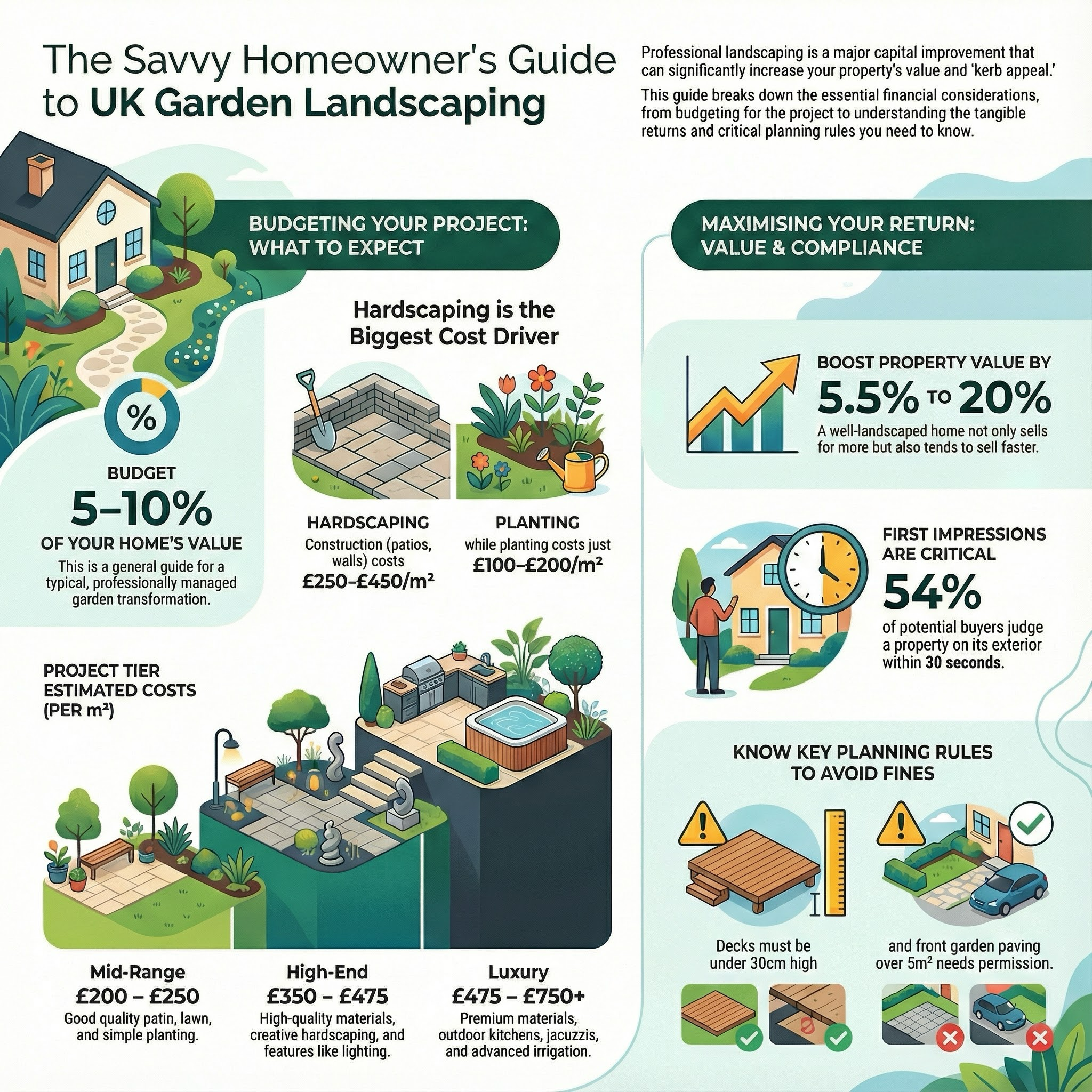
Landscaper explained
Whether you are looking to sharpen up existing borders with permanent steel edging or completely overhaul a patchy, uneven lawn, understanding the process and costs involved ensures you get a finish that lasts for years rather than months.
The cost of lawn re-edging and relaying depends heavily on the linear meterage of the edges and the quality of the turf selected. Labour remains the largest component due to the physical nature of the work.
| Item | Low £ | High £ | Notes |
|---|---|---|---|
| Labour (per day) | £250 | £450 | Usually requires a team of two for efficiency. |
| Premium Turf (per m²) | £6 | £12 | Includes VAT; price varies by grass variety. |
| Metal Edging (per metre) | £15 | £35 | Everedge or similar steel products. |
| Timber/Plastic Edging (per metre) | £5 | £15 | Treated softwood or heavy-duty recycled plastic. |
| Waste Disposal (Skip/Grab) | £150 | £350 | Soil and turf are heavy and expensive to tip. |
| Total Project (Small Lawn) | £450 | £950 | Typical 20-30m² urban garden. |
Factors such as restricted access (e.g., carrying materials through a terraced house) and the need for specialized machinery like sod cutters will increase the final quote.
Cutting a simple edge with a half-moon tool is a straightforward DIY task. However, relaying a lawn or installing permanent metal or stone edging is back-breaking work that requires a keen eye for levels.
Professional landscapers use sod cutters to ensure a uniform depth and heavy rollers to prevent "puddling" later on. If your garden has drainage issues, a professional can also incorporate sand slits or French drains during the relaying process.
While there are no specific building regulations for lawn work, any professional removing waste from your property must hold a valid Environment Agency Waste Carrier Licence.
Spring (March to May) and Autumn (September to October) are ideal. The soil is warm, and there is usually enough rainfall to help roots establish without the scorching heat of summer or the dormancy of winter.
You should avoid walking on newly laid turf for at least 3 weeks. If you must walk on it to water, use wide wooden planks to distribute your weight and prevent indentations.
This is not recommended. The old grass will rot down, causing the new turf to become uneven, and weeds from the old lawn will quickly grow through the new layer. Always strip the old turf first.
Everedge or similar powder-coated steel edging is the gold standard. It is thin enough to be invisible, prevents grass roots from spreading into borders, and is tough enough to be mown over directly.
This is usually a sign of "stress," most commonly caused by underwatering. In the first two weeks, a new lawn needs deep soaking every evening (unless it rains heavily) to ensure the water reaches the soil beneath the turf.
This guide was written with AI assistance and is intended for general information only. Prices are estimates based on UK averages and may vary by region. Always get at least three quotes and consult a qualified professional before starting any work.
Ask follow-ups in plain English. The AI explains options, sequencing and what to ask the landscaper — so you walk in informed.
Professional garden design is the blueprint for a successful outdoor transformation. It bridges the gap between a vague idea and a functional, beautiful space t...
READ GUIDE →GuideA level garden is the essential foundation for almost every outdoor improvement, from installing a new lawn or patio to erecting a summerhouse. Beyond aesthetic...
READ GUIDE →GuideProfessional landscaping is one of the most effective ways to increase your home’s kerb appeal and market value, often adding up to 20% to a UK property's price...
READ GUIDE →GuideRevitalising your outdoor space often starts with the basics: a lush, level lawn and a clean, stable patio. In the UK, our damp winters and variable summers tak...
READ GUIDE →GuideProfessional landscaping and garden design involve much more than just planting flowers or mowing a lawn. It is the process of modifying the visible features of...
READ GUIDE →GuideCombining a pond installation with a decking replacement is a popular way for UK homeowners to create a multi-layered, tranquil garden space. This project not o...
READ GUIDE →