Instant
01 · Ask
Ask the AI a follow-up
Got more questions about landscaping and design? Describe the bit you're unsure about — the AI explains options, sequencing and what to ask the landscaper.

One team for design plus build — saves the handover gaps and lets you change spec mid-build cleanly.
You've read the brief on landscaping and design. Now lean on us to find the right landscaper — and stay in control of the job.
Got more questions about landscaping and design? Describe the bit you're unsure about — the AI explains options, sequencing and what to ask the landscaper.
Costs, timelines, pitfalls and the right questions to ask before any landscaper starts on landscaping and design.
Itemised quotes from up to 3 local landscapers on landscaping and design — so you can compare like-for-like, not lump sums.
Ready when you are
Enter your postcode and get free quotes from local pros.
Four moves that separate a smooth job from a nightmare.
Using too little MOT Type 1 or failing to compact it properly leads to sinking or "rocking" patio slabs within 12 months.
Failing to account for the garden's natural slope can lead to water pooling against the house walls, causing damp issues.
Choosing "architectural" plants that cannot survive a UK frost or placing shade-loving plants in direct midday sun.
Excavating just 10cm of soil from a medium garden can produce multiple tonnes of "spoil," which is expensive to skip and remove.
Indicative UK ranges and a typical week-by-week schedule.
By job type
Quote spread is typically ± 18% — always get 3 quotes.
Mid-size garden redesign · week by week
Schedule slips on dependencies — pad each phase by 10–20% for real-world delays.
Landscaper quick-view
Landscaper explained
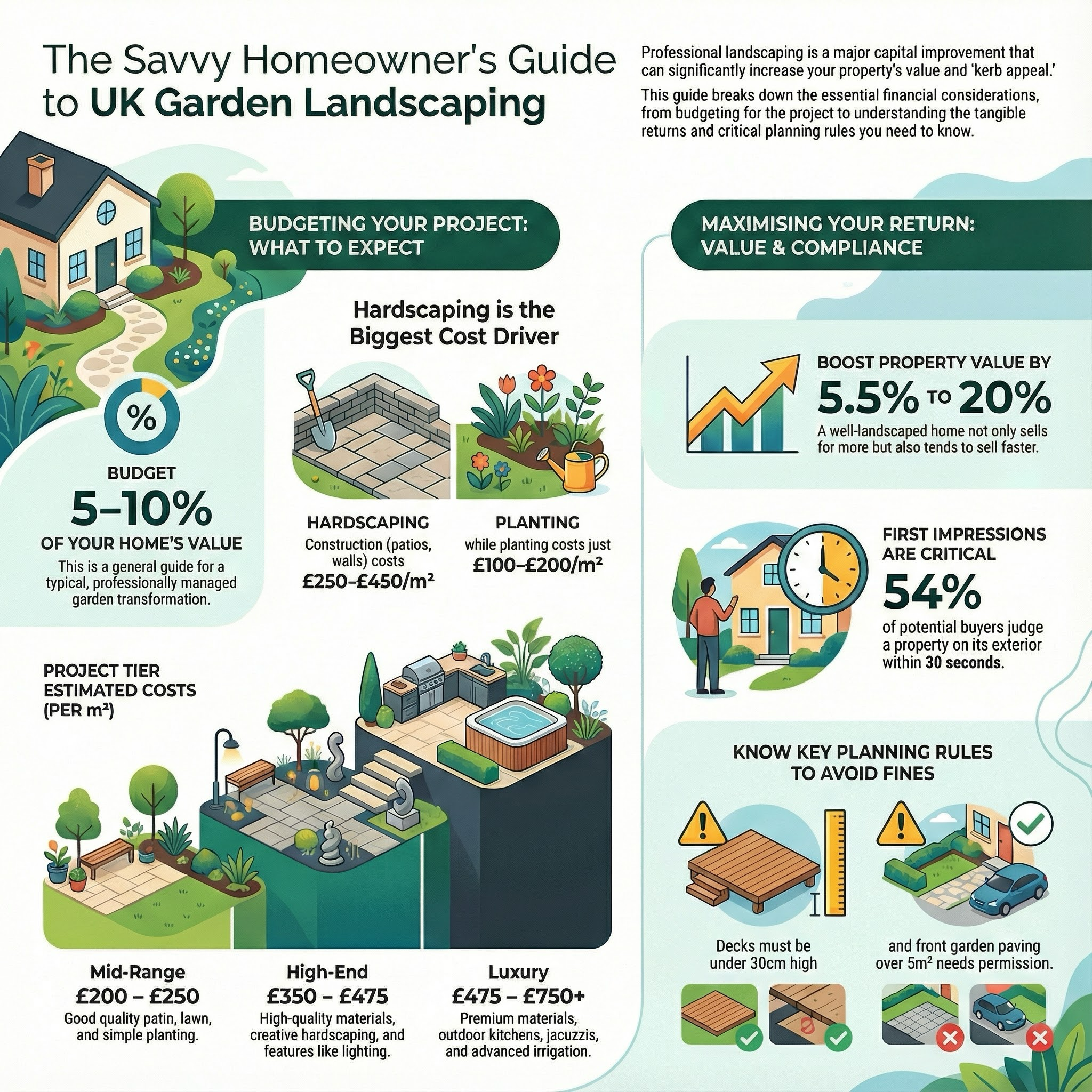
For UK homeowners, a well-executed landscape project can increase property value by up to 20% while creating a vital space for relaxation and entertaining. From managing complex drainage issues to selecting plants that thrive in the British climate, a professional landscaper bridges the gap between architecture and nature.
Landscaping costs vary significantly based on material choices and the current state of your garden. Prices below are 2025/26 estimates for the UK, including VAT and professional installation.
| Project Type | Low £ | High £ | Notes |
|---|---|---|---|
| Small Garden Refresh (Turf & Borders) | £2,500 | £5,000 | Basic soft landscaping and site clearance. |
| Medium Garden Redesign (inc. Patio) | £7,000 | £15,000 | Mix of hard and soft landscaping (approx. 50-100m²). |
| Full Premium Transformation | £20,000 | £50,000+ | High-end materials, lighting, and structural walls. |
| Porcelain Paving (per m²) | £120 | £180 | Includes sub-base, mortar, and grouting. |
| New Lawn / Turfing (per m²) | £15 | £30 | Includes soil prep and high-quality turf. |
| Design Fees | £500 | £2,500 | Depending on complexity and 3D rendering. |
Labour typically accounts for 40% to 60% of the total project cost. Factors such as "restricted access" (e.g., needing to carry materials through a terraced house) can add 15-20% to the final quote due to increased manual labour time.
While basic gardening and simple turfing are manageable for a confident DIYer, structural landscaping requires professional expertise. Mistakes in patio sub-bases or retaining wall construction can lead to expensive "subsidence" issues or drainage failures that damage your home’s foundations.
Any project involving gas lines (for fire pits), mains electricity (for lighting), or walls over one metre in height should always be handled by qualified professionals to ensure safety and legal compliance.
Hard landscaping (paving and walls) is best done in spring or autumn when temperatures are moderate. Soft landscaping (planting and turfing) is ideal in autumn or early spring, as plants can establish roots before the heat of summer or the deep frost of winter.
It is highly recommended. New turf and young plants require consistent watering for the first 12 months. If you are investing thousands in plants, an outdoor tap or an automated irrigation system is a cheap way to protect that investment.
This depends on the design. A "low maintenance" garden usually features porcelain paving, slow-growing shrubs, and artificial grass or high-quality mulch. A "high maintenance" garden features manicured lawns, seasonal flower beds, and fast-growing hedges.
Yes, but it is more expensive in the long run. If you do it in stages, ensure the "heavy" work (drainage, foundations, and cable runs for lighting) is done first. Redoing a lawn because you forgot to run a pipe underneath it later is a common and costly mistake.
Sandstone is a natural stone that is porous and requires sealing to prevent staining and algae growth. Porcelain is man-made, non-porous, and extremely durable, making it almost maintenance-free, though it is usually more expensive to buy and install.
Most full-service landscapers include site clearance in their quote. This includes dismantling old structures and disposing of the materials. However, if the shed has an asbestos roof (common in older UK gardens), you will need a specialist removal team.
This guide was written with AI assistance and is intended for general information only. Prices are estimates based on UK averages and may vary by region. Always get at least three quotes and consult a qualified professional before starting any work.
Ask follow-ups in plain English. The AI explains options, sequencing and what to ask the landscaper — so you walk in informed.
Professional garden design is the blueprint for a successful outdoor transformation. It bridges the gap between a vague idea and a functional, beautiful space t...
READ GUIDE →GuideA crisp, well-defined lawn edge is often the difference between a garden that looks "done" and one that looks truly professional. In the UK, our damp climate an...
READ GUIDE →GuideA level garden is the essential foundation for almost every outdoor improvement, from installing a new lawn or patio to erecting a summerhouse. Beyond aesthetic...
READ GUIDE →GuideProfessional landscaping is one of the most effective ways to increase your home’s kerb appeal and market value, often adding up to 20% to a UK property's price...
READ GUIDE →GuideRevitalising your outdoor space often starts with the basics: a lush, level lawn and a clean, stable patio. In the UK, our damp winters and variable summers tak...
READ GUIDE →GuideCombining a pond installation with a decking replacement is a popular way for UK homeowners to create a multi-layered, tranquil garden space. This project not o...
READ GUIDE →