Instant
01 · Ask
Ask the AI a follow-up
Got more questions about loft Hatch Repair? Describe the bit you're unsure about — the AI explains options, sequencing and what to ask the loft conversions.

Stuck, broken or damaged loft hatch — fixed or replaced with proper insulated, draught-sealed unit.
You've read the brief on loft Hatch Repair. Now lean on us to find the right loft conversions — and stay in control of the job.
Got more questions about loft Hatch Repair? Describe the bit you're unsure about — the AI explains options, sequencing and what to ask the loft conversions.
Costs, timelines, pitfalls and the right questions to ask before any loft conversions starts on loft Hatch Repair.
Itemised quotes from up to 3 local loft conversionss on loft Hatch Repair — so you can compare like-for-like, not lump sums.
Ready when you are
Enter your postcode and get free quotes from local pros.
Four moves that separate a smooth job from a nightmare.
A poorly sealed hatch allows warm, moist air into the cold loft, leading to mould on the rafters.
Cheap plywood hatches often warp over time, preventing a flush fit and causing significant draughts.
Many older hatches are just a thin piece of wood; adding 100mm of rigid foam is the single best way to stop "chimney effect" heat loss.
Often caused by the weight of a loft ladder pulling on a frame that wasn't designed to take the load.
Indicative UK ranges and a typical week-by-week schedule.
By job type
Quote spread is typically ± 18% — always get 3 quotes.
Dormer loft conversion · week by week
Schedule slips on dependencies — pad each phase by 10–20% for real-world delays.
Loft Conversions quick-view
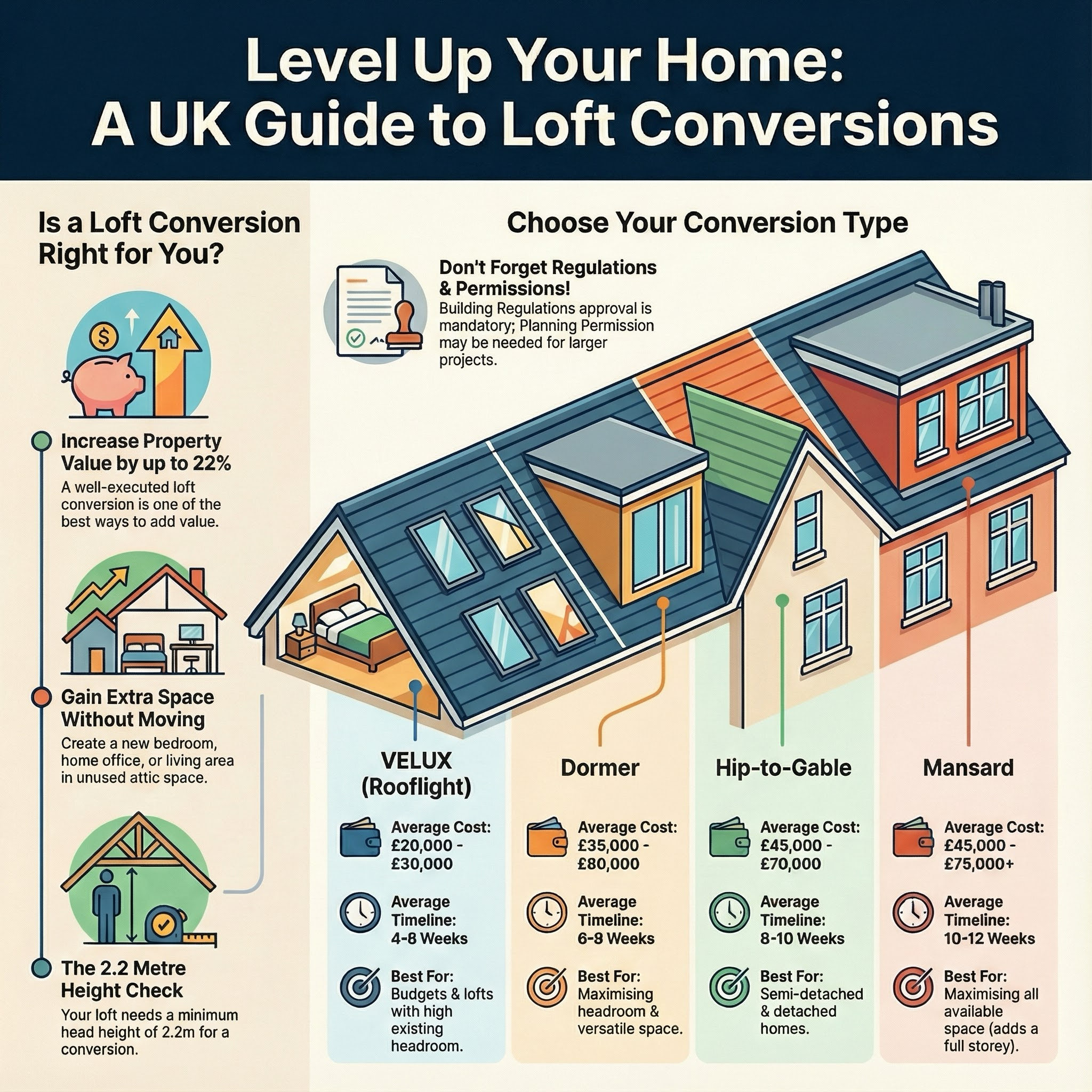
Loft Conversions explained
Repairing or upgrading your loft hatch ensures your home remains thermally efficient while providing safe, easy access to your storage space. Whether it is a sticking hinge, a broken catch, or failing draught seals, addressing these issues promptly prevents structural wear and improves home comfort.
Prices vary depending on whether you are repairing an existing timber hatch or replacing it with a modern, pre-insulated PVC unit. These figures include VAT and are based on 2025/26 UK averages.
| Service Item | Low £ | High £ | Notes |
|---|---|---|---|
| Basic Repair (Hinges/Seals) | £120 | £180 | Includes minor parts and 1 hour labour. |
| Full Hatch Replacement (PVC) | £250 | £450 | Supply and fit of an insulated drop-down unit. |
| Bespoke Timber Hatch Repair | £180 | £300 | Common in period properties with non-standard sizes. |
| Structural Widening | £350 | £600 | Cutting joists and installing trimmers for a larger hatch. |
The total cost is largely driven by the "make-ready" work required. If your ceiling is lath and plaster, or if the hatch needs to be relocated to avoid a structural beam, expect prices to sit at the higher end of the scale.
Replacing a simple catch or sticking a new draught strip is a straightforward DIY task. However, if the hatch is sticking due to a warped frame or if you need to enlarge the opening, a professional is recommended.
Cutting into ceiling joists without proper structural knowledge can compromise the integrity of your roof. Always hire a professional for structural alterations.
Furthermore, modern building regulations regarding thermal "U-values" are strict. A professional installer will ensure your hatch meets Part L of the Building Regulations, keeping your home's EPC rating as high as possible.
This is a common "quick fix," but it is dangerous. Adding weight makes the hatch difficult to open safely and can cause the hinges to fail suddenly. It is far better to install a proper compression latch.
Fire-rated hatches are typically made of steel or specially treated timber and will have a label on the "loft side" indicating their rating (e.g., FD30). If you live in a flat or a house with three or more storeys, a fire-rated hatch is usually mandatory.
The draught might be coming from the gap between the hatch frame and the ceiling rather than the hatch door itself. This gap should be filled with expanding foam or mastic during installation.
Yes, but it involves more work. A carpenter will need to create a new opening, reinforce it with trimmers, and then patch the old opening with plasterboard and a skim coat of plaster.
Modern standards prefer "drop-down" hatches. They are easier to operate, safer when used with ladders, and the weight of the hatch helps compress the draught seals for a better thermal fit.
This guide was written with AI assistance and is intended for general information only. Prices are estimates based on UK averages and may vary by region. Always get at least three quotes and consult a qualified professional before starting any work.
Ask follow-ups in plain English. The AI explains options, sequencing and what to ask the loft conversions — so you walk in informed.
Installing a loft ladder is one of the most cost-effective ways to unlock hidden storage space in your UK home. Beyond convenience, a professionally fitted ladd...
READ GUIDE →GuideMaintaining the floor boarding in your loft is essential for both safe storage and the structural integrity of your home. Over time, older chipboard can bow, cr...
READ GUIDE →GuideBoarding out your loft is one of the most cost-effective ways to increase your home's storage capacity without the expense of a full conversion. In the UK, wher...
READ GUIDE →GuideInstalling a professional loft ladder is one of the most cost-effective ways to add value and functionality to your UK home. Rather than struggling with a preca...
READ GUIDE →GuideConverting a dusty attic into functional storage is one of the most cost-effective ways to add value and space to a UK home. By utilising the "dead space" above...
READ GUIDE →GuideA sturdy loft ladder is the gatekeeper to your home’s extra storage or attic living space. While these ladders are built for durability, years of use can lead t...
READ GUIDE →