Instant
01 · Ask
Ask the AI a follow-up
Got more questions about loft Ladder Installation? Describe the bit you're unsure about — the AI explains options, sequencing and what to ask the loft conversions.

Concertina, telescopic or sliding ladder — sized to your opening and fitted with insulated hatch.
You've read the brief on loft Ladder Installation. Now lean on us to find the right loft conversions — and stay in control of the job.
Got more questions about loft Ladder Installation? Describe the bit you're unsure about — the AI explains options, sequencing and what to ask the loft conversions.
Costs, timelines, pitfalls and the right questions to ask before any loft conversions starts on loft Ladder Installation.
Itemised quotes from up to 3 local loft conversionss on loft Ladder Installation — so you can compare like-for-like, not lump sums.
Ready when you are
Enter your postcode and get free quotes from local pros.
Four moves that separate a smooth job from a nightmare.
If the ladder isn't trimmed correctly to the floor height, the hinges take the full weight of the user, leading to catastrophic failure.
Poorly fitted hatches allow warm air to escape, which can cause damp and mould issues in the loft.
Failing to measure the "swing clearance" can result in a ladder that hits a wall or door before it fully unfolds.
Using standard wood screws instead of heavy-duty coach bolts can cause the unit to pull away from the joists over time.
Indicative UK ranges and a typical week-by-week schedule.
By job type
Quote spread is typically ± 18% — always get 3 quotes.
Dormer loft conversion · week by week
Schedule slips on dependencies — pad each phase by 10–20% for real-world delays.
Loft Conversions quick-view
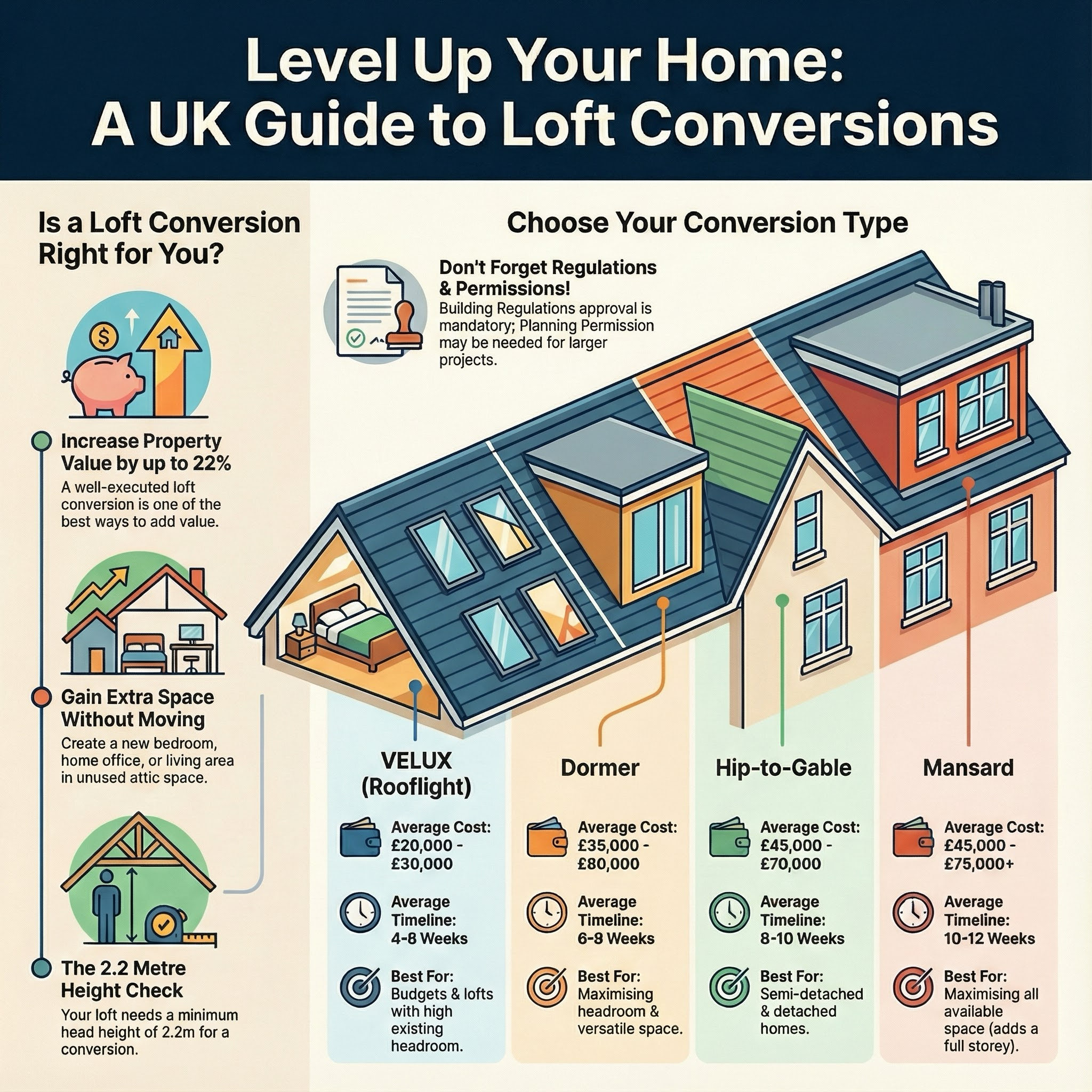
Loft Conversions explained
Beyond simple convenience, a well-fitted loft ladder ensures your home remains energy efficient and meets modern safety standards. Whether you are looking for a basic aluminium slider or a premium timber folding unit, understanding the installation process and associated costs is essential for any homeowner.
Prices vary based on the material of the ladder and whether the existing hatch needs to be enlarged or moved. These figures include supply and professional installation, including VAT.
| Item | Low £ | High £ | Notes |
|---|---|---|---|
| Basic 2-Section Aluminium | £180 | £350 | Fits existing hatches; budget-friendly. |
| 3-Section Timber Folding | £450 | £850 | Includes insulated hatch; very sturdy. |
| Telescopic Ladder | £300 | £550 | Ideal for tight spaces or small landings. |
| Electric / Motorised Ladder | £1,500 | £3,000+ | Premium convenience; requires power. |
| Hatch Enlargement/Relocation | £150 | £400 | Labour and structural timber costs. |
The primary cost drivers are the ladder material and structural complexity. Timber ladders are more expensive but offer better insulation and higher weight capacities, whereas aluminium is cheaper but can be noisier and colder to the touch.
While a confident DIYer can install a basic bolt-on aluminium ladder, timber folding units and hatch enlargements should be left to professionals. Cutting ceiling joists incorrectly can compromise the structural integrity of your roof, leading to sagging ceilings or worse.
Professional installers ensure the hatch is correctly insulated and draught-proofed to meet Part L of the Building Regulations, preventing heat loss from your living areas into the cold loft.
Questions to ask:
Most domestic loft ladders (timber or aluminium) are rated for a maximum load of 150kg (approx. 23.5 stone). This must include both the person and any heavy boxes they are carrying.
Yes. Telescopic ladders or "concertina" style ladders are designed specifically for tight spaces where there isn't enough "swing room" for a traditional folding ladder.
No, you generally do not need planning permission for internal works like moving a loft hatch. However, if your building is Listed, you will need Listed Building Consent.
Timber is sturdier, feels more like a staircase, and usually comes with a pre-insulated hatch. Aluminium is cheaper and lighter but can feel slightly "springy" and is less aesthetically pleasing.
If installed correctly with a modern insulated hatch and draught seals, it should actually make your home warmer by replacing an old, leaky wooden board with a sealed unit.
This guide was written with AI assistance and is intended for general information only. Prices are estimates based on UK averages and may vary by region. Always get at least three quotes and consult a qualified professional before starting any work.
Ask follow-ups in plain English. The AI explains options, sequencing and what to ask the loft conversions — so you walk in informed.
Installing a loft ladder is one of the most cost-effective ways to unlock hidden storage space in your UK home. Beyond convenience, a professionally fitted ladd...
READ GUIDE →GuideMaintaining the floor boarding in your loft is essential for both safe storage and the structural integrity of your home. Over time, older chipboard can bow, cr...
READ GUIDE →GuideBoarding out your loft is one of the most cost-effective ways to increase your home's storage capacity without the expense of a full conversion. In the UK, wher...
READ GUIDE →GuideConverting a dusty attic into functional storage is one of the most cost-effective ways to add value and space to a UK home. By utilising the "dead space" above...
READ GUIDE →GuideA faulty loft hatch is more than just a minor inconvenience; it is a primary source of heat loss and a potential safety hazard. In the UK, where energy efficien...
READ GUIDE →GuideA sturdy loft ladder is the gatekeeper to your home’s extra storage or attic living space. While these ladders are built for durability, years of use can lead t...
READ GUIDE →