Instant
01 · Ask
Ask the AI a follow-up
Got more questions about loft Storage Installation? Describe the bit you're unsure about — the AI explains options, sequencing and what to ask the loft conversions.

Stilted boards, shelves and racks in the loft — designed for safe storage without insulation compromise.
You've read the brief on loft Storage Installation. Now lean on us to find the right loft conversions — and stay in control of the job.
Got more questions about loft Storage Installation? Describe the bit you're unsure about — the AI explains options, sequencing and what to ask the loft conversions.
Costs, timelines, pitfalls and the right questions to ask before any loft conversions starts on loft Storage Installation.
Itemised quotes from up to 3 local loft conversionss on loft Storage Installation — so you can compare like-for-like, not lump sums.
Ready when you are
Enter your postcode and get free quotes from local pros.
Four moves that separate a smooth job from a nightmare.
Compressing 270mm of insulation down to 100mm reduces its thermal effectiveness by over 50%.
Blocking eaves ventilation or trapping moisture under boards can cause roof timbers to rot over time.
Placing heavy furniture or gym equipment in a loft not designed for "habitable use" can cause ceiling cracks or structural failure.
Installing storage without a safe, permanent ladder often leads to the storage space being underutilised or causing injury.
Indicative UK ranges and a typical week-by-week schedule.
By job type
Quote spread is typically ± 18% — always get 3 quotes.
Dormer loft conversion · week by week
Schedule slips on dependencies — pad each phase by 10–20% for real-world delays.
Loft Conversions quick-view
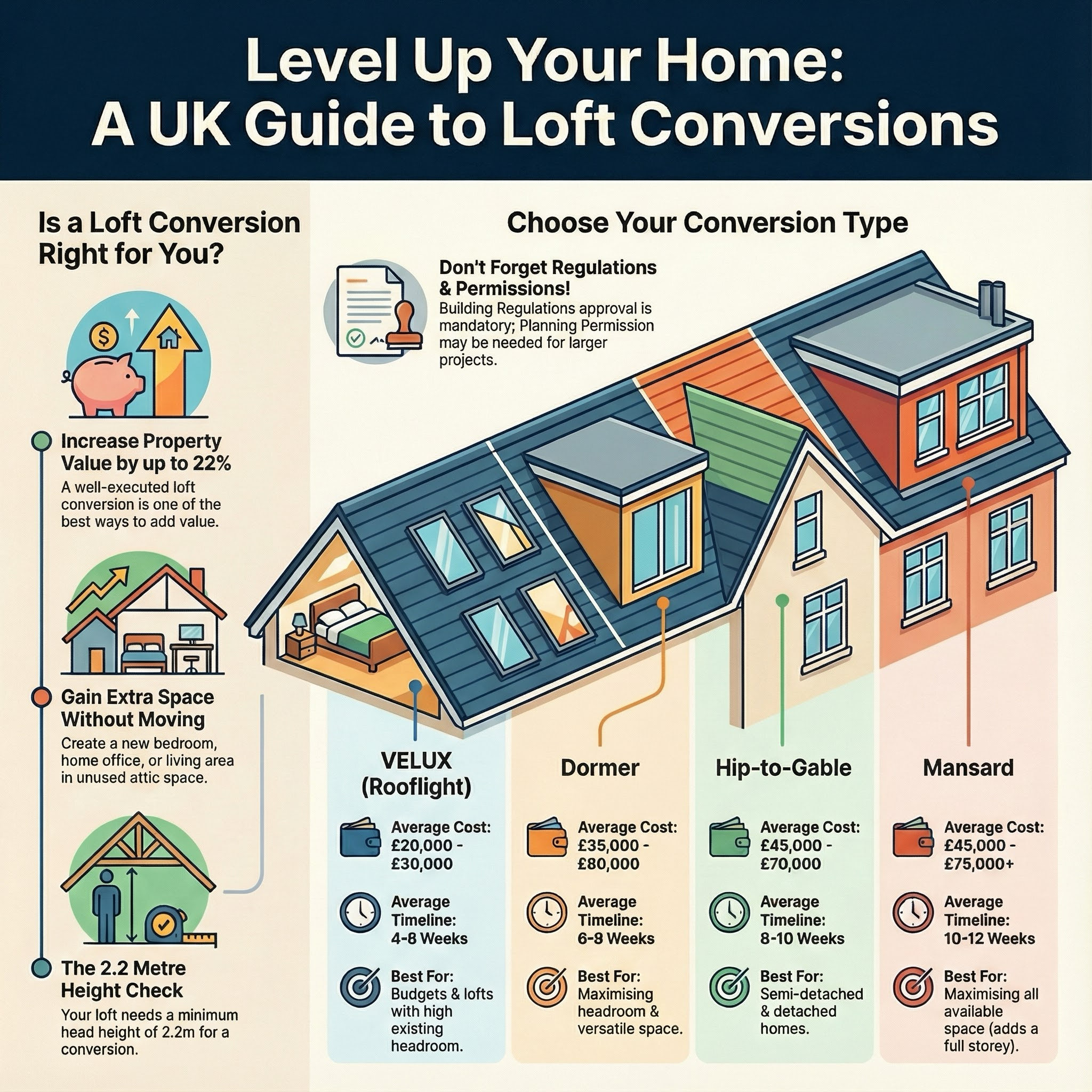
Loft Conversions explained
Modern loft storage installation focuses on preserving thermal efficiency. In the UK, this usually involves installing raised boarding systems that sit above your insulation, ensuring you don't compromise your home's energy rating or fall foul of building regulations.
Prices vary based on the size of the area and whether you require a raised system to protect deep insulation. The following estimates include materials and labour at 2025/26 UK rates, including VAT.
| Item | Low £ | High £ | Notes |
|---|---|---|---|
| Small Area Boarding (approx. 10m²) | £550 | £900 | Standard tongue-and-groove boards. |
| Raised Boarding System (approx. 15m²) | £950 | £1,600 | Includes "Loft Legs" to protect 270mm insulation. |
| Truss Shelving (per 3-tier unit) | £150 | £250 | Fitted to the internal roof structure. |
| Loft Ladder (Supply & Fit) | £250 | £600 | Price depends on timber vs aluminium. |
| LED Loft Light (Mains wired) | £120 | £200 | Requires a Part P qualified electrician. |
Factors affecting the final bill include the age of your property, the complexity of the roof trusses (fink trusses vs purlin roofs), and the ease of access to the loft hatch.
While basic boarding is a common DIY task, it carries risks. Falling through a ceiling is a common DIY accident, and incorrectly boarding over insulation can lead to dampness, interstitial condensation, and a significant drop in your home's EPC rating.
Professional installers use raised systems that maintain airflow, protecting your roof timbers and your manufacturer’s warranty on new-build homes.
If you require mains-powered lighting, you must use a qualified electrician to comply with Part P Building Regulations. For structural changes to the loft hatch or joists, professional expertise is essential to avoid compromising the roof's integrity.
Yes, but you must use a raised boarding system. Standard boarding directly onto the joists will likely void your NHBC warranty and compress the high-performance insulation required in modern homes.
Most standard UK ceiling joists are designed for "light storage," typically around 25kg to 50kg per square metre. If you plan to store heavy items, you may need structural reinforcement.
If done correctly with a raised system, it won't. However, if you squash the insulation to fit boards, your home will lose heat faster, and your energy bills will likely increase.
No, planning permission is not required for boarding a loft for storage purposes. It is only required if you are converting the space into a "habitable" room (bedroom or office).
No. Boarding is for storage only. Using it as an office or bedroom requires a full conversion that meets strict Building Regulations regarding fire safety, head height, and floor strength.
This guide was written with AI assistance and is intended for general information only. Prices are estimates based on UK averages and may vary by region. Always get at least three quotes and consult a qualified professional before starting any work.
Ask follow-ups in plain English. The AI explains options, sequencing and what to ask the loft conversions — so you walk in informed.
Installing a loft ladder is one of the most cost-effective ways to unlock hidden storage space in your UK home. Beyond convenience, a professionally fitted ladd...
READ GUIDE →GuideMaintaining the floor boarding in your loft is essential for both safe storage and the structural integrity of your home. Over time, older chipboard can bow, cr...
READ GUIDE →GuideBoarding out your loft is one of the most cost-effective ways to increase your home's storage capacity without the expense of a full conversion. In the UK, wher...
READ GUIDE →GuideInstalling a professional loft ladder is one of the most cost-effective ways to add value and functionality to your UK home. Rather than struggling with a preca...
READ GUIDE →GuideA faulty loft hatch is more than just a minor inconvenience; it is a primary source of heat loss and a potential safety hazard. In the UK, where energy efficien...
READ GUIDE →GuideA sturdy loft ladder is the gatekeeper to your home’s extra storage or attic living space. While these ladders are built for durability, years of use can lead t...
READ GUIDE →