Instant
01 · Ask
Ask the AI a follow-up
Got more questions about custom Steel Fabrication? Describe the bit you're unsure about — the AI explains options, sequencing and what to ask the metalwork & blacksmith.

Beams, frames, balustrades, brackets — bespoke steel fabrication to engineer's drawings.
You've read the brief on custom Steel Fabrication. Now lean on us to find the right metalwork & blacksmith — and stay in control of the job.
Got more questions about custom Steel Fabrication? Describe the bit you're unsure about — the AI explains options, sequencing and what to ask the metalwork & blacksmith.
Costs, timelines, pitfalls and the right questions to ask before any metalwork & blacksmith starts on custom Steel Fabrication.
Itemised quotes from up to 3 local metalwork & blacksmiths on custom Steel Fabrication — so you can compare like-for-like, not lump sums.
Ready when you are
Enter your postcode and get free quotes from local pros.
Four moves that separate a smooth job from a nightmare.
Occurs when external steel is not properly galvanised or when "raw" steel is simply painted over.
If a fabricator applies too much heat during welding, the steel can warp, leading to gates that don't shut or beams that aren't level.
Steel is not easily adjusted on-site; if the initial survey is out by even 10mm, the entire piece may be unusable.
A sign of poor craftsmanship where small beads of metal are left on the surface, ruining the final paint finish.
Indicative UK ranges and what affects price.
By job type
Quote spread is typically ± 18% — always get 3 quotes.
Metalwork & Blacksmith quick-view
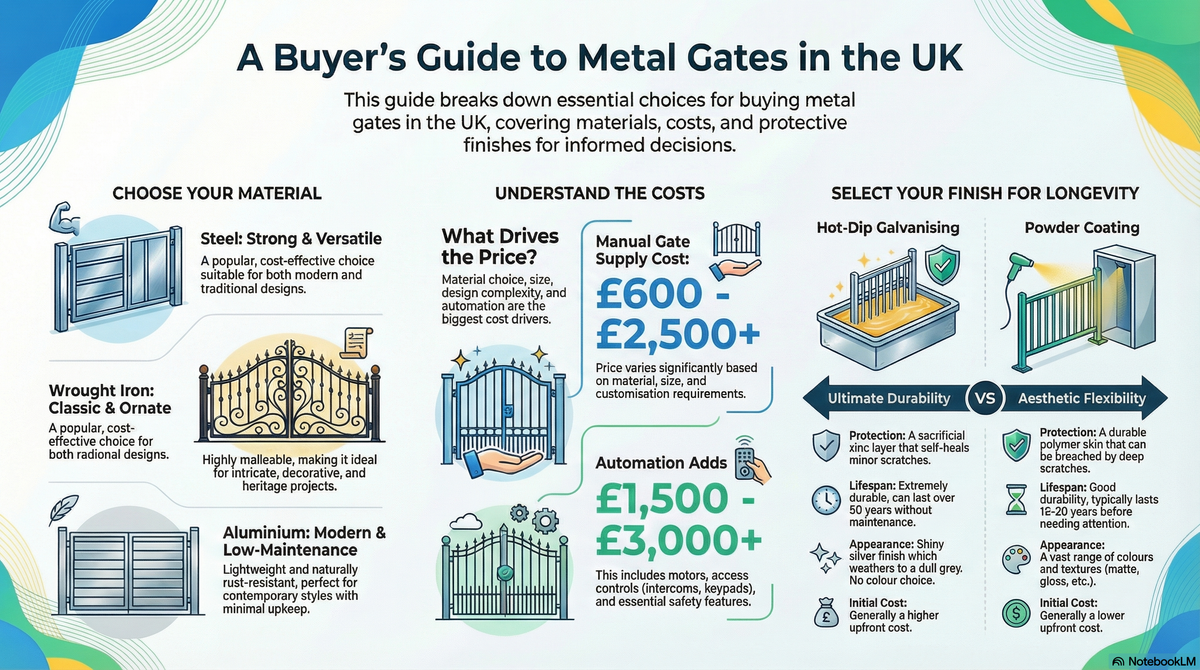
For UK homeowners, custom fabrication offers the chance to move beyond "off-the-shelf" solutions. Working with a skilled blacksmith or fabricator allows you to create pieces tailored to the exact dimensions of your property, ensuring a perfect fit that adds significant value to your home.
Prices for steel fabrication vary significantly based on the complexity of the design and the current market price of raw steel. Structural items are often priced by weight, while decorative items are priced by labour intensity.
| Item / Service | Low £ | High £ | Notes |
|---|---|---|---|
| Small Custom Bracket/Repair | £150 | £350 | Simple fabrication and welding. |
| Structural RSJ (Standard length) | £250 | £750 | Price excludes installation. |
| Bespoke Garden Gate (Single) | £600 | £1,800 | Includes galvanising and coating. |
| Internal Glass/Steel Balustrade | £2,500 | £6,000+ | Per flight, depending on finish. |
| Fabricator Labour (Hourly) | £55 | £95 | Workshop or site-based rate. |
Factors affecting the final bill include the complexity of the welds, the choice of finish (powder coating is more expensive than primer), and whether the fabricator needs to perform a site survey before starting work.
Custom steel fabrication is strictly a professional trade. Structural steelwork must comply with strict building regulations, and poor welding can lead to catastrophic failure.
Structural steel used in UK construction must be fabricated by a firm with the correct UKCA (formerly CE) marking certifications to ensure the safety of the building.
While a DIYer might manage basic metal painting, the actual cutting, welding, and structural design require industrial machinery and certified skills. Attempting to weld load-bearing structures yourself will likely invalidate your home insurance and fail building inspections.
Galvanising involves dipping steel in molten zinc to provide a rust-proof barrier. Powder coating is a decorative dry powder finish baked on in an oven. For external work, you should ideally have both (known as a duplex system).
Yes. If you are removing a load-bearing wall, a structural engineer must calculate the size and weight of the steel (RSJ) required. The fabricator then builds to these exact specifications.
Yes, many fabricators offer mobile welding services. However, it is usually more expensive and messier than workshop fabrication, so it is typically reserved for repairs or final assembly of large structures.
For powder-coated items, simply wash with warm soapy water. For stainless steel, use a dedicated cleaner to prevent "tea staining" (surface rust). Check for any chips in the paint and touch them up immediately to prevent moisture from reaching the metal.
Stainless steel is highly resistant to rust and looks modern, but it is significantly more expensive and harder to work with. Mild steel is the standard for most UK homes but must be treated (galvanised/painted) to prevent rusting.
This guide was written with AI assistance and is intended for general information only. Prices are estimates based on UK averages and may vary by region. Always get at least three quotes and consult a qualified professional before starting any work.
Ask follow-ups in plain English. The AI explains options, sequencing and what to ask the metalwork & blacksmith — so you walk in informed.
Custom metal railings are a significant investment for UK homeowners, offering a blend of security, safety, and architectural character. Whether you are restori...
READ GUIDE →GuideA well-installed handrail is more than just a safety requirement; it is a vital architectural feature that provides stability and style to UK homes. Whether you...
READ GUIDE →GuideEmergency metal repairs are often critical for home security and structural safety. Whether it is a snapped driveway gate hinge, a failing fire escape, or a dam...
READ GUIDE →GuideMetal fabrication is a cornerstone of UK home improvement, bridging the gap between structural necessity and aesthetic appeal. Whether you are installing a stru...
READ GUIDE →GuideMetal staircases have become a hallmark of modern British architecture, offering a sleek, industrial aesthetic that traditional timber cannot match. Whether you...
READ GUIDE →GuideCustom metal gates are a premium investment for UK homeowners, offering a level of security, durability, and kerb appeal that off-the-shelf timber options simpl...
READ GUIDE →