Instant
01 · Ask
Ask the AI a follow-up
Got more questions about custom Gate Fabrication Process? Describe the bit you're unsure about — the AI explains options, sequencing and what to ask the metalwork & blacksmith.

Bespoke pedestrian or driveway gate — designed, welded, galvanised and powder-coated.
You've read the brief on custom Gate Fabrication Process. Now lean on us to find the right metalwork & blacksmith — and stay in control of the job.
Got more questions about custom Gate Fabrication Process? Describe the bit you're unsure about — the AI explains options, sequencing and what to ask the metalwork & blacksmith.
Costs, timelines, pitfalls and the right questions to ask before any metalwork & blacksmith starts on custom Gate Fabrication Process.
Itemised quotes from up to 3 local metalwork & blacksmiths on custom Gate Fabrication Process — so you can compare like-for-like, not lump sums.
Ready when you are
Enter your postcode and get free quotes from local pros.
Four moves that separate a smooth job from a nightmare.
Heavy metal gates put immense strain on pillars; without deep concrete footings, the gates will eventually sag and fail to latch.
This occurs when "cold galvanising" sprays are used instead of hot-dip baths, leading to rust bleeding through the paint within months.
Using undersized hinges for heavy bespoke gates leads to difficult operation and premature wear.
Failing to account for a rising driveway slope can result in a gate that hits the ground when opened.
Indicative UK ranges and what affects price.
By job type
Quote spread is typically ± 18% — always get 3 quotes.
Metalwork & Blacksmith quick-view
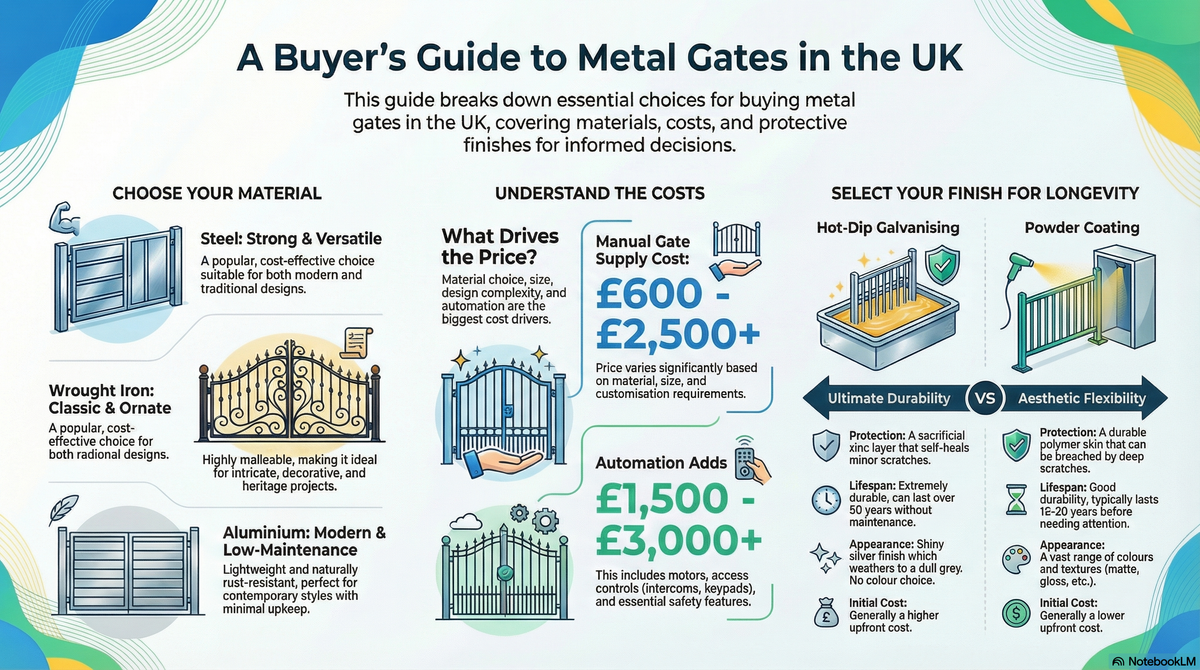
Beyond aesthetics, a professionally fabricated gate provides a robust physical barrier that can last for decades if treated correctly. In the UK's damp climate, the fabrication process must focus heavily on corrosion resistance and structural integrity to prevent sagging or rusting over time.
The cost of custom metalwork is primarily driven by the weight of the steel used and the complexity of the decorative scrolls or laser-cut patterns. Prices in 2025/26 reflect the continued high cost of raw materials and the specialist energy-intensive galvanising process.
| Item | Low £ | High £ | Notes |
|---|---|---|---|
| Small Side/Garden Gate | £650 | £1,300 | Simple design, fully installed and finished. |
| Double Driveway Gates (Manual) | £1,800 | £4,500 | Standard 3m-4m width; price varies by height. |
| Automated Metal Gates | £5,000 | £10,000+ | Includes motors, safety sensors, and intercoms. |
| Design & Consultation Fee | £150 | £400 | Often deducted from the final bill if you proceed. |
| Hot-Dip Galvanising (Add-on) | £200 | £600 | Essential for 25+ year rust protection. |
Labour costs for a skilled blacksmith or fabricator typically range from £60 to £90 per hour. Complex decorative work or structural repairs to existing pillars will significantly increase the final quote.
Metal gate fabrication is strictly a professional task requiring industrial-grade welding equipment, metal benders, and cutting torches. While a DIYer might be able to hang a pre-made gate, bespoke fabrication involves structural calculations to ensure the gate's weight doesn't pull down the supporting pillars.
Safety is paramount: Automated gates must be installed by a professional to comply with UK safety regulations, preventing crush injuries or entrapment.
Aluminium is lighter and naturally rust-proof, making it excellent for automation. However, steel is generally stronger, more traditional in appearance, and easier to repair if damaged.
If galvanised and powder-coated, they only need an annual wash with soapy water and grease on the hinges. Automated gates require a professional safety service every 6–12 months.
Usually, yes. However, the gates must be structurally sound and swing freely. A fabricator may need to weld additional mounting plates to the frame to support the motor arms.
True wrought iron is rarely used today as it is incredibly expensive. Most "wrought iron" gates are actually made from mild steel, which is then forged or decorated to mimic the traditional look.
Solid panel gates can act like a sail and may "rattle" in high winds. Open-railing designs allow wind to pass through, making them much quieter and putting less stress on the posts.
This guide was written with AI assistance and is intended for general information only. Prices are estimates based on UK averages and may vary by region. Always get at least three quotes and consult a qualified professional before starting any work.
Ask follow-ups in plain English. The AI explains options, sequencing and what to ask the metalwork & blacksmith — so you walk in informed.
Custom metal railings are a significant investment for UK homeowners, offering a blend of security, safety, and architectural character. Whether you are restori...
READ GUIDE →GuideA well-installed handrail is more than just a safety requirement; it is a vital architectural feature that provides stability and style to UK homes. Whether you...
READ GUIDE →GuideEmergency metal repairs are often critical for home security and structural safety. Whether it is a snapped driveway gate hinge, a failing fire escape, or a dam...
READ GUIDE →GuideMetal fabrication is a cornerstone of UK home improvement, bridging the gap between structural necessity and aesthetic appeal. Whether you are installing a stru...
READ GUIDE →GuideMetal staircases have become a hallmark of modern British architecture, offering a sleek, industrial aesthetic that traditional timber cannot match. Whether you...
READ GUIDE →GuideCustom steel fabrication is the backbone of many UK home improvement projects, ranging from essential structural beams (RSJs) to decorative garden gates and bes...
READ GUIDE →