Instant
01 · Ask
Ask the AI a follow-up
Got more questions about metal Fabrication Costs &? Describe the bit you're unsure about — the AI explains options, sequencing and what to ask the metalwork & blacksmith.

What metal fabrication actually costs in 2026 — by material, complexity and finish.
You've read the brief on metal Fabrication Costs &. Now lean on us to find the right metalwork & blacksmith — and stay in control of the job.
Got more questions about metal Fabrication Costs &? Describe the bit you're unsure about — the AI explains options, sequencing and what to ask the metalwork & blacksmith.
Costs, timelines, pitfalls and the right questions to ask before any metalwork & blacksmith starts on metal Fabrication Costs &.
Itemised quotes from up to 3 local metalwork & blacksmiths on metal Fabrication Costs & — so you can compare like-for-like, not lump sums.
Ready when you are
Enter your postcode and get free quotes from local pros.
Four moves that separate a smooth job from a nightmare.
Skipping galvanising on external steel leads to "rust-jacking," where paint peels and the metal structurally weakens.
Metal is unforgiving; if a gate is fabricated 10mm too wide, it cannot be easily adjusted on-site without damaging the finish.
Visible "spatter" or pinholes in welds are signs of poor craftsmanship and potential failure points.
Using stainless steel fixings on mild steel without isolation can cause rapid galvanic corrosion.
Indicative UK ranges and what affects price.
By job type
Quote spread is typically ± 18% — always get 3 quotes.
Metalwork & Blacksmith quick-view
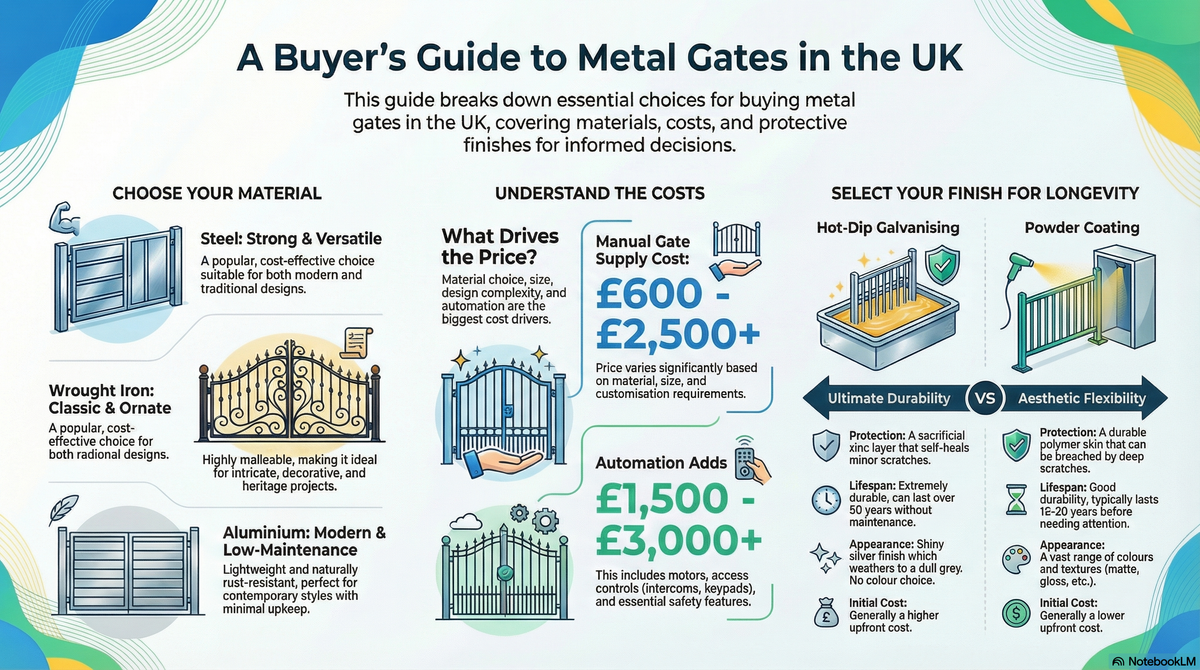
For UK homeowners, engaging a professional fabricator or blacksmith ensures that your project meets strict British Standards for safety and durability. From security gates to decorative staircases, bespoke metalwork is an investment that adds significant value and character to a property.
| Item / Service | Low £ | High £ | Notes |
|---|---|---|---|
| Fabricator Hourly Rate | £45 | £85 | Higher rates for mobile welding on-site. |
| Structural RSJ (per metre) | £70 | £140 | Price varies by weight and steel grade. |
| Standard Side Gate | £550 | £1,400 | Includes fabrication and basic installation. |
| Railings (per linear metre) | £180 | £450 | Depends on complexity and finish. |
| Bespoke Internal Staircase | £3,500 | £12,000+ | Architectural designs with glass or wood. |
| Small Repair / Welding Call-out | £150 | £350 | Minimum charge for mobile repair work. |
Several factors influence the final quote, most notably the current market price of raw steel and the complexity of the finish. Bespoke "one-off" designs require significantly more labour in the drawing and jigging phases compared to standard patterns.
Always confirm if the quote includes "hot-dip galvanising." Without this process, external mild steel will begin to rust within months, regardless of the paint quality.
Metal fabrication is strictly a professional trade. Structural work, such as installing RSJs, must be calculated by a structural engineer and installed by specialists to comply with UK Building Regulations.
While DIY enthusiasts may attempt minor repairs with hobbyist welders, the risk of "cold welds" (which look solid but lack structural integrity) is high. For any load-bearing or security-related metalwork, the expertise of a coded welder is essential to ensure safety and insurance compliance.
Questions to ask:
A blacksmith uses heat and a forge to shape metal artistically (wrought iron style), while a fabricator typically cuts, bends, and welds pre-formed metal sections (steel beams, modern gates) using industrial machinery.
If the metal has been hot-dip galvanised and then powder-coated, it should remain maintenance-free for 15–20 years. If it is only painted, you may need to touch up chips every 2–3 years to prevent rust.
Aluminium is lighter and naturally resistant to rust, making it excellent for coastal areas or automated gates. However, steel is stronger, more traditional, and generally more cost-effective for larger spans.
Cast iron is notoriously difficult to weld and requires specialist pre-heating techniques. You should look for a fabricator who specifically mentions "cast iron repair" rather than a general steel fabricator.
Steel prices are subject to global market fluctuations, energy costs, and import tariffs. Most UK fabricators can only hold a quote price for 7–14 days due to these rapid changes in material costs.
This guide was written with AI assistance and is intended for general information only. Prices are estimates based on UK averages and may vary by region. Always get at least three quotes and consult a qualified professional before starting any work.
Ask follow-ups in plain English. The AI explains options, sequencing and what to ask the metalwork & blacksmith — so you walk in informed.
Custom metal railings are a significant investment for UK homeowners, offering a blend of security, safety, and architectural character. Whether you are restori...
READ GUIDE →GuideA well-installed handrail is more than just a safety requirement; it is a vital architectural feature that provides stability and style to UK homes. Whether you...
READ GUIDE →GuideEmergency metal repairs are often critical for home security and structural safety. Whether it is a snapped driveway gate hinge, a failing fire escape, or a dam...
READ GUIDE →GuideMetal staircases have become a hallmark of modern British architecture, offering a sleek, industrial aesthetic that traditional timber cannot match. Whether you...
READ GUIDE →GuideCustom steel fabrication is the backbone of many UK home improvement projects, ranging from essential structural beams (RSJs) to decorative garden gates and bes...
READ GUIDE →GuideCustom metal gates are a premium investment for UK homeowners, offering a level of security, durability, and kerb appeal that off-the-shelf timber options simpl...
READ GUIDE →